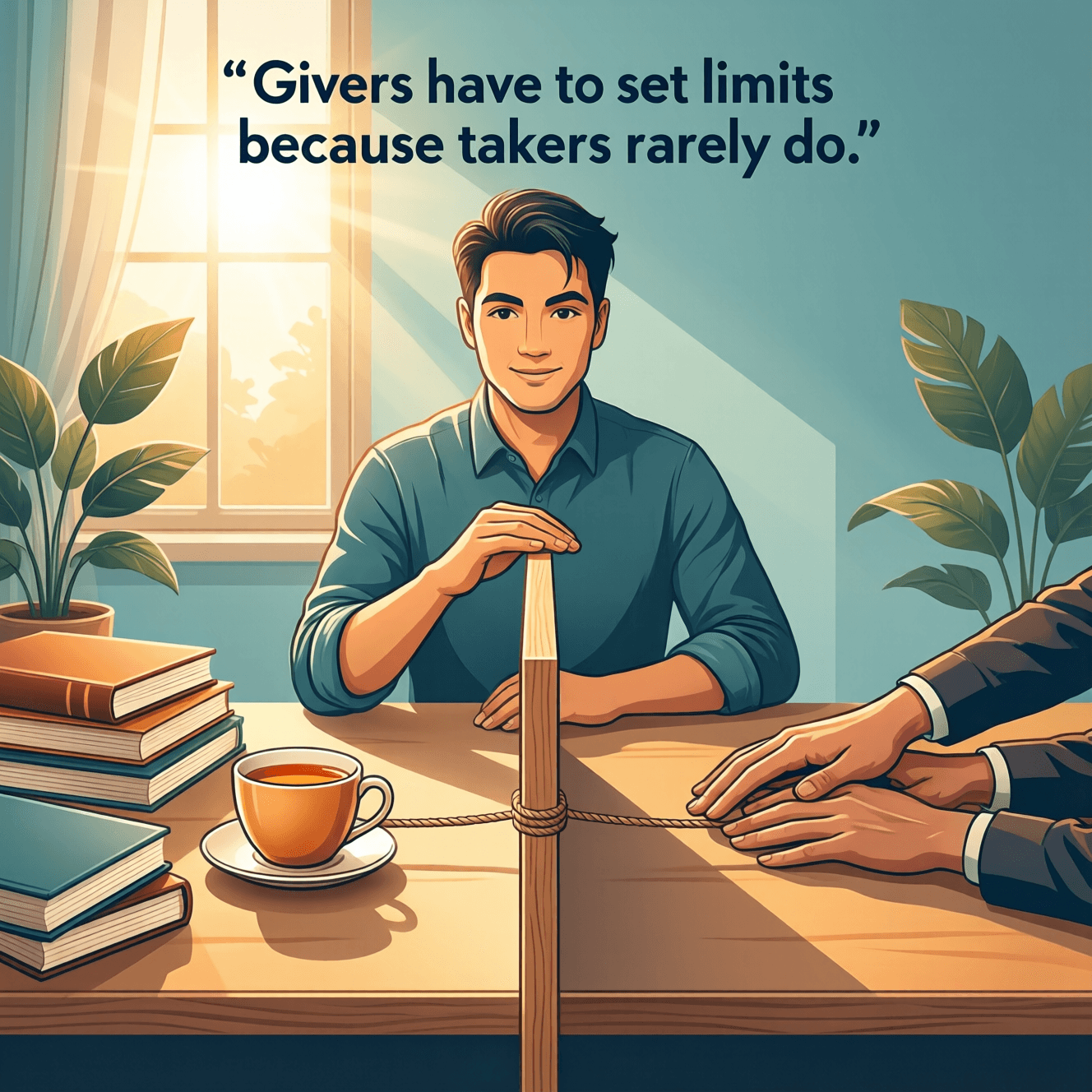
The next step is reframing what a boundary means. Limits are often mistaken for punishment, yet they function more like guardrails: they prevent harm while allowing movement. In that sense, boundaries can protect both parties. They stop the giver from burning out, and they stop the taker from slipping into dependency or entitlement that weakens their relationships elsewhere.
This logic mirrors a broader ethical idea found in Aristotle’s Nicomachean Ethics (c. 350 BC), where virtue is a mean between extremes: generosity sits between stinginess and wastefulness. A boundary is what keeps generosity in that virtuous middle—directed, intentional, and proportional—rather than collapsing into self-erasure. [...]