Authors
Matt Haig
Matt Haig (born 1975) is a British author of novels and non-fiction, known for works such as The Midnight Library and Reasons to Stay Alive. His writing frequently addresses mental health, hope, and recovery, reflected in the quoted line about healing and rest.
Quotes: 4
Quotes by Matt Haig
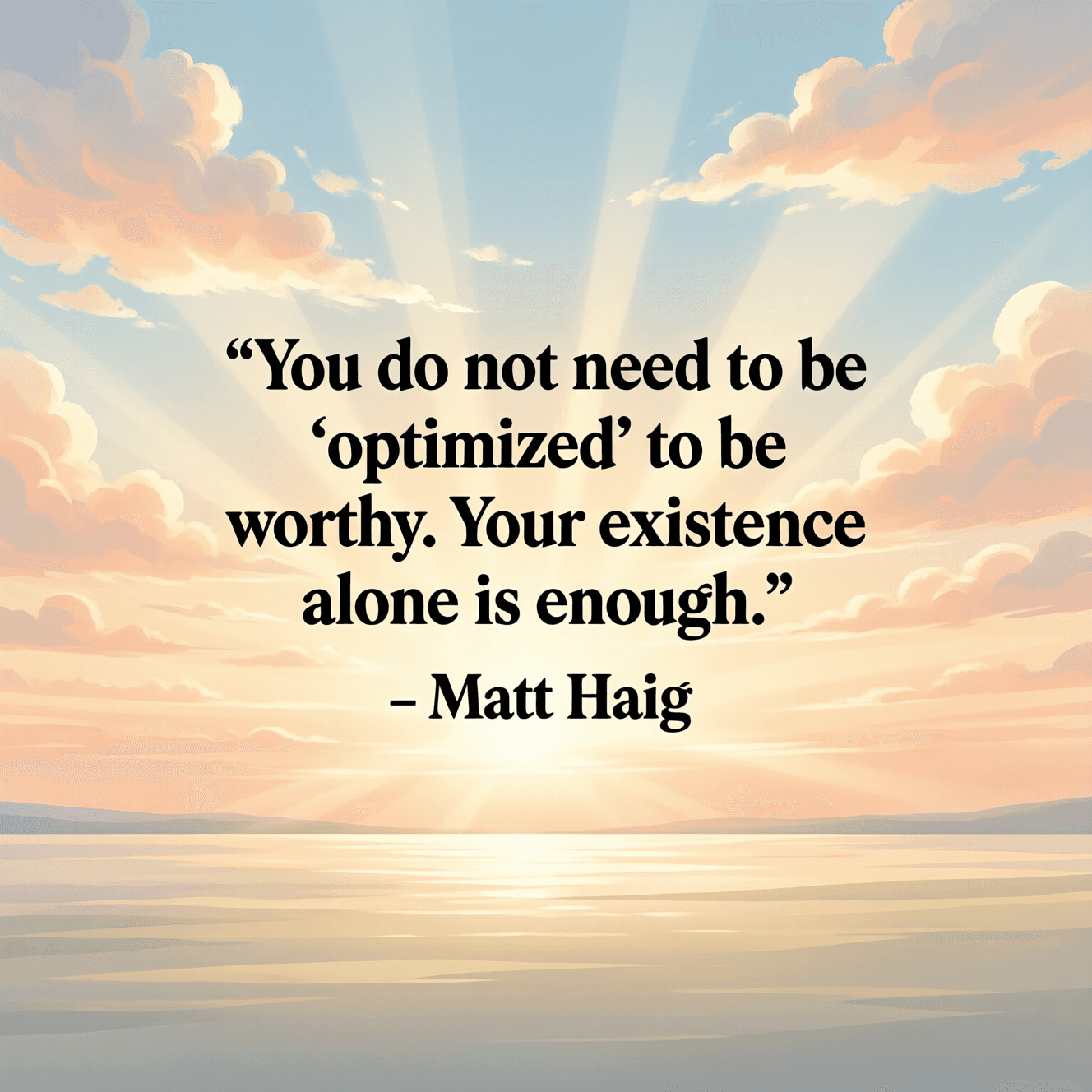
Worth Beyond Productivity and Constant Self-Optimization
Seen more broadly, Haig’s idea belongs to a long humanistic tradition that locates value in being rather than performance. Immanuel Kant’s Groundwork of the Metaphysics of Morals (1785) argues that people must be treated as ends in themselves, never merely as means. Although Kant writes in philosophical rather than therapeutic language, the ethical implication is similar: human beings possess intrinsic worth that does not depend on utility. Likewise, this sentiment resonates with later existential and human-centered thinkers. Carl Rogers’s On Becoming a Person (1961) emphasized unconditional positive regard, suggesting that people flourish most when they are not loved only for meeting standards. Haig’s quote distills that same truth into a gentler, modern reassurance. [...]
Created on: 3/17/2026

Your Perfect Record of Making It Through
Next, the line elevates endurance from passive luck to an active skill. Survival often includes unglamorous actions—getting out of bed, answering one message, showing up to work, or asking for help. Those moments don’t look heroic in the moment, yet they accumulate into something substantial: proof that you can function under strain. Consider the person who makes it through a year of grief by keeping small routines—tea in the morning, a walk at dusk, one friend who listens. That isn’t a dramatic turnaround, but it is competence in the face of hardship. Haig’s “success rate” makes those small continuations count. [...]
Created on: 3/5/2026

Feeling Pain Without Becoming Your Pain
Finally, the quote offers a portable practice for hard moments: when emotion surges, mentally reframe it as weather. You might say, “I’m walking through heavy rain today,” which preserves both truth (it’s hard) and separation (it’s not me). Over time, this stance builds resilience because it keeps identity larger than the current mood. Rain can last hours or days, but it changes; you can take steps, seek support, and wait for shifts. Haig’s core message is quietly empowering: you are the one in the rain, not the rain itself. [...]
Created on: 3/3/2026

Why Healing Often Resembles Rest, Not Progress
Importantly, the rest Haig describes isn’t necessarily passive. It can mean boundaries, routine, and deliberate reduction—turning off notifications, attending fewer obligations, or building gentle structure around sleep and nourishment. These decisions require agency, especially for people who equate worth with motion. Anecdotally, many recovering from burnout describe a difficult middle phase where doing less feels unbearable, as if identity is tied to productivity. Yet that interval often precedes clearer thinking and renewed capacity. In that way, rest becomes not a detour from healing but the method by which healing proceeds. [...]
Created on: 1/31/2026