
Authors
Mindy Kaling
Mindy Kaling (born June 24, 1979) is an American actress, comedian, writer, and producer best known for writing and acting on The Office and creating The Mindy Project. She has authored multiple books and often addresses themes of identity, ambition, and confidence in her work.
Quotes: 5
Quotes by Mindy Kaling

How Gratitude Turns Emotion Into Beauty
At first glance, Mindy Kaling’s line suggests that beauty is not only something we see but something we feel. Gratitude becomes a kind of inward radiance, transforming an ordinary emotional response into something almost...
Created on: 7/15/2026

Owning Your Voice by Writing Your Part
Mindy Kaling’s advice reads like a simple directive, but it carries a larger philosophy: if you want a role that truly fits you, you may have to create it. Rather than waiting for permission or perfect circumstances, she...
Created on: 3/6/2026
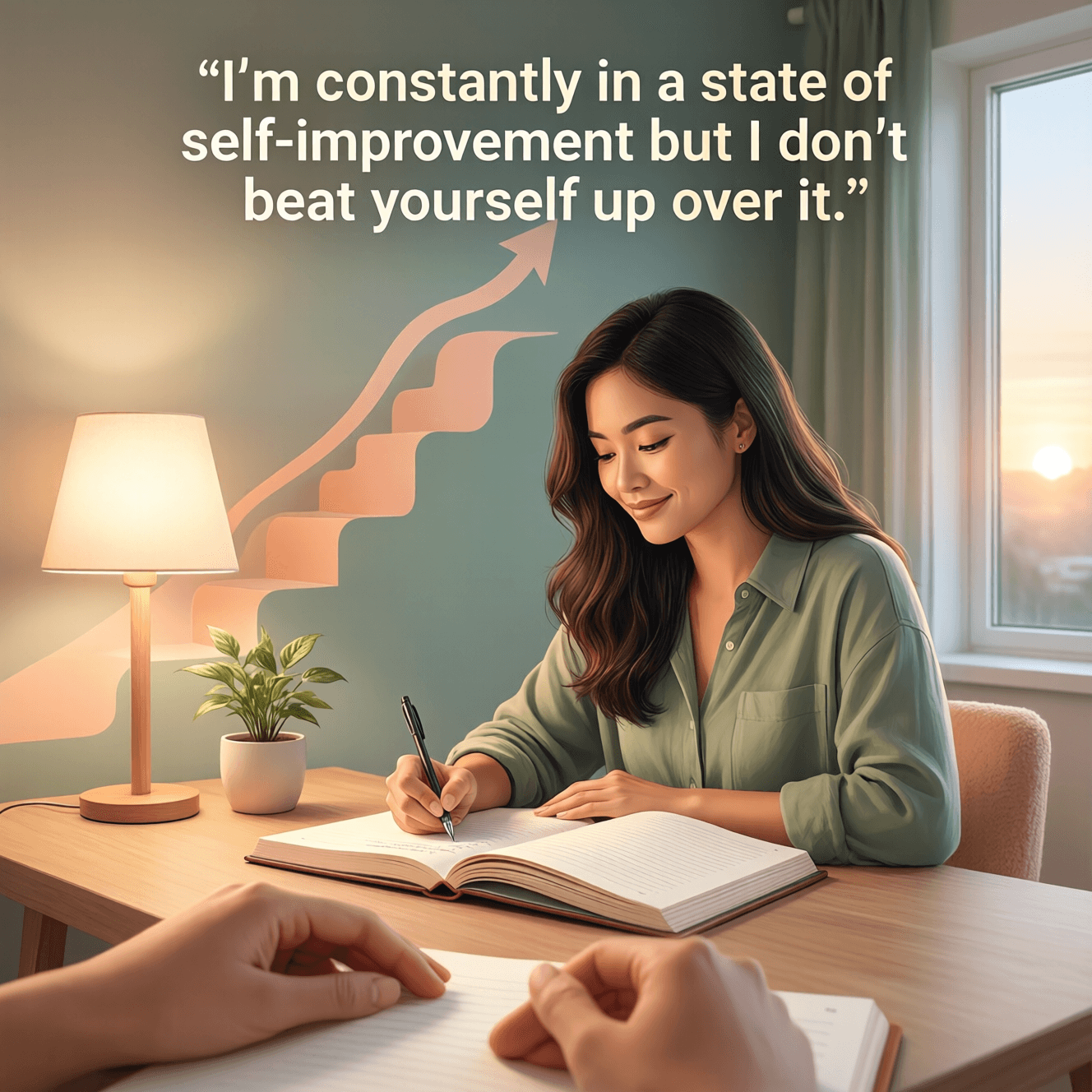
Self-Improvement Without Shame or Self-Punishment
Mindy Kaling’s line captures a modern ideal: keep evolving, but refuse to turn the process into a courtroom where you are both defendant and judge. Self-improvement here is not an emergency response to being “not enough,...
Created on: 2/25/2026

Making Your Own Path When None Appears
Mindy Kaling’s line begins with a candid observation: not everyone is handed a clear career roadmap. In many fields, the “path” is more myth than method—job titles are ambiguous, internships are scarce, and the steps fro...
Created on: 2/21/2026

Confidence as the Courage to Claim Space
Mindy Kaling’s line starts by deliberately colliding two concepts that usually live on opposite sides of a moral judgment: confidence and entitlement. Because “entitlement” often evokes arrogance or unearned demands, the...
Created on: 2/7/2026