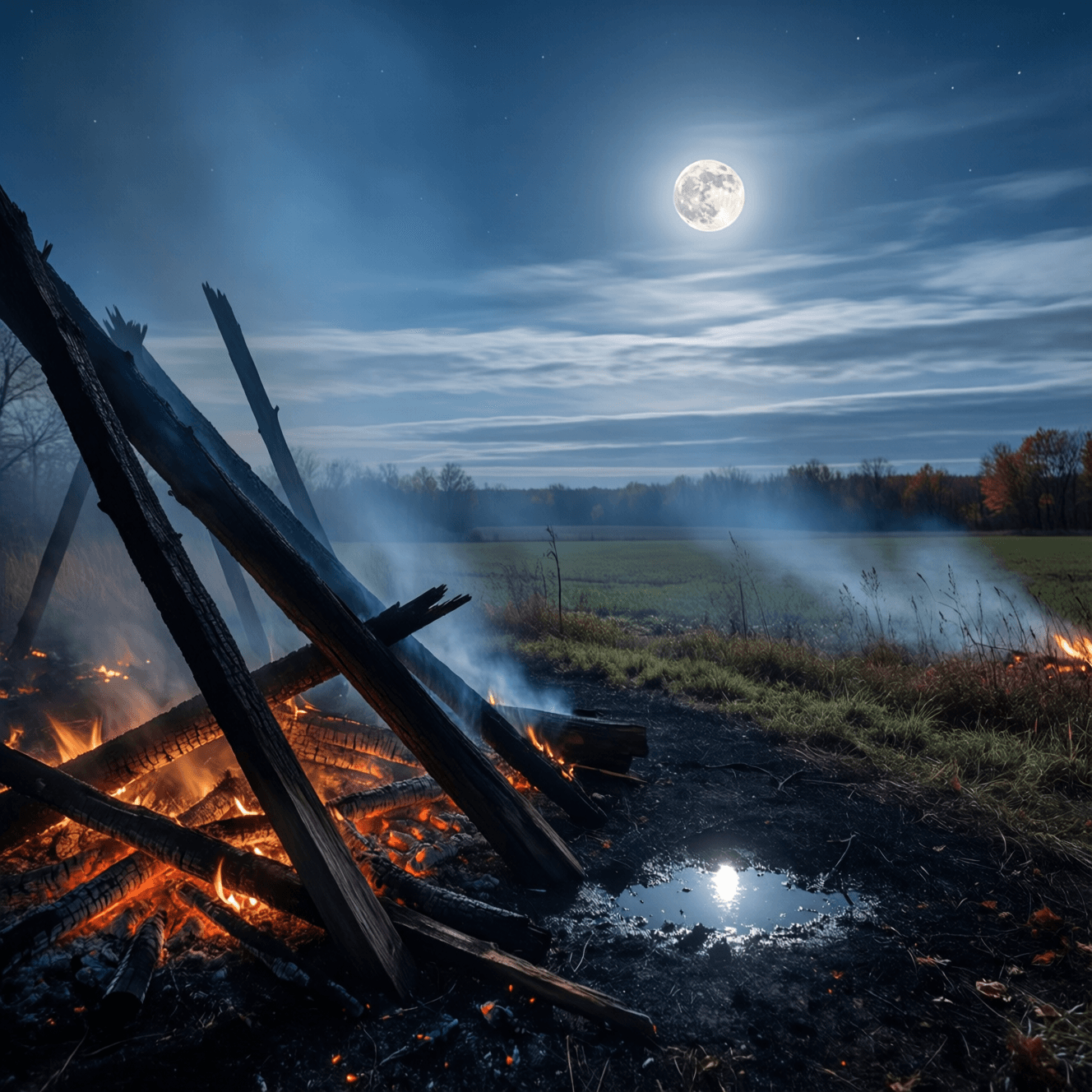
The quote resonates with a long tradition in Japanese poetry and Buddhist thought in which impermanence is not merely tolerated but studied as a fundamental condition of life. Rather than presenting permanence as the default and loss as an exception, the line treats change as the situation we are always in, even when we pretend otherwise.
Seen this way, the burned barn is less a moral lesson than a lens: it forces a recognition that what we build—homes, plans, identities—can vanish quickly. Yet the moon’s continued presence suggests another truth running alongside impermanence: something vast remains, even when familiar structures do not. [...]