Su Shi (Su Dongpo
Su Shi (1037–1101), also known as Su Dongpo, was a leading Song dynasty poet, essayist, calligrapher and government official. His famous ci and shi poems, including lines about the Yangtze and the moon, have had lasting influence on Chinese literature and culture.
Quotes by Su Shi (Su Dongpo
Quotes: 5

Rivers of Time, Moonlight Shared Across Ages
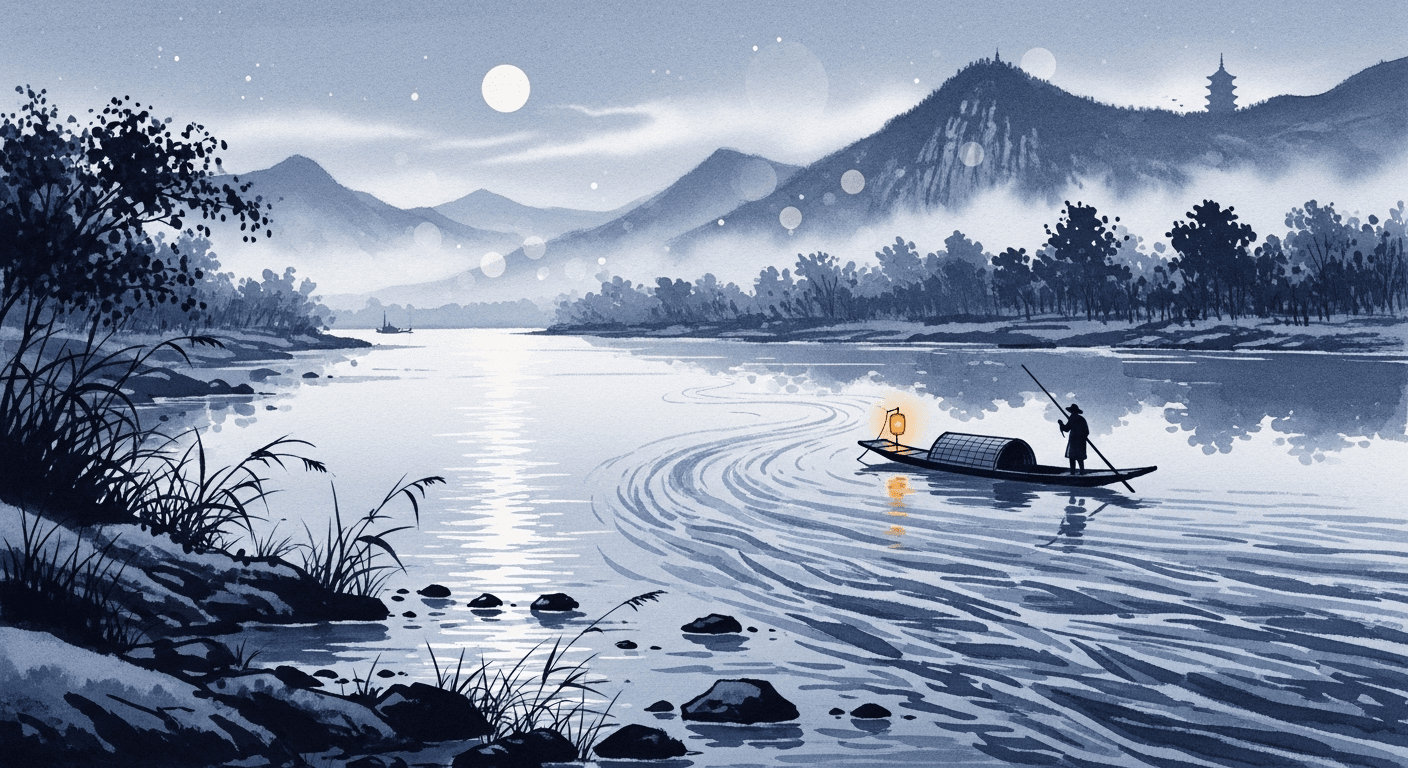
At the outset, Yang Shen’s image of the Yangtze sweeping east—its waves “washing away” fallen champions—offers a stark meditation on impermanence. History’s pageantry, he implies, dissolves into foam, as fame proves no match for time’s current. Popularly placed at the opening of Romance of the Three Kingdoms and traced to Yang Shen’s ci poem Linjiangxian (Ming, c. 16th century), the couplet compresses entire dynasties into a single watery gesture. The river, ever-moving, becomes history’s impartial editor: it preserves the landscape yet erases names. Thus the scene is not merely elegiac; it is diagnostic, urging humility before the ceaseless motion that outlives all triumphs. [...]
Created on: 8/30/2025

Under One Moon: Distance, Memory, and Longevity
The Mid-Autumn Festival ritualizes this insight: families eat mooncakes, lift cups, and admire the same luminous disc, making kinship visible across neighborhoods and borders. Chinese literary tradition echoes the gesture—Li Bai’s “Quiet Night Thoughts” (8th c.) links moonlight with homesickness—so Su Shi’s lines join an older chorus. Even beyond China, practices like Japan’s tsukimi suggest a broader human instinct: to gather around a sky-born emblem and feel less alone. In this way, the poem’s wish becomes cultural practice, and practice, in turn, sustains the wish. [...]
Created on: 8/30/2025

One Moon, Many Hearts Across Distance
At the poem’s heart is a frank concession to change: “People have grief and joy, partings and reunions; the moon has phases of dimness and fullness—such things are hard to perfect.” By paralleling human fortunes with the moon’s cycles, Su Shi reframes instability as a natural rhythm rather than a personal failure. This acceptance, steeped in yin–yang sensibility, clears a path from lament to blessing. Because fullness cannot be permanent, the poet offers what can endure: the capacity to look up together. The wish for longevity thereby becomes a wish for recurring moments of shared light. [...]
Created on: 8/30/2025

One Moon, Shared Across a Thousand Miles
Consequently, the wish for longevity is not raw desire for endless years but a moral horizon: enough time to meet again, to celebrate often, and to keep rituals alive. In Confucian terms, it sustains kinship and friendship across appointments and borders; in the ci lyric tradition, it invites communal singing that braids private feeling with public festivity. The blessing does not erase distance; rather, it extends the thread of togetherness so that separation becomes a pause in an ongoing conversation. [...]
Created on: 8/30/2025

Under One Moon, Love Outlasts Distance
Moreover, Su Shi draws on a deep reservoir of symbolism. In classical Chinese, chanjian (婵娟) is an elegant epithet for the moon, often evoking graceful beauty rather than a literal person. Earlier poets turned moonlight into homesickness and kinship; Li Bai’s Quiet Night Thought (8th century) famously transforms a beam on the floor into an ache for home. Alongside poetry, legend reinforced this bridge: the Huainanzi (2nd century BCE) recounts the Chang’e myth, in which a woman ascends to the moon, linking human longing to a distant, shining dwelling. Su Shi’s lines resonate with these traditions, yet he refines them into a practical solace—we cannot share a table, but we can share a moon. [...]
Created on: 8/30/2025