
Authors
William Blake
William Blake (1757-1827) was an English poet, painter, and printmaker known for illuminated books such as Songs of Innocence and of Experience and The Marriage of Heaven and Hell. His work combined visionary imagery and social commentary, and the quote emphasizes creativity and artistic audacity.
Quotes: 16
Quotes by William Blake

Cleansing Perception to Glimpse the Infinite
At first glance, William Blake’s line suggests that reality itself is not limited; rather, our way of seeing it is. In The Marriage of Heaven and Hell (1790–1793), Blake argues that the mind filters experience through ha...
Created on: 4/11/2026

Kindling Inner Sparks Into Lasting Meaning
Blake’s invitation to “trust the small sparks within you” begins with the simple act of noticing them. These sparks are the fleeting intuitions, half-formed ideas, and quiet longings that surface between the demands of d...
Created on: 12/11/2025

When Love Guides Work, Excellence Follows
Blake’s sentence compresses a large claim: the quality of an act rises with the quality of its love. In this view, love is not a mere feeling but a way of attending—giving full presence, patience, and respect to the task...
Created on: 11/16/2025

Create Systems or Be Ruled by Others
William Blake issues his challenge in Jerusalem: The Emanation of the Giant Albion (c. 1804–1820): “I must Create a System, or be enslaved by another Man’s.
Created on: 11/9/2025
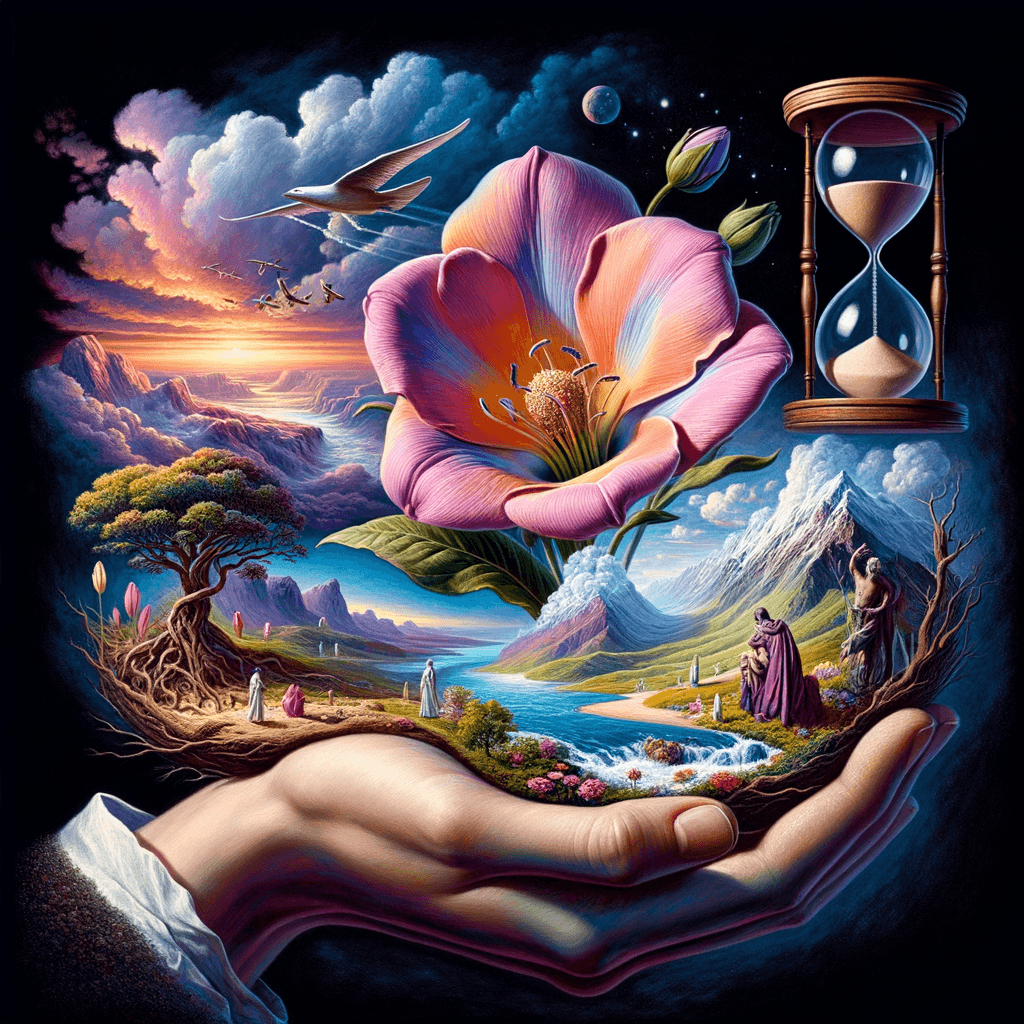
To See a World in a Grain of Sand - William Blake
This quote suggests that vast and profound insights can be found in the smallest and most ordinary things if one has the perception and imagination to see them. It encourages finding magic and significance in everyday ob...
Created on: 6/6/2024

To See a World in a Grain of Sand and a Heaven in a Wildflower - William Blake
This quote by William Blake suggests that there is immense beauty and wonder in the simplest things if one is open to seeing them. It emphasizes the power of perception and imagination in transforming the ordinary into t...
Created on: 5/31/2024
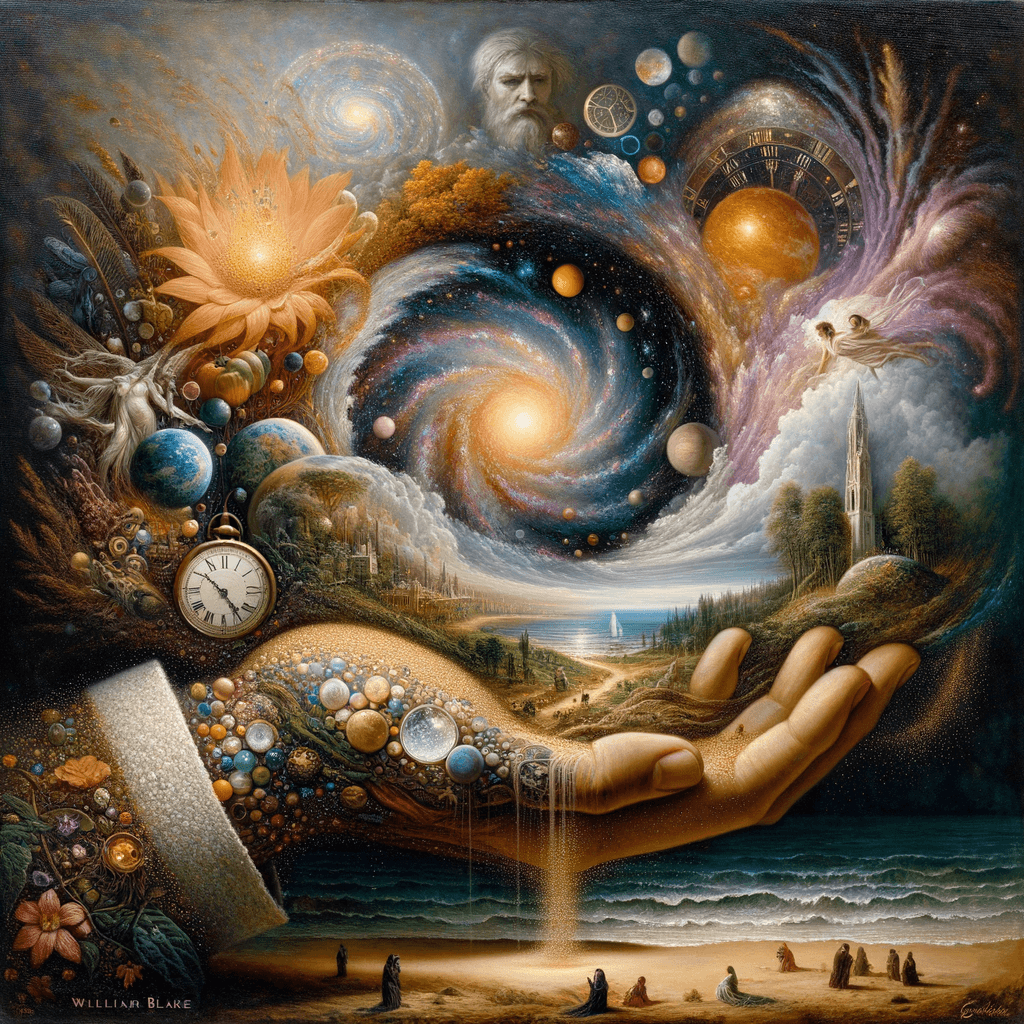
To See a World in a Grain of Sand - William Blake
This quote highlights the ability to perceive the vastness and depth of the world in the smallest of things. It suggests that one can find immense significance and beauty in the simplest elements of nature.
Created on: 5/30/2024