
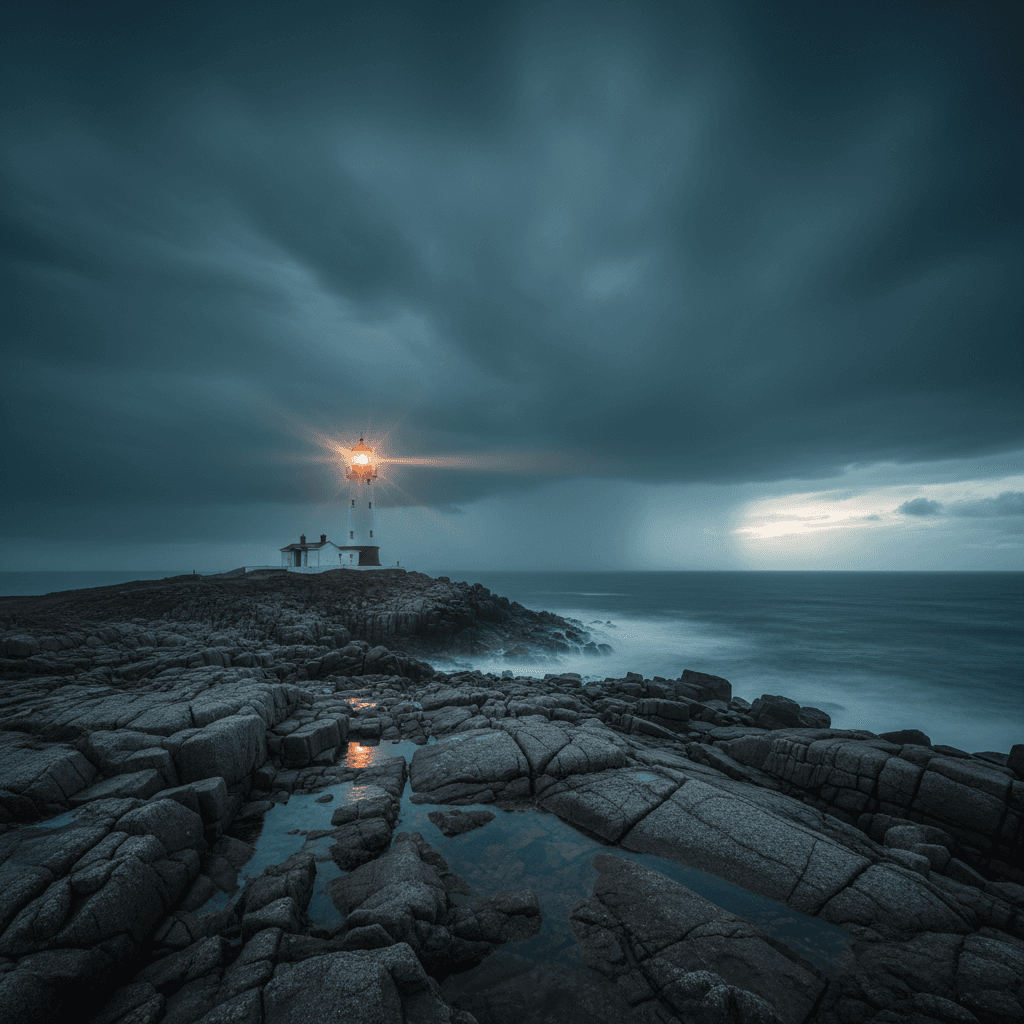
Courage is the steady light that outlasts the storm — Marcus Aurelius
—What lingers after this line?
A Stoic Image of Resilience
In calling courage a “steady light,” Marcus Aurelius frames bravery not as a sudden blaze of heroism but as something dependable and sustained. The storm stands for everything that batters human life—loss, fear, public chaos, private doubt—while the light suggests orientation and clarity when circumstances try to erase both. This metaphor fits the Stoic aim of remaining internally governed even when the world is not. Rather than promising that storms will pass quickly, the line emphasizes what can endure throughout them: a steadiness that keeps a person from being swept into panic or despair.
What Marcus Meant by Courage
For Aurelius, courage is not reckless defiance; it is the capacity to meet pain, uncertainty, and duty without surrendering one’s principles. In his *Meditations* (c. 170–180 CE), he repeatedly returns to the idea that external events are not fully ours to command, but our judgments and choices are—making moral firmness the real arena of strength. Seen this way, courage becomes a daily discipline. It’s the practiced ability to say, “This is difficult, but I will respond with integrity,” which naturally connects the “light” to an inner faculty that remains available even when the outside world turns harsh.
Why Steadiness Matters More Than Intensity
The phrase “outlasts the storm” shifts attention from momentary acts to endurance. Intense bravery can flare up in emergencies, but lasting courage shows itself in continuing to act well when the adrenaline is gone and the situation still isn’t resolved. That distinction matters because many of life’s storms—illness, grief, long conflict, sustained pressure—are not single events but prolonged weather. As a result, Aurelius’ image favors consistency over spectacle. Courage becomes closer to a lamp that keeps burning—maintained, protected, and refueled—than to lightning that briefly brightens the sky.
The Inner Citadel in a Violent World
Aurelius wrote as a Roman emperor facing war, plague, and political strain, yet he repeatedly treats tranquility as an internal achievement rather than a gift of circumstances. Later Stoic commentary often describes this as an “inner citadel,” a protected core of judgment and character that can remain intact even when events are chaotic. From that angle, the “steady light” is not optimism in the sense of denying danger; it is the refusal to let danger dictate one’s values. The storm may rage, but it cannot force the mind to abandon patience, justice, or self-command unless one consents.
Courage as Moral Clarity Under Pressure
Light doesn’t only comfort—it reveals. In practical terms, courage can be the capacity to keep seeing what is right when fear tries to narrow attention to self-preservation. That might look like telling the truth when silence is safer, making a fair decision when anger would be easier, or continuing to care for someone when exhaustion tempts withdrawal. Because storms distort perception, courage becomes a kind of moral vision: holding steady enough to distinguish what matters from what merely threatens. This connects the metaphor’s two halves—steadiness keeps the light from flickering, and the light keeps the person oriented through the storm.
Carrying the Light Into Daily Practice
The quote ultimately invites a manageable standard: not constant fearlessness, but reliable steadiness. Stoic practice aligns with this through small, repeatable acts—pausing before reacting, naming what is in one’s control, and choosing the next right action even when emotions surge. Over time, that repeated steadiness becomes what “outlasts” adversity. The storm’s duration is uncertain, but the commitment to respond with courage can be renewed moment by moment, turning Aurelius’ poetic image into a lived habit rather than a distant ideal.
One-minute reflection
What does this quote ask you to notice today?
Related Quotes
6 selectedThe art of life is more like the wrestler's art than the dancer's; stand ready and firm to meet sudden and unexpected onsets. — Marcus Aurelius
Marcus Aurelius
Marcus Aurelius contrasts two arts to clarify what living well demands. A dancer suggests elegance, rhythm, and practiced beauty; a wrestler, by contrast, suggests balance under pressure, resistance, and constant readine...
Read full interpretation →The mind adapts and converts to its own purposes the obstacle to our acting. — Marcus Aurelius
Marcus Aurelius
At its heart, Marcus Aurelius’s line expresses a central Stoic conviction: external events do not fully determine our lives; rather, our judgments about them shape what they become. In his Meditations (c.
Read full interpretation →Reject your sense of injury and the injury itself disappears. — Marcus Aurelius
Marcus Aurelius
At first glance, Marcus Aurelius’s line seems severe, yet its central claim is distinctly Stoic: much of suffering arises not from the event itself but from our judgment about it. In his Meditations (c.
Read full interpretation →A blazing fire makes flame and brightness out of everything that is thrown into it. — Marcus Aurelius
Marcus Aurelius
Marcus Aurelius compresses a central Stoic lesson into a vivid image: a strong fire does not merely endure what is cast into it, but transforms it into more flame and light. In that sense, adversity is not just something...
Read full interpretation →When jarred, unavoidably, by circumstance, revert at once to yourself, and don't lose the rhythm more than you can help. — Marcus Aurelius
Marcus Aurelius
Marcus Aurelius urges a swift inward recovery when life shakes us out of balance. In this short instruction, the disturbance itself is treated as inevitable, but the real test lies in how quickly we return to our center.
Read full interpretation →Whatever challenge you might find yourself in, has a solution. It is very much possible that it is not an obvious one. — Anonymous (skipped) → You have power over your mind – not outside events. Realise this, and you will find strength. — Marcus Aurelius
Marcus Aurelius
Taken together, these two quotations form a single philosophy of endurance: every challenge contains the possibility of a solution, even when that solution is difficult to see. The anonymous saying begins with hope, insi...
Read full interpretation →More From Author
More from Marcus Aurelius →Consistency is the sum that equals what we become. — Marcus Aurelius
Marcus Aurelius’ line frames becoming as a kind of moral mathematics: each repeated action adds to the total of a life. Rather than imagining identity as a single grand decision, the quote suggests that character is accu...
Read full interpretation →If anyone can refute me—show me I'm making a mistake or looking at things from the wrong perspective—I'll gladly change. — Marcus Aurelius
Marcus Aurelius begins from a position that appears modest but is actually deeply disciplined: he is willing to be corrected. Rather than treating disagreement as an insult, he frames it as an opportunity to see more cle...
Read full interpretation →The art of life is more like the wrestler's art than the dancer's; stand ready and firm to meet sudden and unexpected onsets. — Marcus Aurelius
Marcus Aurelius contrasts two arts to clarify what living well demands. A dancer suggests elegance, rhythm, and practiced beauty; a wrestler, by contrast, suggests balance under pressure, resistance, and constant readine...
Read full interpretation →How much time he gains who does not look to see what his neighbour says or does or thinks, but only at what he does himself, to make it just and holy. — Marcus Aurelius
Marcus Aurelius argues that a great deal of life is wasted in watching other people—what they say, what they do, and even what they might be thinking. Instead, he recommends a disciplined inward turn: focus on your own c...
Read full interpretation →