
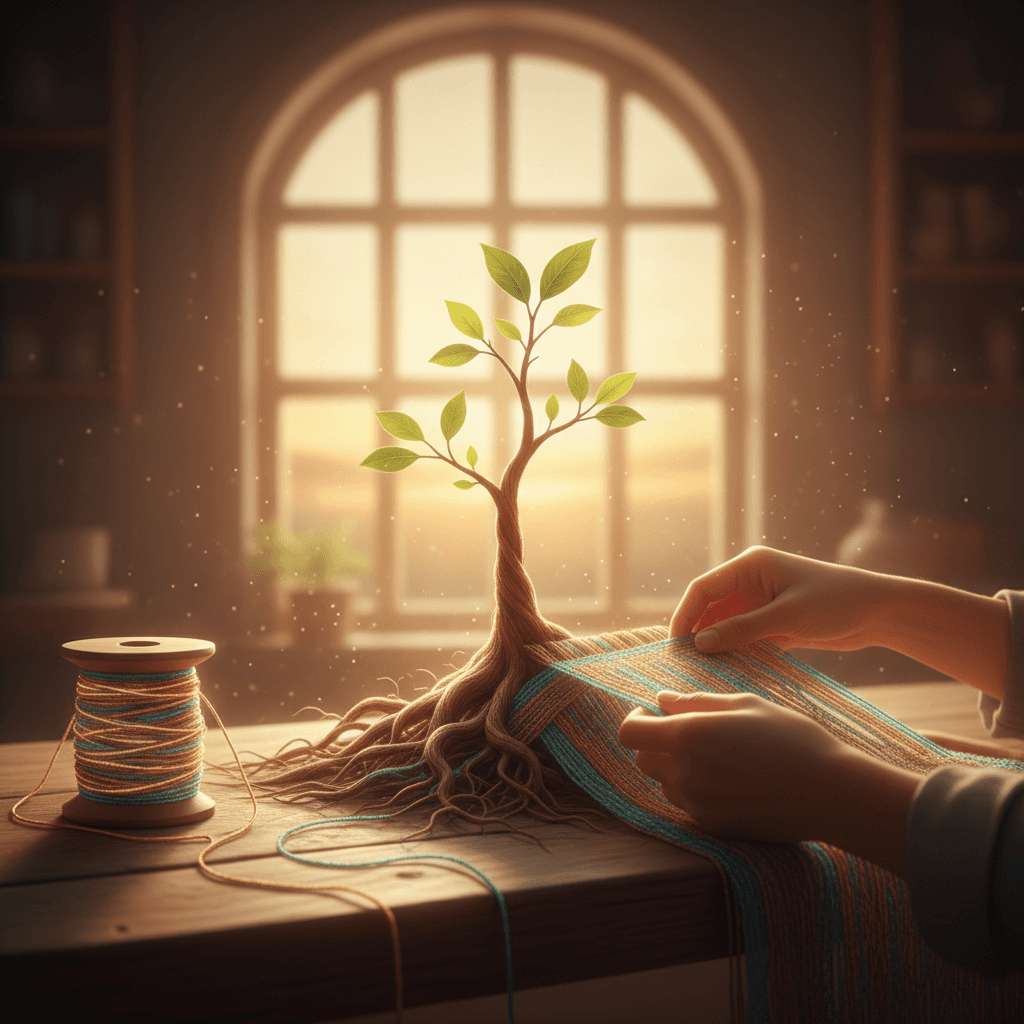
Craft hope into habit, and resilience will follow as habit's child. — Audre Lorde
—What lingers after this line?
Hope as a Deliberate Practice
Audre Lorde’s line reframes hope from a fleeting feeling into something you can craft—worked at with intention, repetition, and care. By calling it a habit, she implies that hope can be trained even when circumstances are harsh, much like strengthening a muscle that initially resists the weight. Rather than waiting for optimism to arrive, the quote urges an active stance: shape small, reliable routines that keep possibility within reach. This opening move matters because it relocates power back to the individual and the community. If hope is craft, then it is not naïve denial; it is a disciplined refusal to let despair be the only daily ritual.
Why Habits Outlast Moods
Once hope is understood as practice, the logic of habit explains why it can endure. Moods surge and collapse, but habits remain available on the hardest days, when motivation is scarce. A person who writes one honest page each morning, texts a friend after work, or takes a brief walk to reset their mind is not merely “being positive”—they are rehearsing continuity. From there, Lorde’s insight becomes practical: habits create structure, and structure creates breathing room. Even a small, repeatable act can become a sturdy hinge that keeps life opening rather than shutting.
Resilience as Hope’s Next Generation
The phrase “habit’s child” suggests resilience is not conjured in a crisis; it is born from what was practiced beforehand. When hope becomes routine, resilience emerges almost as a byproduct—an earned capacity to adapt, to recover, and to keep choosing oneself and one’s values. In this sense, resilience isn’t a personality trait reserved for a few; it’s an outcome of repeated, grounded actions. This also changes how setbacks are interpreted. Instead of seeing difficulty as proof that hope was foolish, the habitual hopeful treats difficulty as the very context in which resilience is trained and revealed.
The Political and Communal Edge of Hope
Lorde’s work consistently ties inner life to collective survival, so her “habit” is not only private self-help; it is a method of endurance against forces that aim to exhaust people. In essays like “The Transformation of Silence into Language and Action” (1977), she argues that speaking, creating, and connecting are practices that turn fear into agency. Hope, then, can be a communal discipline: shared meals, mutual aid, study circles, or art-making that insists on a future. With that shift, resilience becomes more than individual toughness. It becomes the community’s learned capacity to respond, regroup, and continue—together.
Everyday Craft: Small Rituals That Build Capacity
Carrying the metaphor of craft forward, hope can be stitched into daily life through modest, repeatable rituals. Someone might keep a “proof list” of moments they handled hard things, or end each day naming one action they can take tomorrow. Another might schedule a weekly check-in with a trusted person, not to solve everything, but to remain tethered to possibility. Over time, these acts accumulate into a quiet confidence: not that nothing will go wrong, but that you have practices for meeting what comes. That is resilience taking shape in the background, gradually and reliably.
From Survival to Continuance
Finally, Lorde’s sentence implies a trajectory: craft leads to habit, habit leads to resilience, and resilience makes continuance possible. The point is not to romanticize struggle, but to insist that life can be built even when it is under pressure. Hope becomes the daily vote for one’s future, and resilience becomes the living evidence that those votes add up. In the end, the quote offers a compact ethic: do not outsource hope to luck or inspiration. Make it ordinary, make it repeatable, and watch what it raises.
One-minute reflection
What does this quote ask you to notice today?
Related Quotes
6 selectedDon't fight the challenges. Just find a new way to stand. — Germany Kent
Germany Kent
Germany Kent’s words begin with a quiet reversal of instinct: instead of treating every challenge as an enemy to defeat, she invites us to reconsider our posture toward difficulty. The emphasis is not on surrender, but o...
Read full interpretation →Optimist: someone who figures that taking a step backward after taking a step forward is not a disaster, it's more like a cha-cha. — Robert Brault
Robert Brault
Robert Brault’s line begins with a witty redefinition: an optimist is not someone who denies backward motion, but someone who interprets it differently. Instead of treating a setback as proof of failure, the optimist see...
Read full interpretation →A mind grows by staying with difficulty long enough for the experience to change it. — Mary Catherine Bateson
Mary Catherine Bateson
Mary Catherine Bateson’s observation begins with a quiet but demanding truth: the mind does not grow merely by encountering difficulty, but by remaining with it. Challenge becomes transformative only when we resist the u...
Read full interpretation →When you are friends with your storm, you dance, instead of getting blown away. — Michael Bassey Johnson
Michael Bassey Johnson
Michael Bassey Johnson’s line begins with a striking reversal: the storm is not merely an enemy to survive, but a force one can learn to understand. In this sense, the storm may represent grief, fear, conflict, uncertain...
Read full interpretation →Just because your light flickers does not mean it is about to go out. — Yohancé Salimu
Yohancé Salimu
At first glance, Yohancé Salimu’s line separates appearance from reality. A flicker suggests instability, fatigue, or interruption, yet it does not automatically signal extinction.
Read full interpretation →When something in your life dies—whether it be a job, a hobby, or a dream—I encourage you not to focus on what could have been but instead to look for the new life and the new opportunities that result. — Ryan Hall
Ryan Hall
Ryan Hall frames loss as a kind of death, and that metaphor immediately broadens the quote beyond grief in the literal sense. A job can end, a cherished hobby can fade, and a long-held dream can collapse; yet in each cas...
Read full interpretation →More From Author
More from Audre Lorde →We are powerful because we have survived, and that is what it is all about—survival and growth. — Audre Lorde
At its core, Audre Lorde’s statement redefines power not as domination, status, or control, but as the hard-won strength that comes from continuing despite adversity. To survive is already to have resisted erasure, and L...
Read full interpretation →Community does not mean that we all agree on everything. It means that we respect each other enough to stay in the room. — Audre Lorde
At its core, Audre Lorde’s statement challenges the comforting but shallow idea that community is built on sameness. Instead, she argues that real belonging depends on the willingness to remain present with one another e...
Read full interpretation →Caring for myself is not self-indulgence, it is self-preservation. — Audre Lorde
Audre Lorde’s line begins by dismantling a familiar accusation: that tending to oneself is frivolous or vain. By rejecting “self-indulgence,” she separates care from consumption, suggesting that rest, nourishment, and em...
Read full interpretation →Caring for myself is not self-indulgence, it is self-preservation. — Audre Lorde
Audre Lorde’s statement pivots on a crucial reframing: what many dismiss as “self-indulgence” can be, in reality, the basic work of staying alive and whole. By pairing “caring for myself” with “self-preservation,” she ch...
Read full interpretation →