
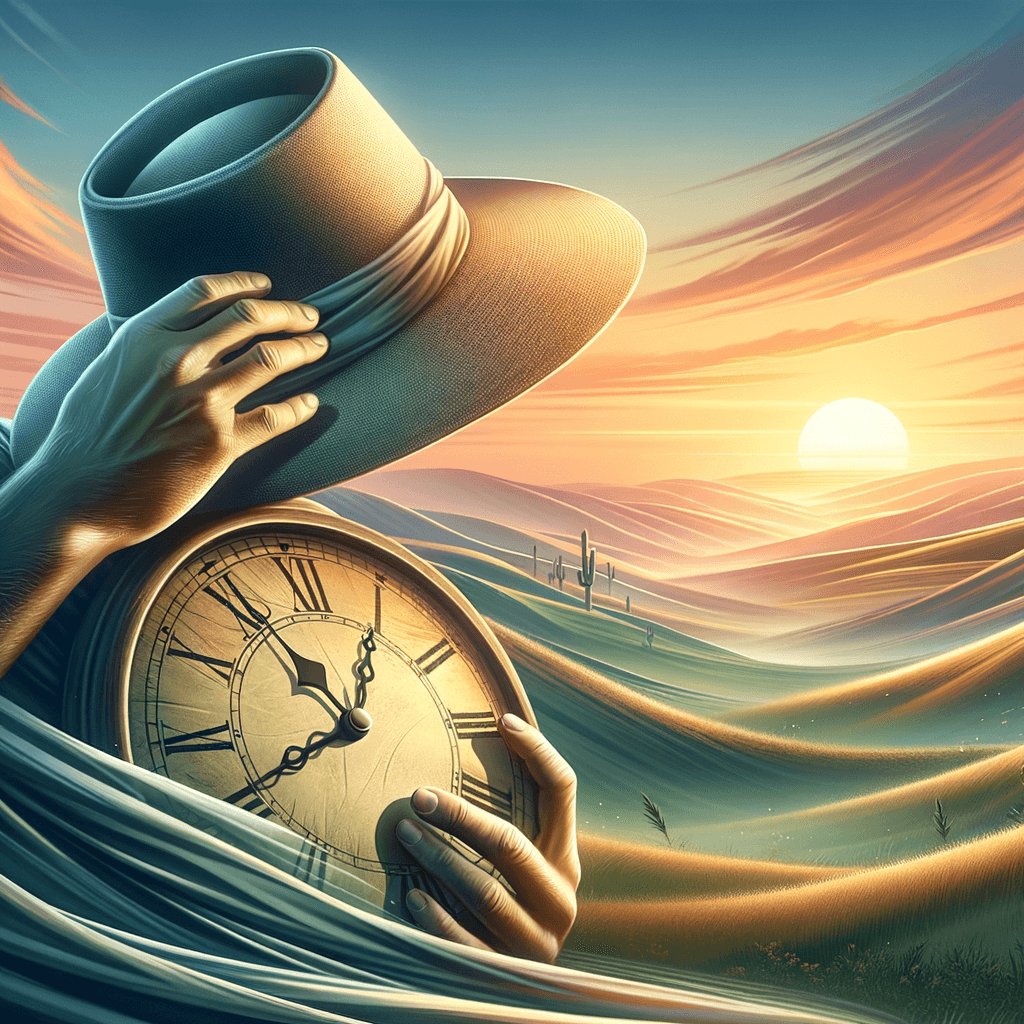
Hang on to your hat. Hang on to your hopes. And wind the clock, for tomorrow is another day. — E.B. White
—What lingers after this line?
Resilience and Perseverance
This quote encourages readers to stay resilient through life's trials. It suggests holding onto your hat as a metaphor for holding steady amid challenges, and maintaining hope, as a guiding force through uncertain times.
Hope in the Future
E.B. White encourages optimism by reminding us that tomorrow offers new opportunities for growth, regardless of today's difficulties. Winding the clock symbolizes preparing for new beginnings and looking forward to a fresh start.
Metaphor of Time
The mention of 'winding the clock' signifies the passage of time and the cycles of life. It is a reminder that time moves forward, and with it comes the comforting idea of renewal and second chances.
Adaptability in Turbulent Times
‘Hang on to your hat’ also implies bracing yourself during unpredictable situations. It speaks of the need for adaptability and persistence when navigating life's ever-changing circumstances.
Philosophical Reflection
White's quote reflects a stoic and optimistic view of life. By advocating hope and resilience, even in moments of uncertainty, he encourages an active participation in the ongoing flow of life and time.
Literary Context
E.B. White, the author of classics such as 'Charlotte's Web' and 'Stuart Little,' often imbued his work with messages of hope, perseverance, and the passing of time, reflecting the timeless themes in his writing.
One-minute reflection
What does this quote ask you to notice today?
Related Quotes
6 selectedJust because your light flickers does not mean it is about to go out. — Yohancé Salimu
Yohancé Salimu
At first glance, Yohancé Salimu’s line separates appearance from reality. A flicker suggests instability, fatigue, or interruption, yet it does not automatically signal extinction.
Read full interpretation →When something in your life dies—whether it be a job, a hobby, or a dream—I encourage you not to focus on what could have been but instead to look for the new life and the new opportunities that result. — Ryan Hall
Ryan Hall
Ryan Hall frames loss as a kind of death, and that metaphor immediately broadens the quote beyond grief in the literal sense. A job can end, a cherished hobby can fade, and a long-held dream can collapse; yet in each cas...
Read full interpretation →Today's tears water tomorrow's gardens. — Matshona Dhliwayo
Matshona Dhliwayo
At first glance, Matshona Dhliwayo’s line transforms grief into something unexpectedly fertile. Tears, usually seen as signs of pain or loss, become water for a future garden, suggesting that suffering is not merely endu...
Read full interpretation →Dreams are made of sturdy stuff. — William Carlos Williams
William Carlos Williams
At first glance, William Carlos Williams’s line reverses a familiar assumption: dreams are often treated as airy, fleeting, and insubstantial, yet he insists they are made of “sturdy stuff.” In that compact phrase, he gi...
Read full interpretation →Confidence is not absence of fear; it is the quiet recognition that you have survived every hard day so far. — Michelle Obama
Michelle Obama
At first glance, confidence is often mistaken for boldness without hesitation, yet Michelle Obama’s words gently overturn that myth. She frames confidence not as the absence of fear, but as a steadier inner knowledge: yo...
Read full interpretation →The art of life is more like the wrestler's art than the dancer's; stand ready and firm to meet sudden and unexpected onsets. — Marcus Aurelius
Marcus Aurelius
Marcus Aurelius contrasts two arts to clarify what living well demands. A dancer suggests elegance, rhythm, and practiced beauty; a wrestler, by contrast, suggests balance under pressure, resistance, and constant readine...
Read full interpretation →More From Author
More from E.B. White →Always be on the lookout for the presence of wonder. — E. B. White
E. B.
Read full interpretation →I get up every morning determined to both change the world and have one hell of a good time. Sometimes this makes planning the day difficult. — E.B. White
E.B. White’s line captures a familiar tension that begins the moment we wake: the urge to do something meaningful with our lives while still relishing the pleasures of the day.
Read full interpretation →