
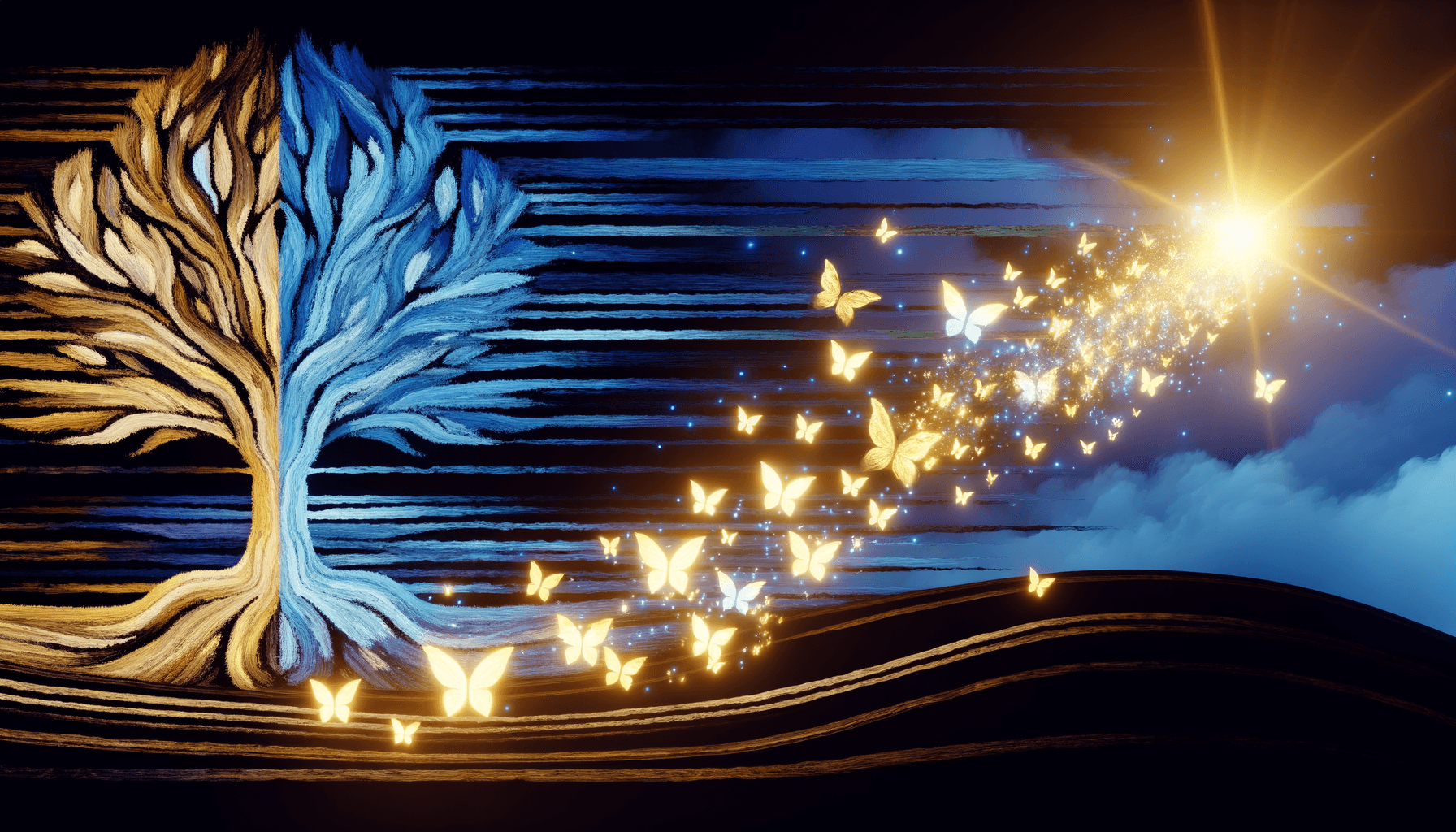
The deeper that sorrow carves into your being, the more joy you can contain. — Kahlil Gibran
—What lingers after this line?
Interconnectedness of Emotions
The quote suggests that sorrow and joy are intrinsically linked; experiencing deep sorrow expands your capacity for future happiness.
Growth Through Adversity
It implies that emotional pain can deepen a person, enabling greater understanding and appreciation of joyful moments.
Resilience and Healing
The message encourages resilience by showing that hardship is not just destructive but can also lead to greater fulfillment.
Philosophical Depth
Gibran uses poetic imagery to communicate the profound idea that suffering carves space within us for positive emotions.
Encouragement and Hope
This perspective offers hope to those in sorrow, reminding them that pain may eventually give way to profound joy.
Recommended Reading
As an Amazon Associate, we earn from qualifying purchases.
One-minute reflection
Where does this idea show up in your life right now?
Related Quotes
6 selectedI am not a mess but a deeply feeling person in a messy world. — Glennon Doyle
Glennon Doyle
Glennon Doyle’s line begins by rejecting a label that often gets stuck to people who feel intensely: “mess.” Rather than accepting that judgment, she reframes it as a misreading of depth—suggesting that what looks chaoti...
Read full interpretation →Your heart is an ocean, capable of holding countless stars.
Unknown
This metaphor suggests that the heart has immense emotional depth, akin to the vastness of an ocean. It implies that a person is capable of experiencing and containing a wide range of emotions and feelings.
Read full interpretation →Live so that your losses teach you how to love without measure. — Kahlil Gibran
Kahlil Gibran
Kahlil Gibran’s line suggests that loss is not merely something to endure but a demanding teacher that reshapes the heart. Instead of treating grief as a detour from life, he invites us to live in such a way that every w...
Read full interpretation →Secret of joy is the mastery of pain. — Khalil Gibran
Kahlil Gibran
Khalil Gibran’s insight points to a timeless truth: joy is often born from our ability to endure and rise above suffering. Rather than existing as separate experiences, pain and happiness are deeply connected.
Read full interpretation →Translate your pain into color and let it teach the world how to feel. — Kahlil Gibran
Kahlil Gibran
Kahlil Gibran, a poet who was also a painter, urges us to convert what wounds us into a visual language that others can feel. In The Prophet (1923), he often translates interior storms into elemental images, and here he...
Read full interpretation →Let your grief be the clay from which unexpected strength is formed. — Khalil Gibran
Kahlil Gibran
Gibran’s image invites a subtle reframe: sorrow is not a dead weight but workable clay. In other words, pain can be held, turned, and shaped with care.
Read full interpretation →More From Author
More from Kahlil Gibran →Your home is your larger body. It grows in the sun and sleeps in the stillness of the night. — Kahlil Gibran
At first glance, Gibran transforms the idea of home from a mere structure into something intimate and organic: “your larger body.” In this image, a dwelling is not separate from the person who inhabits it, but an outward...
Read full interpretation →March on. Do not tarry. To go forward is to move toward perfection. — Kahlil Gibran
Gibran’s opening imperative—“March on. Do not tarry.”—sets a tone of disciplined urgency.
Read full interpretation →There must be spaces in your togetherness, and let the winds of the heavens dance between you. — Kahlil Gibran
Gibran’s line opens with a gentle paradox: he speaks to people who are already “together,” yet insists that togetherness is healthiest when it includes room. Rather than portraying love as fusion, he frames it as a relat...
Read full interpretation →Our anxiety does not come from thinking about the future, but from wanting to control it. — Kahlil Gibran
Kahlil Gibran reframes anxiety as something more specific than mere anticipation. The future itself—uncertain, unfolding, and not yet real—doesn’t automatically distress us; rather, distress appears when we demand certai...
Read full interpretation →