
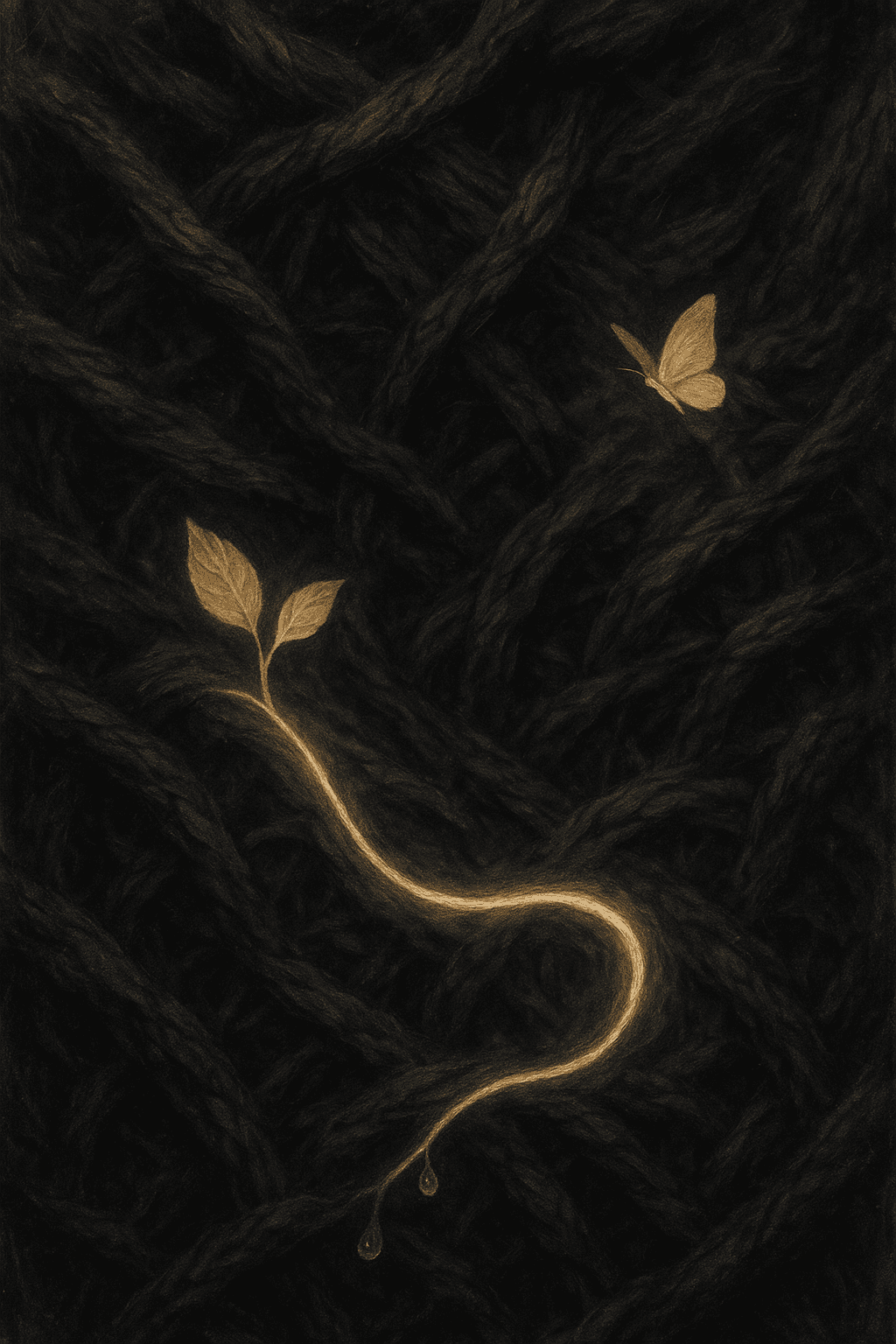
The silk thread of hope is woven into every fiber of adversity. — Indian Proverb
—What lingers after this line?
Hope and Adversity: An Intrinsic Bond
The Indian proverb likens hope to a silk thread running through the fabric of difficulty, emphasizing their inseparable connection. Even when life’s challenges seem overwhelming, a subtle resilience—hope—remains present. This poetic imagery suggests that, far from being absent in adversity, hope is often most visible in the very midst of our struggles, subtly influencing our capacity to endure.
Cultural Perspectives on Endurance
Moving beyond metaphor, many cultures have recognized the power of hope to sustain individuals in times of hardship. In Indian epics like the Ramayana, characters persist in the face of insurmountable odds, drawing strength from hope. Similarly, the concept of 'sisu' in Finnish culture or 'ganbaru' in Japan highlights the universal belief that perseverance is bolstered by an inner optimism, reflecting the proverb’s core message.
Silk as a Symbol of Strength and Fragility
The choice of silk is deliberate—silk is both delicate and incredibly strong, a paradox frequently noted in textile lore. Like hope, silk’s understated strength can withstand great tension, yet it retains grace and flexibility. This duality reveals that hope, while seeming fragile during adversity, actually possesses a surprising resilience that can sustain the spirit through life’s toughest times.
Historical Examples of Hope in Hardship
History offers many illustrations of hope as a lifeline during dark periods. Viktor Frankl, in his memoir 'Man’s Search for Meaning' (1946), recounted how prisoners in concentration camps found hope in small gestures and dreams, ultimately helping many survive. Such real-world cases mirror the proverb's image of a single thread of hope woven through even the bleakest circumstances.
Adversity as the Loom for Growth
As we reflect on the proverb, it becomes clear that adversity is not just a backdrop for hope but the very loom that strengthens and reveals it. Trials give context to hope, making its presence more profound. By understanding adversity as an opportunity for hope to take root and flourish, individuals can approach struggles with a renewed sense of purpose, weaving resilience into the tapestry of their lives.
One-minute reflection
What feeling does this quote bring up for you?
Related Quotes
6 selectedA mind grows by staying with difficulty long enough for the experience to change it. — Mary Catherine Bateson
Mary Catherine Bateson
Mary Catherine Bateson’s observation begins with a quiet but demanding truth: the mind does not grow merely by encountering difficulty, but by remaining with it. Challenge becomes transformative only when we resist the u...
Read full interpretation →When you are friends with your storm, you dance, instead of getting blown away. — Michael Bassey Johnson
Michael Bassey Johnson
Michael Bassey Johnson’s line begins with a striking reversal: the storm is not merely an enemy to survive, but a force one can learn to understand. In this sense, the storm may represent grief, fear, conflict, uncertain...
Read full interpretation →Just because your light flickers does not mean it is about to go out. — Yohancé Salimu
Yohancé Salimu
At first glance, Yohancé Salimu’s line separates appearance from reality. A flicker suggests instability, fatigue, or interruption, yet it does not automatically signal extinction.
Read full interpretation →When something in your life dies—whether it be a job, a hobby, or a dream—I encourage you not to focus on what could have been but instead to look for the new life and the new opportunities that result. — Ryan Hall
Ryan Hall
Ryan Hall frames loss as a kind of death, and that metaphor immediately broadens the quote beyond grief in the literal sense. A job can end, a cherished hobby can fade, and a long-held dream can collapse; yet in each cas...
Read full interpretation →Today's tears water tomorrow's gardens. — Matshona Dhliwayo
Matshona Dhliwayo
At first glance, Matshona Dhliwayo’s line transforms grief into something unexpectedly fertile. Tears, usually seen as signs of pain or loss, become water for a future garden, suggesting that suffering is not merely endu...
Read full interpretation →Dreams are made of sturdy stuff. — William Carlos Williams
William Carlos Williams
At first glance, William Carlos Williams’s line reverses a familiar assumption: dreams are often treated as airy, fleeting, and insubstantial, yet he insists they are made of “sturdy stuff.” In that compact phrase, he gi...
Read full interpretation →More From Author
More from Indian Proverb →The person who has many desires is poor; the person who is content is rich. — Indian Proverb
The proverb begins by redefining poverty and wealth as inner conditions rather than bank balances. Someone with “many desires” is described as poor because longing creates a constant sense of lack, even when possessions...
Read full interpretation →The lotus does not hesitate to bloom even in the muddiest waters. — Indian Proverb
The proverb highlights the ability to thrive and flourish despite challenging or unpleasant circumstances.
Read full interpretation →Mountains don’t rise without earthquakes. — Indian Proverb
This proverb suggests that significant progress or greatness often emerges from hardship or disruption.
Read full interpretation →By trying often, the monkey learns to jump from the tree. — Indian Proverb
This Indian proverb encapsulates a timeless truth: success is built on the foundation of repeated attempts and perseverance. Just as a monkey evolves its ability to leap gracefully from tree to tree, people accomplish sk...
Read full interpretation →