
Quote of the day
Turning Fear’s Footprint Into a Courageous Path
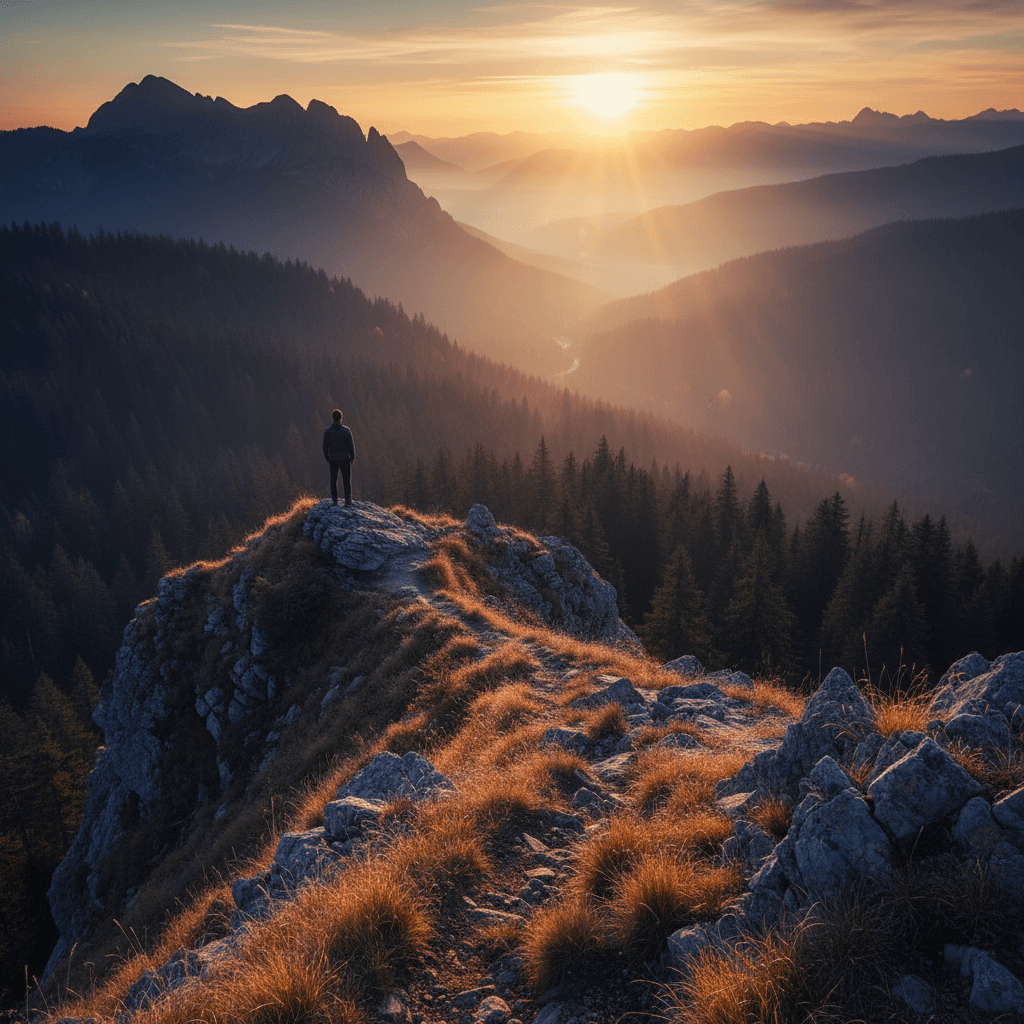
Stand where your fear used to stand; call that place courage. — Carl Jung
— Carl Jung
Interpretation
Read full interpretation →At the outset, Jung’s line invites a spatial metaphor: fear once occupied a place in you, and courage is the act of standing precisely there. The point is not to banish fear but to re-inhabit the ground it held, converti...
Read full interpretation →
Reclaiming Fear’s Ground
At the outset, Jung’s line invites a spatial metaphor: fear once occupied a place in you, and courage is the act of standing precisely there. The point is not to banish fear but to re-inhabit the ground it held, converting avoidance into presence. Courage thus becomes a stance, not a feeling; it is the posture you adopt while fear still murmurs at the edges. By naming that place “courage,” you reframe experience—an act Jung saw as psychologically potent because naming reshapes meaning. The moment you choose to remain where you once retreated, the narrative flips from threat to growth. In this way, courage is less about charging forward and more about refusing to give ground to what once dictated your movements.
Shadow Work and Individuation
Building on this, Jung’s notion of the shadow—those disowned aspects of the self—explains why fear marks vital territory. In Archetypes and the Collective Unconscious (CW 9i), he suggests that integration requires contact with what we avoid; fear becomes a compass pointing toward unlived life. To stand there is to begin individuation, the lifelong process of becoming whole. Moreover, Jung’s essays in Modern Man in Search of a Soul emphasize encounters with the unconscious as tests of courage. Standing one’s ground at that threshold stabilizes the psyche: the energy bound up in repression is released as vitality. Thus, the site of fear doubles as a workshop for character, where the self is forged rather than fragmented.
Alchemical Courage
Carrying the thought forward, Jung often used alchemy to symbolize inner transformation. In Psychology and Alchemy (CW 12), the black phase (nigredo) precedes illumination; darkness is not an error but the crucible. Fear signals the nigredo, a necessary descent where raw material is prepared for refinement. Consequently, standing in fear’s place mirrors the alchemist’s patience: you do not flee the heat; you endure it until form changes. The move from avoidance to presence is akin to transmuting base lead into gold—an ethical gold that shows up as steadier choices, clearer sight, and a self that can bear tension without collapsing.
Neuroscience of Facing What Frightens
In a complementary key, research on exposure and memory reconsolidation explains why staying put helps. Joseph LeDoux’s work on the amygdala (The Emotional Brain, 1996) shows that safe, repeated encounters with a trigger can dampen fear responses. Likewise, systematic desensitization (Wolpe, 1958) pairs graded exposure with relaxation, teaching the body a new script. Crucially, presence updates memory. When you remain where fear once ruled and nothing catastrophic happens, the brain rewrites predictions. Over time, the same place that cued alarm begins to cue mastery. Thus, biology corroborates Jung’s psychology: courage is a learned intimacy with what we once refused to meet.
Practices That Anchor Bravery
To make this tangible, design micro-bravery rituals. Name the fear—affect labeling can reduce distress (Lieberman et al., Science, 2007)—then take the smallest step that keeps you in contact with the edge. Breathe with longer exhales, plant your feet, and remain for sixty seconds longer than last time. Repeat until the ground feels newly yours. Consider a speaker with stage fright. Instead of hiding backstage, they step onto the empty stage each day, let fear rise and fall, and read one line aloud. Soon, the spotlights become less a threat than a practice mat. By inhabiting the site of fear, they accumulate proof of capability—evidence sturdy enough to call the place courage.
Courage With Discernment
Finally, courage is not recklessness; it is calibrated presence. Aristotle’s Nicomachean Ethics frames virtue as a mean between extremes—the brave person avoids both panic and bravado. Similarly, Jung’s approach presumes containment: boundaries, support, and timing that make the encounter transformative rather than overwhelming. Therefore, stand where fear stood, but prepare wisely: enlist allies, set durations, and titrate intensity. In doing so, you practice a mature bravery that neither denies fear nor defers to it. The reclaimed ground becomes a landmark in your inner map—once labeled danger, now marked, with earned authority, as courage.
One-minute reflection
What does this quote ask you to notice today?