
Measuring Worth Through Kindness, Not Applause
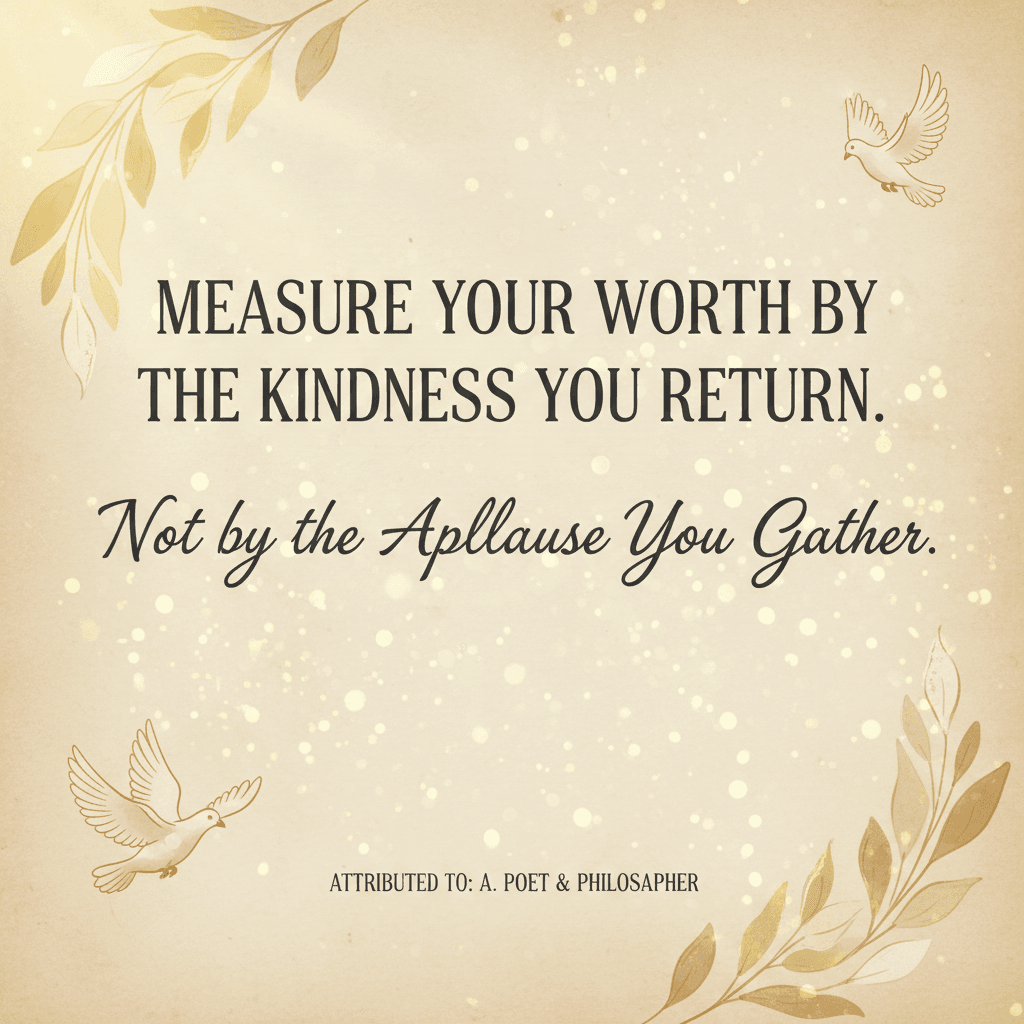
Measure your worth by the kindness you return, not by the applause you gather. — Kahlil Gibran
—What lingers after this line?
One-minute reflection
Where does this idea show up in your life right now?
Redefining the Measure of a Life
Kahlil Gibran’s insight invites a quiet but radical shift: from living for the world’s reaction to living for the good we do within it. Instead of tallying praise, followers, or public recognition, he suggests we look inward at the kindness we return—especially the kind we offer in response to what we have received. In this way, a life’s value is not a spectacle but a subtle current, often invisible to crowds yet deeply felt by individuals. As we move from external evaluation to inner integrity, the question changes from “How many people applauded me?” to “Whose burden became lighter because I was there?”
The Trap of Applause and External Validation
Applause, whether literal or metaphorical, can be intoxicating. Social media “likes,” professional awards, and public compliments function as modern claps from the audience. However, just as ephemeral as the echo in a theater, they fade quickly, pushing us to chase the next round of approval. Historical figures such as the Roman emperor Marcus Aurelius warned against this hunger in his *Meditations* (c. 180 AD), reminding himself that the opinions of others are unstable and fleeting. By tying our worth to such shifting signals, we become dependent performers rather than grounded human beings, always asking what will impress rather than what will genuinely help.
Kindness as an Active Return, Not Passive Goodness
Gibran’s phrase “the kindness you return” also highlights reciprocity: we are not isolated givers but participants in a network of care. Kindness here is not mere niceness or avoidance of harm; it is a conscious act of responding to the generosity, patience, or love we have received—from family, strangers, or even previous generations. Consider a teacher who was once mentored with patience and now invests the same attention in struggling students. No audience may witness this quiet cycle, yet it embodies a living gratitude. Thus, worth emerges not as a static trait but as a dynamic flow: what comes to us in care is multiplied as it passes through us to others.
Invisible Deeds and the Ethics of the Unseen
Many of the most transformative acts of kindness never reach a stage. A parent comforting a child at 3 a.m., a neighbor checking on an elderly resident, or a colleague privately encouraging someone after a failure—these moments rarely earn applause, yet they stitch together the fabric of a humane society. Religious and philosophical traditions alike honor such unseen goodness; the Gospel of Matthew (c. 80–90 CE), for instance, praises giving in secret and warns against doing good “to be seen by others.” By emphasizing returned kindness over recognition, Gibran aligns with this ethic of the unseen, suggesting that the truest parts of our character emerge precisely when no one is watching.
From Performance to Integrity in Daily Life
Translating this idea into daily living means shifting our internal questions. Before acting, we might ask: “Is this post, decision, or gesture aimed at applause, or does it genuinely return kindness to someone or something that has sustained me?” This could mean crediting a colleague instead of absorbing praise, listening deeply when it would be easier to impress with words, or choosing a less glamorous path that better serves others. Over time, such choices cultivate integrity: a consistency between what we value and how we behave. As our focus moves from audience approval to authentic contribution, we discover a quieter, more durable self-respect that no ovation can rival.
A Worth That Outlives the Echo of Clapping
Ultimately, applause dies with the crowd, but kindness tends to ripple beyond its moment. A single generous act can alter someone’s trajectory, influencing how they in turn treat others, forming a chain that outlasts both giver and receiver. Gibran’s counsel, then, is not an invitation to reject appreciation outright, but to place it in its proper place: as a by-product, not the purpose, of our actions. When we measure our worth by the kindness we return, we anchor our lives in something that can endure silence, obscurity, and time—leaving behind not just memories of our performance, but living legacies of compassion.