
Honest Strokes That Turn Ordinary Days Masterpieces
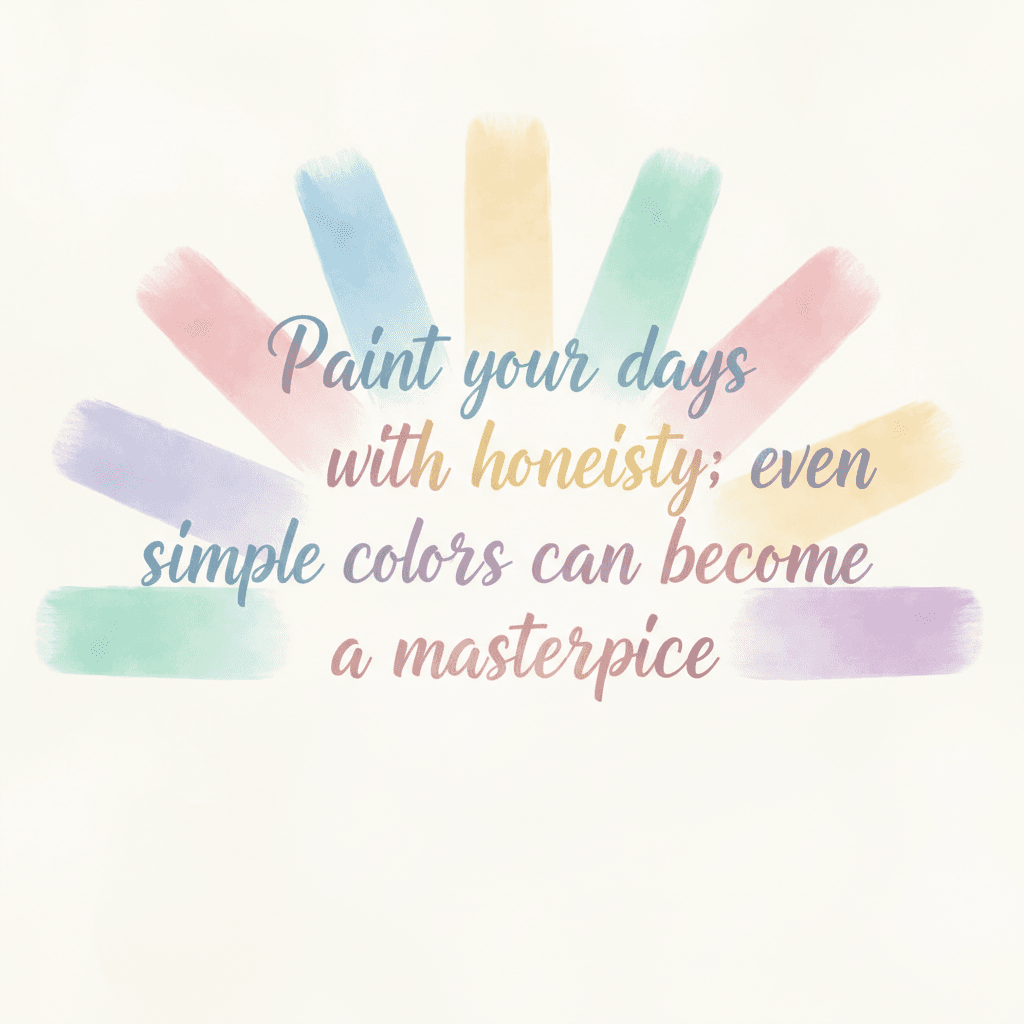
Paint your days with honesty; even simple colors can become a masterpiece. — Emily Dickinson
—What lingers after this line?
One-minute reflection
What feeling does this quote bring up for you?
The Canvas of Everyday Life
This quote presents each day as a blank canvas, awaiting the colors of our choices and attitudes. Rather than reserving creativity for artists alone, it suggests that everyone is constantly painting with actions, words, and intentions. In this metaphor, life is not a single grand mural completed at once, but a sequence of modest daily panels that together form a larger work. By recognizing our days as creative opportunities, we begin to see ordinary routines—conversations, tasks, and quiet moments—as brushstrokes that define the overall picture of who we become.
Honesty as the Essential Pigment
Moving deeper into the metaphor, honesty is presented as the primary color on our palette. It is less about blunt confession and more about living in alignment with what we know to be true—our values, feelings, and commitments. Just as pure pigments give clarity and depth to a painting, sincerity gives coherence and richness to a life. When we speak and act with integrity, our choices layer together without clashing, creating a consistent image instead of a confused collage. In this sense, honesty is not merely a moral duty but the key ingredient that brings harmony to the picture we are painting.
The Beauty of Simple Colors
The reference to “simple colors” underscores that brilliance does not require extravagance. A limited palette, skillfully used, can produce astonishing effects, as seen in Johannes Vermeer’s restrained yet luminous interiors (c. 1660s). Likewise, a simple life—marked by small, truthful gestures—can be profoundly beautiful. Everyday acts such as keeping promises, admitting mistakes, and expressing genuine gratitude may appear plain, yet, repeated over time, they form intricate patterns of trust and warmth. Thus, the quote counters the assumption that only dramatic experiences or grand achievements create beauty, suggesting that modest hues, applied consistently, are enough.
From Routine Strokes to Quiet Mastery
As the metaphor unfolds, the idea of a “masterpiece” shifts our focus from isolated actions to long-term accumulation. A painter’s finest work emerges not from a single flourish but from layer upon layer of deliberate strokes. Similarly, a meaningful life arises from repeated, honest choices that gradually refine our character. Moments of doubt, correction, and recommitment function like revisions on a canvas, improving composition over time. The quote invites us to trust this slow process, implying that we need not see immediate brilliance; instead, we can have faith that faithful daily effort will eventually reveal unexpected depth and harmony.
Cultivating Presence in the Act of Painting
Finally, the call to “paint your days” also speaks to mindful engagement. Rather than drifting through time, we are urged to be present with the brush in hand, aware that each decision leaves a mark. This awareness naturally encourages compassion toward ourselves and others, since every canvas is still in progress and every painter still learning. By combining honesty with attentiveness—checking in with our motives, adjusting our tones, softening harsh lines—we participate actively in shaping our own narrative. In this way, the quote becomes an invitation: to live deliberately, color by color, until the ordinary reveals its quiet, masterful design.