
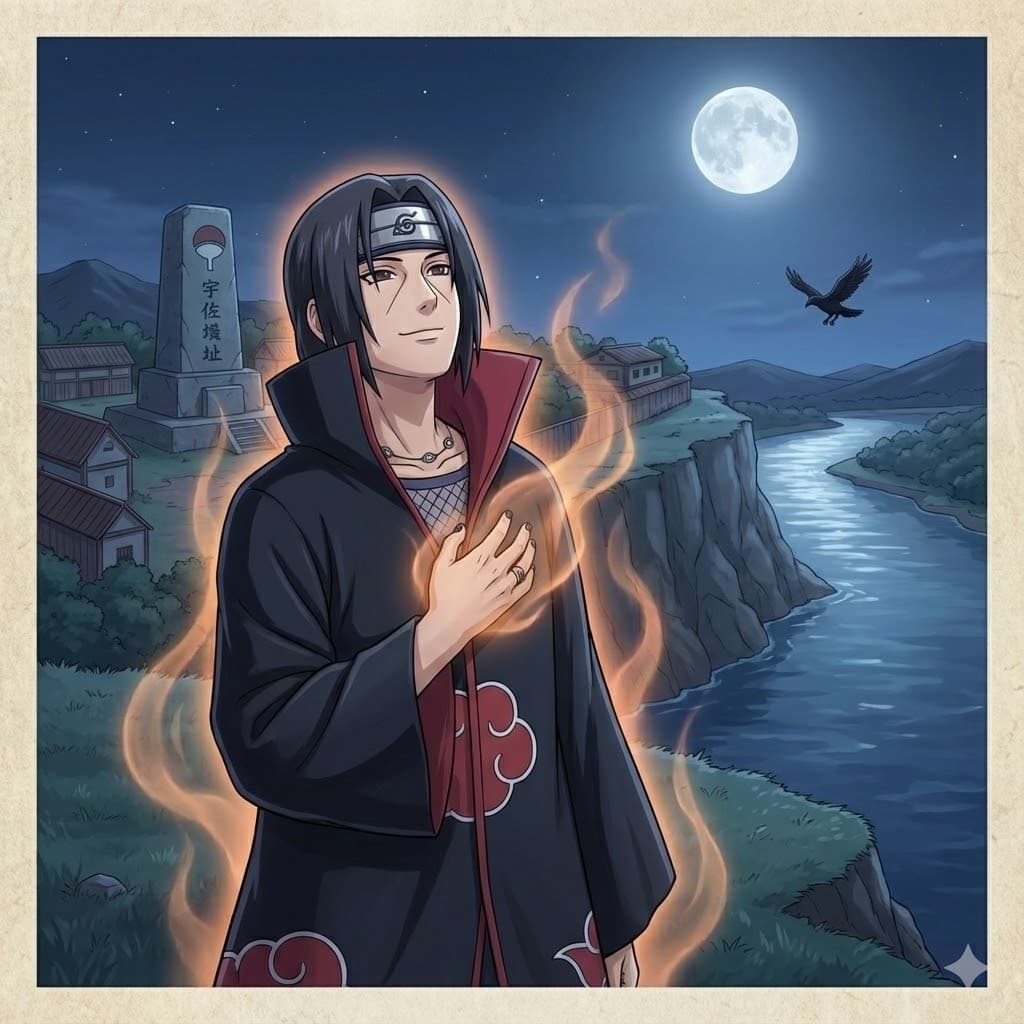
Those who forgive themselves are the strongest of all. — Itachi Uchiha, Naruto Series
—What lingers after this line?
Understanding Itachi’s Claim About Strength
Itachi Uchiha’s line, “Those who forgive themselves are the strongest of all,” reframes strength as an inner achievement rather than an external display. Instead of focusing on power, skill, or victory over others, he points to a more difficult opponent: one’s own guilt, regret, and self-hatred. Within the Naruto series, Itachi embodies this paradox—seen by others as a villain, he quietly carries unbearable burdens. Thus, his statement is not abstract philosophy; it comes from lived experience of someone who has made devastating choices and then must coexist with their consequences, day after day.
From Self-Judgment to Self-Acceptance
To appreciate his insight, it helps to trace the path from self-judgment to self-forgiveness. Many people find it easy to condemn themselves for past mistakes, replaying scenes in their minds like an endless punishment. However, Itachi suggests that remaining trapped in this cycle is a kind of weakness, because it prevents growth and action. By contrast, self-forgiveness does not erase responsibility; rather, it acknowledges fault, accepts the pain, and then chooses not to be defined solely by failure. This transition from harsh inner critic to compassionate witness is what turns remorse into wisdom instead of paralysis.
Naruto’s World as a Mirror of Inner Conflict
Within Naruto’s narrative, forgiveness is a recurring theme, and Itachi’s words resonate with several character arcs. For example, Naruto himself spends much of his journey wrestling with rejection and the fear that he is a burden to others. Characters like Gaara or Sasuke similarly struggle with self-loathing wrapped in anger. Against this backdrop, Itachi’s assertion acts as a quiet commentary on the series: the real battlefield is often internal. The shinobi world may glorify jutsu and combat, but the story repeatedly shows that the hardest victories are over one’s own despair, shame, and desire for revenge.
Psychological Strength in Facing One’s Own Past
Looking beyond fiction, modern psychology aligns with Itachi’s view that self-forgiveness is a demanding form of resilience. Studies on self-compassion, such as those discussed by Kristin Neff (*Self-Compassion*, 2011), indicate that people who can acknowledge their flaws without collapsing into self-hatred cope better with stress and recover more quickly from setbacks. This process is not self-indulgence; it requires confronting painful truths honestly rather than hiding from them. Consequently, the courage to look at one’s past actions, take responsibility, and then release perpetual self-punishment reflects a depth of strength that brute toughness alone cannot match.
Responsibility, Atonement, and Moving Forward
However, Itachi’s line does not excuse wrongdoing or erase the need to make amends. In the series, his life can be read as ongoing atonement: he accepts the consequences of his choices and continues to act for what he believes is the greater good. Self-forgiveness, in this view, is not a shortcut but the final step after accountability, remorse, and genuine effort to repair harm. Once this process unfolds, clinging to endless guilt becomes counterproductive, trapping both oneself and others in the past. By forgiving themselves, individuals free their energy for constructive action—protecting, helping, and creating rather than endlessly self-punishing.
Why Forgiving Yourself Is a Form of Courage
Ultimately, Itachi’s words highlight a subtle form of bravery: the willingness to see oneself clearly and still choose to live meaningfully. Many find it easier to fight external enemies than to sit alone with regret and accept their own imperfection. Yet those who do so gain a steadier kind of strength, one rooted in honesty and compassion. In this light, self-forgiveness is not forgetting, excusing, or minimizing one’s actions; it is deciding that a painful past will inform, but not imprison, the future. That decision—to live on with open eyes and an open heart—is precisely the strength Itachi honors.
Recommended Reading
As an Amazon Associate, we earn from qualifying purchases.
One-minute reflection
What's one small action this suggests?
Related Quotes
6 selectedWhen your heart grows, your power follows. — Choji Akimichi, Naruto Series
Choji Akimichi, Naruto Series
In the Naruto series, Choji Akimichi begins as an often-overlooked character, more associated with snacks than strength. Yet his line, “When your heart grows, your power follows,” quietly summarizes his entire journey.
Read full interpretation →Strength comes from enduring the pain you thought would break you. — Tsunade, Naruto Series
Tsunade, Naruto Series
Tsunade’s words suggest that strength is not something we discover in comfort, but something hammered into shape in our most painful moments. What we once believed would destroy us instead becomes the very experience tha...
Read full interpretation →Strength isn't loud. It's the quiet decision to keep going. — Hinata Hyuga, Naruto Series
Hinata Hyuga, Naruto Series
Hinata Hyuga’s words challenge a familiar misconception: that strength must be dramatic, visible, and loud. Instead, she points to an inward power that does not seek attention but reveals itself in persistence.
Read full interpretation →Silence the noise, strengthen the soul. — Marcus Aurelius
Marcus Aurelius
At first glance, Marcus Aurelius’s line condenses the heart of Stoic practice into a simple command: reduce distraction so that character can grow. In his Meditations (c.
Read full interpretation →Self-mastery is the hardest victory. — Aristotle
Aristotle
Aristotle’s remark turns victory inward, suggesting that the fiercest contest is not against rivals, armies, or public obstacles, but against one’s own impulses. At first glance, conquering external challenges may seem m...
Read full interpretation →He who reigns within himself and rules passions, desires, and fears is more than a king. — John Milton
John Milton
At its core, John Milton’s line redefines power. Rather than praising crowns, armies, or inherited rank, he elevates the person who can govern the unruly forces within: passions, desires, and fears.
Read full interpretation →More From Author
More from Itachi Uchiha, Naruto Series →