
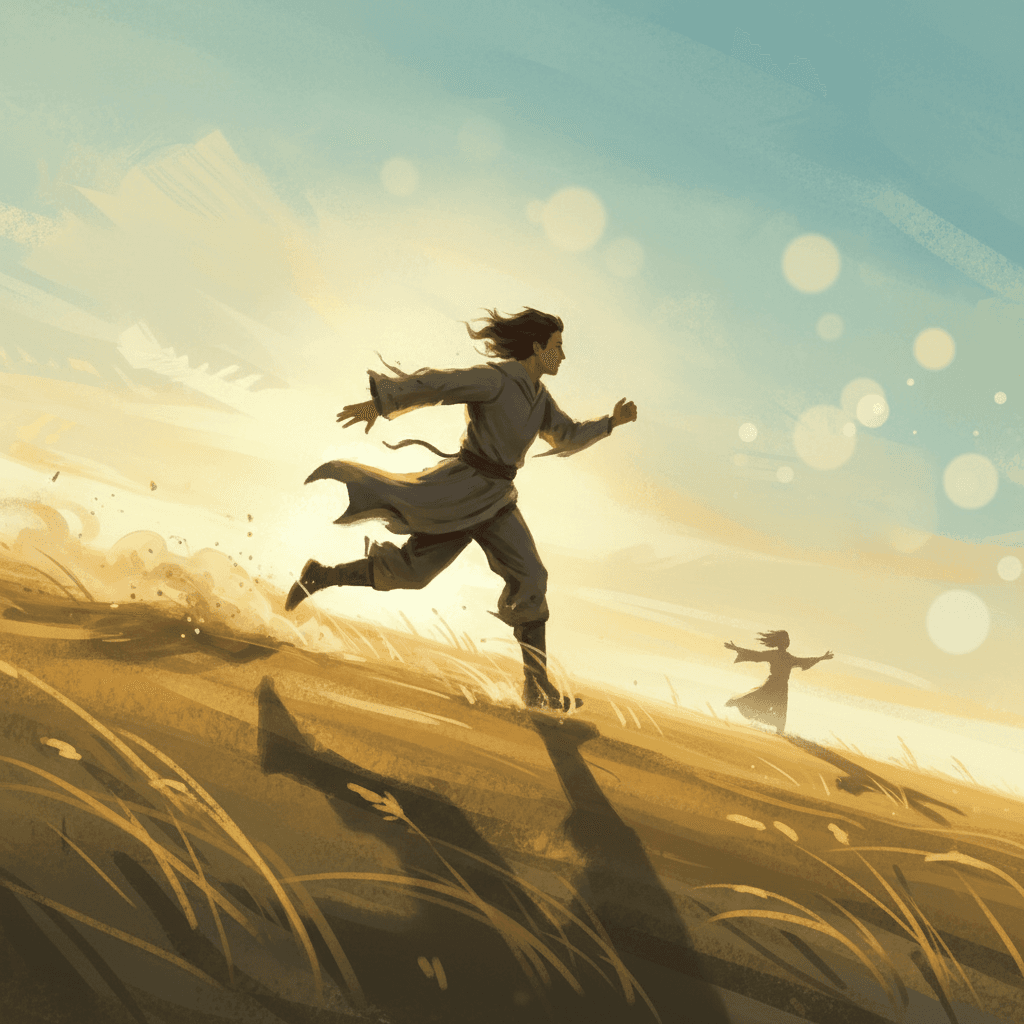
For you, a thousand times over. — Khaled Hosseini
—What lingers after this line?
A Vow That Defines a Relationship
Hosseini’s line, “For you, a thousand times over,” condenses an entire relationship into one unflinching promise. Uttered by Hassan in *The Kite Runner* (2003), it captures loyalty so deep that repetition—“a thousand times”—feels effortless, not exaggerated. Rather than a casual reassurance, the phrase functions as a defining creed: it tells us who he is, what the other person means, and how far he is willing to go, all in ten simple words. In this way, the sentence becomes a lens through which every later act of sacrifice and memory in the novel must be viewed.
Loyalty Amid Class and Power Divides
Moving deeper, the promise gains complexity when set against the social hierarchy of 1970s Kabul. Hassan, a Hazara servant boy, speaks these words to Amir, the privileged Pashtun child he serves. The vow therefore bridges a painful divide of ethnicity, class, and power. While Amir hesitates, hides, and fails to act, Hassan’s declaration stands firm, revealing an asymmetry of courage and love. This contrast forces readers to confront how genuine devotion can emerge from the very margins, challenging assumptions that status or education determine moral strength.
The Weight of Guilt and the Hope of Redemption
As the story unfolds, Amir’s later echo of the line—“For you, a thousand times over”—transforms its meaning. Initially, Hassan’s words highlight Amir’s moral cowardice; later, Amir’s repetition becomes a quiet act of penance toward Hassan’s son, Sohrab. By reusing the same phrase, Hosseini turns a childhood promise into a thread stitching past betrayal to present redemption. The vow becomes not only a symbol of loyalty offered but also a burden Amir must grow worthy of, illustrating how a single sentence can haunt, accuse, and eventually heal.
Love as Action, Not Sentiment
At the heart of the line lies a clear message: love is measured by what one is willing to do, not merely feel. Hassan’s devotion manifests in concrete acts—running the kite, facing bullies, guarding secrets—showing that “a thousand times” refers to repeated, costly choices. This emphasis echoes broader ethical traditions, from the Gospel injunction to go the “second mile” (Matthew 5:41) to Confucian ideals of filial duty, which define love through sustained service. Thus, Hosseini’s phrase resonates beyond the novel, suggesting that real care is a pattern of actions, not a single heroic gesture.
The Reader’s Quiet Self-Interrogation
Finally, the power of the quote lies in the uncomfortable question it leaves behind: for whom, if anyone, would we truly act “a thousand times over”? By watching Amir fail where Hassan succeeds, readers are invited to examine their own thresholds of sacrifice and courage. The line lingers because it is at once inspiring and accusing, holding up an ideal of steadfast love that few of us easily meet. In this way, Hosseini turns a private promise between two boys into a universal mirror, reflecting how we define loyalty, friendship, and the limits of our own devotion.
One-minute reflection
Where does this idea show up in your life right now?
Related Quotes
6 selectedWe cultivate a very small field, but we love it, knowing that God does not require great achievements but a heart that holds back nothing. — Thubten Chodron
Thubten Chodron
At its core, Thubten Chodron’s quote overturns the common belief that worth depends on scale. The image of a “very small field” suggests a life of modest responsibilities, limited influence, or quiet service.
Read full interpretation →When everything goes to hell, the people who stand by you without flinching—they are your family. — Jim Butcher
Jim Butcher
Jim Butcher’s line defines family not by blood alone but by behavior under pressure. When life collapses, polite acquaintances often retreat, yet the people who remain steady without hesitation reveal a deeper bond.
Read full interpretation →I fight for my sake… and for the sake of those who believe in me. — Gaara, Naruto Series
Gaara, Naruto Series
Gaara’s words capture a turning point in his life: he no longer fights only to prove his existence, but also to honor those who have placed their trust in him. Originally introduced in the Naruto series as a lonely weapo...
Read full interpretation →One may tolerate a world of demons for the sake of an angel. — Virginia Woolf
Virginia Woolf
This quote highlights the idea that people are willing to endure immense difficulties or hardships (symbolized by 'demons') for the presence of someone truly cherished (the 'angel').
Read full interpretation →True strength lies in submission which permits one to dedicate his life, through devotion, to something beyond himself. — Henry Miller
Henry Miller
The quote challenges traditional ideas, suggesting real strength comes from humility and submission, not dominance.
Read full interpretation →Doubt thou the stars are fire; doubt that the sun doth move; doubt truth to be a liar; but never doubt I love. — William Shakespeare
William Shakespeare
Shakespeare’s iconic declaration from Hamlet deftly employs the rhetoric of contradiction to emphasize love’s steadfastness. By suggesting we may doubt the most fundamental certainties—the stars’ fire, the sun’s motion,...
Read full interpretation →More From Author
More from Khaled Hosseini →Sow a generous deed and watch a landscape change. — Khaled Hosseini
Khaled Hosseini’s line begins with an agricultural metaphor that quietly widens into a moral vision. A “generous deed” is treated like a seed: small, ordinary, and easy to overlook at the moment it is planted.
Read full interpretation →Your life is a story, and every story needs a plot twist to make it interesting. — Khaled Hosseini
This quote emphasizes viewing life as a personal story, suggesting that individuals are authors of their own journeys.
Read full interpretation →Every step forward is a victory over yesterday’s doubts. — Khaled Hosseini
Khaled Hosseini’s statement encapsulates an empowering philosophy: every advance we make, no matter how minor, represents a triumph over the uncertainties that once held us back. This outlook transforms progress into a p...
Read full interpretation →Boldness plants the seeds that wisdom waters. — Khaled Hosseini
Khaled Hosseini’s metaphor casts boldness as the vital starting point in any journey of achievement. Just as seeds remain inert without the act of planting, ideas and dreams need the initial courage to take root in reali...
Read full interpretation →