
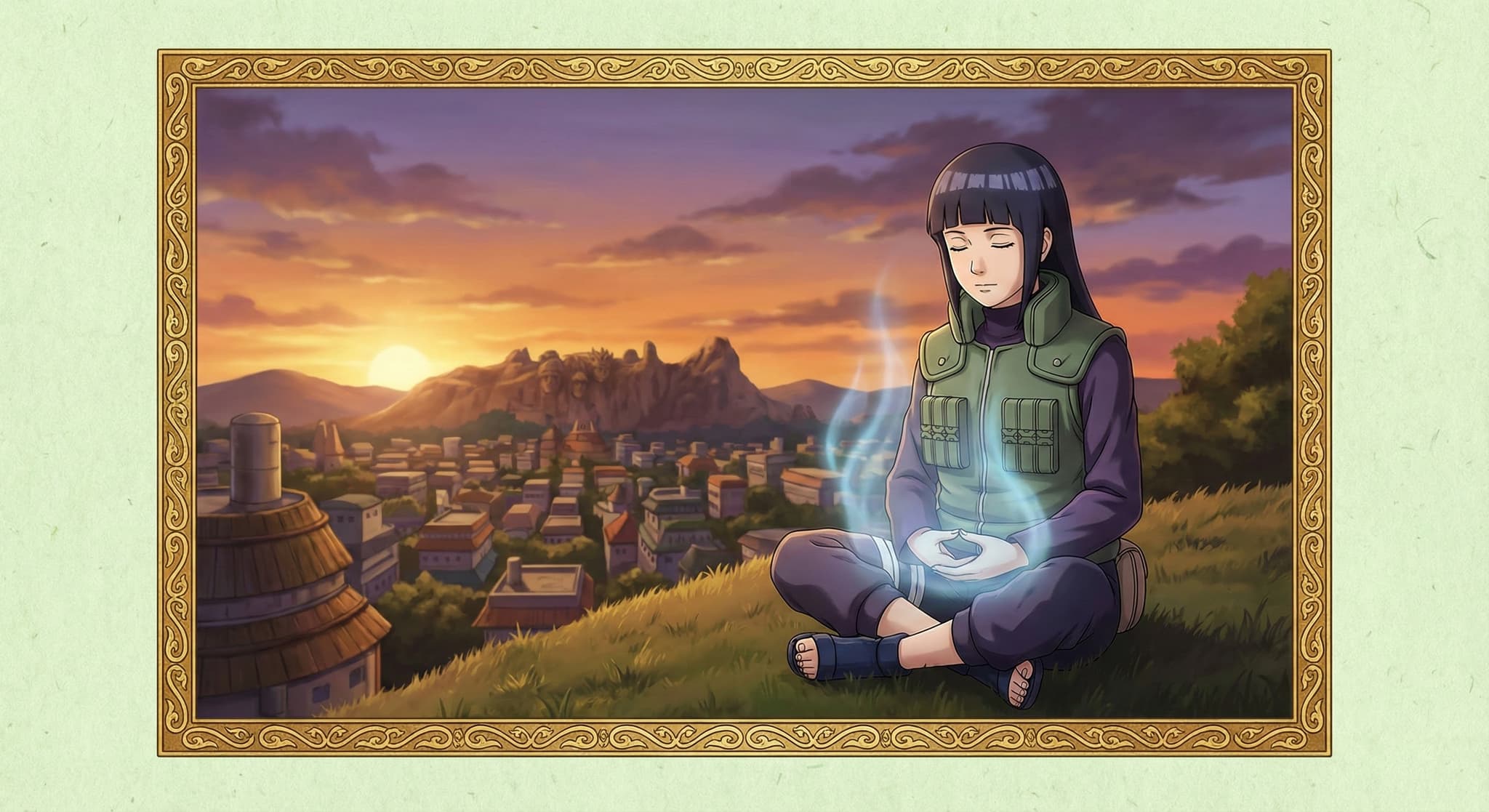
Strength isn't loud. It's the quiet decision to keep going. — Hinata Hyuga, Naruto Series
—What lingers after this line?
Redefining What Strength Really Means
Hinata Hyuga’s words challenge a familiar misconception: that strength must be dramatic, visible, and loud. Instead, she points to an inward power that does not seek attention but reveals itself in persistence. This reframing echoes many philosophical traditions where virtue is measured not by spectacle, but by steadiness. In contrast to the grand displays often celebrated in shonen anime battles, her statement suggests that strength is more about inner resolve than outward dominance.
Quiet Decisions in the Face of Fear
From this starting point, the quote highlights how courage often appears at its smallest scale: a single decision made in silence. Hinata’s own arc in the Naruto series shows this repeatedly, such as when she steps in front of Pain to protect Naruto despite knowing she is overmatched. There is no guarantee of victory or applause—only the quiet choice to act and endure. This kind of decision, made in private moments of fear or doubt, becomes the true test of character.
Perseverance as Everyday Heroism
Carrying the idea further, the ‘decision to keep going’ reframes perseverance as a form of everyday heroism. Unlike a climactic battle, continuing through ordinary hardship—studying after failure, working through grief, rebuilding after loss—rarely looks impressive from the outside. Yet, as Viktor Frankl argues in *Man’s Search for Meaning* (1946), choosing to move forward despite suffering is a deeply human assertion of dignity. Hinata’s insight harmonizes with this: the simple act of not giving up is extraordinary precisely because it is so easily overlooked.
Inner Resolve Versus External Validation
Naturally, this leads to a tension between internal strength and external recognition. Loud strength depends on witnesses, cheers, and visible results. Quiet strength, however, does not require an audience. In Naruto, Hinata’s growth is often unnoticed by other characters, mirroring how real-life resilience can go uncelebrated. Yet, the absence of validation does not diminish its value; rather, it purifies motivation. The individual continues not for praise, but because they have chosen a path and refuse to abandon it.
Cultivating Softness Without Weakness
Finally, the quote invites us to see that gentleness and strength are not opposites. Hinata is kind, soft-spoken, and frequently doubtful—traits easily mistaken for weakness. However, her compassion becomes a source of tenacity: she keeps standing back up because she cares. This aligns with modern psychology’s view that resilience is often rooted in secure values and relationships rather than sheer toughness. Thus, strength is not the absence of vulnerability but the willingness to move forward while vulnerable, quietly choosing the next step even when no one is watching.
One-minute reflection
Where does this idea show up in your life right now?
Related Quotes
6 selectedWhen your heart grows, your power follows. — Choji Akimichi, Naruto Series
Choji Akimichi, Naruto Series
In the Naruto series, Choji Akimichi begins as an often-overlooked character, more associated with snacks than strength. Yet his line, “When your heart grows, your power follows,” quietly summarizes his entire journey.
Read full interpretation →Strength comes from enduring the pain you thought would break you. — Tsunade, Naruto Series
Tsunade, Naruto Series
Tsunade’s words suggest that strength is not something we discover in comfort, but something hammered into shape in our most painful moments. What we once believed would destroy us instead becomes the very experience tha...
Read full interpretation →Those who forgive themselves are the strongest of all. — Itachi Uchiha, Naruto Series
Itachi Uchiha, Naruto Series
Itachi Uchiha’s line, “Those who forgive themselves are the strongest of all,” reframes strength as an inner achievement rather than an external display. Instead of focusing on power, skill, or victory over others, he po...
Read full interpretation →Resilience grows in the quiet choosing to go on. — Seneca
Seneca
Seneca’s line shifts resilience away from grand heroics and toward an inward discipline: the private decision to continue. In Stoic philosophy, strength is not measured by how little one is hurt but by how steadily one r...
Read full interpretation →Courage doesn't always roar. Sometimes courage is the quiet voice at the end of the day saying, 'I will try again tomorrow.'
Unknown
This quote highlights the idea that courage is not always loud and conspicuous. It can manifest as a silent, inner strength that encourages persistence despite challenges and setbacks.
Read full interpretation →In the face of every challenge, there lies a hidden strength. It sleeps within every heartbeat, waiting to be awakened. Embrace every setback, for it is the sprout of self-growth and steadfast conviction.
growth and steadfast conviction.
The quote suggests that every individual possesses an inherent strength that is not always apparent. This strength resides deep within, waiting to be discovered and harnessed during difficult times.
Read full interpretation →More From Author
More from Hinata Hyuga, Naruto Series →