
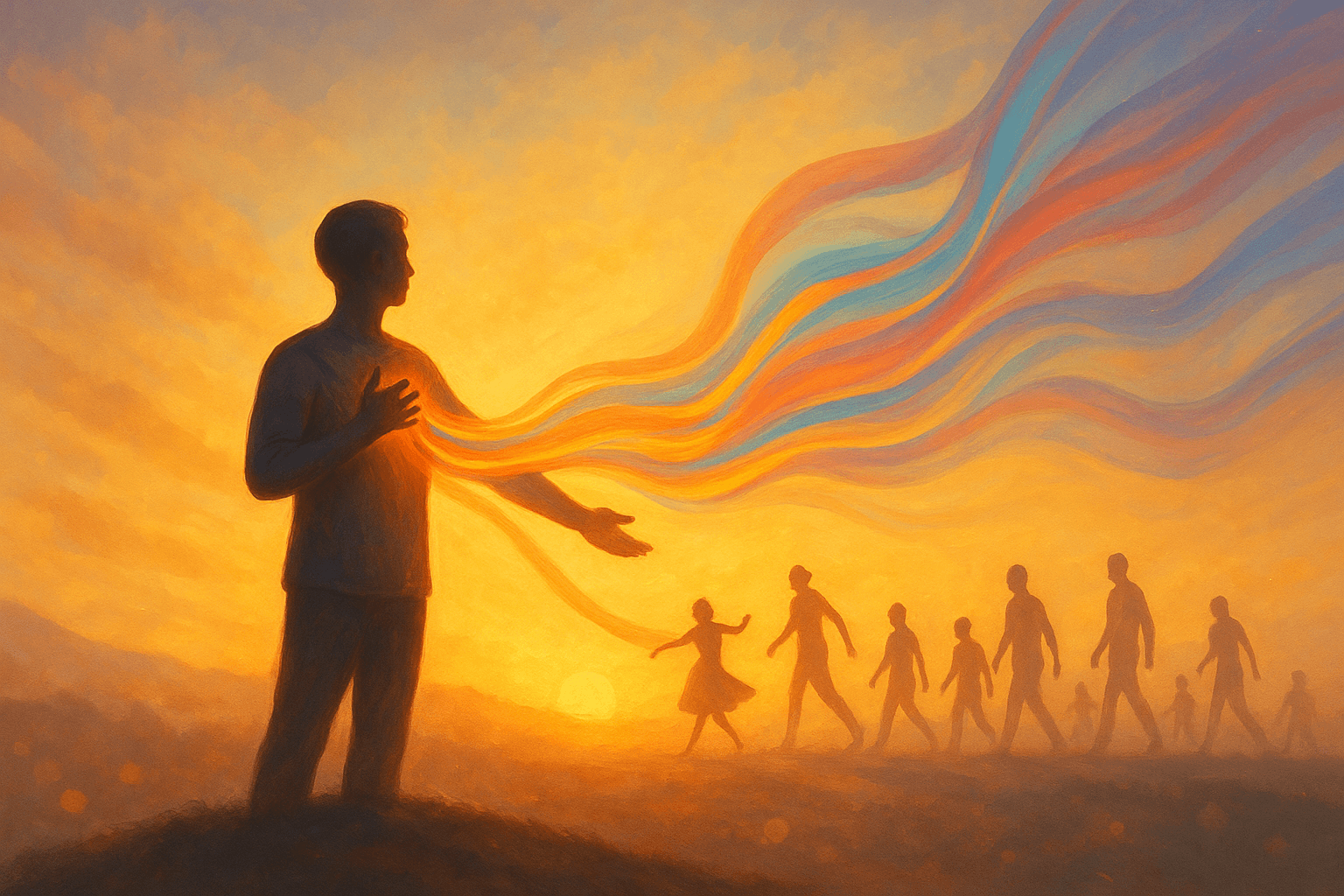
Start with what moves you and make the world follow — Nelson Mandela
—What lingers after this line?
Beginning From Inner Conviction
Nelson Mandela’s call to “start with what moves you” places inner conviction at the center of meaningful action. Rather than chasing trends or external approval, he suggests that real change begins with the issues, people, or injustices that genuinely stir our emotions. This inward starting point is not self-indulgent; it is a compass. Because what truly moves us is often where our deepest values and strongest sense of responsibility reside, beginning there anchors our work in authenticity instead of imitation.
From Personal Passion to Public Purpose
Yet Mandela does not stop at personal feeling; he adds “and make the world follow,” emphasizing a crucial transition from inner passion to public purpose. The idea is that when we act courageously on what matters to us, we invite others to recognize their own concerns in our example. Mandela’s lifelong resistance to apartheid grew from his private outrage at racial injustice and evolved into a collective movement. In this way, personal passion becomes a bridge, transforming one person’s moral fire into a shared cause that others willingly join.
Authenticity as a Source of Influence
Because of this bridge, authenticity becomes a powerful form of influence. People are more likely to follow someone who clearly believes in what they are doing, even at personal cost. Mandela’s long imprisonment, like the sacrifices of other moral leaders such as Mahatma Gandhi, exposed the depth of his commitment and made his message harder to dismiss. Rather than relying on manipulation or charisma alone, he demonstrated that consistency between words and actions can draw the world’s attention and respect, gradually turning solitary conviction into collective momentum.
Courage in the Face of Indifference or Opposition
However, starting with what moves you often means standing apart from the crowd, at least at first. Mandela’s phrase quietly acknowledges that the world may not initially care about what you care about. History shows that early advocates of abolition, women’s suffrage, or civil rights were frequently marginalized or punished. Yet their persistence slowly shifted public conscience. In this light, “make the world follow” is less about commanding obedience and more about enduring long enough, and clearly enough, that others can finally see what you saw from the beginning.
Transforming Private Feeling Into Collective Change
Ultimately, the quote sketches a path from emotion to transformation. It begins with listening to what moves you, continues with acting in alignment with that feeling, and culminates in creating conditions where others can recognize their own values reflected in your stand. As Mandela’s journey illustrates, this process is rarely quick or easy, but it is how societies shift: one person’s unwavering response to their inner call can become the spark that invites the world, step by step, to follow toward a more just and humane future.
One-minute reflection
What's one small action this suggests?
Related Quotes
6 selectedIf you want to change the world, change yourself. - Mahatma Gandhi
Mahatma Gandhi
This quote emphasizes that societal change begins with individual actions. Rather than focusing on changing others, one should first work on self-improvement and personal growth to have a broader impact.
Read full interpretation →Be the change that you wish to see in the world. - Mahatma Gandhi
Mahatma Gandhi
This quote emphasizes the importance of personal responsibility in fostering change. It encourages individuals to take initiative and embody the principles they believe in rather than waiting for others to act.
Read full interpretation →Take action, inspire others, and the world will change. — Wangari Maathai, Kenya.
Wangari Maathai, Kenya.
This quote emphasizes the importance of taking initiative. It suggests that personal actions can lead to broader change, encouraging individuals to be proactive in their endeavors.
Read full interpretation →Education is the most powerful weapon which you can use to change the world. — Nelson Mandela, South Africa.
Nelson Mandela, South Africa.
Mandela emphasizes that education equips individuals with knowledge and skills necessary to effect transformative changes in society. It is a tool for empowerment and social progress.
Read full interpretation →Plant ideas like seeds and tend them with action until forests of change grow — Marie Curie
Marie Curie
Marie Curie’s metaphor treats ideas not as static thoughts but as living seeds—small, vulnerable, and full of latent potential. A seed contains an entire future, yet it remains invisible until it meets the right conditio...
Read full interpretation →Raise your voice with purpose; silence does not shape horizons. — Alice Walker
Alice Walker
Alice Walker’s line begins as a direct summons: “Raise your voice with purpose” treats speaking up not as a reflex, but as a deliberate act aimed at change. Purpose matters because volume alone can become noise, while pu...
Read full interpretation →More From Author
More from Nelson Mandela →Turn obstacles into lessons; let each one teach you a new method of flight. — Nelson Mandela
Mandela’s line begins with a quiet reversal: the obstacle is not merely something to endure, but something that instructs. By treating hardship as a lesson, you move from asking “Why is this happening to me?” to “What is...
Read full interpretation →Forging unity begins with the small gestures of brave hearts. — Nelson Mandela
Nelson Mandela’s words remind us that unity is not an abstract goal reserved for grand speeches or historical turning points; it is woven from ordinary moments. Instead of imagining social harmony as something only leade...
Read full interpretation →May your choices reflect your hopes, not your fears. — Nelson Mandela
This quote encourages individuals to make decisions based on their aspirations and dreams rather than being driven by their anxieties and fears. It promotes a mindset of optimism and forward-thinking.
Read full interpretation →Everything seems impossible until it is done. - Nelson Mandela
This quote highlights the notion that difficult tasks often seem insurmountable at first. However, with perseverance and determination, what once seemed impossible can ultimately be achieved.
Read full interpretation →