
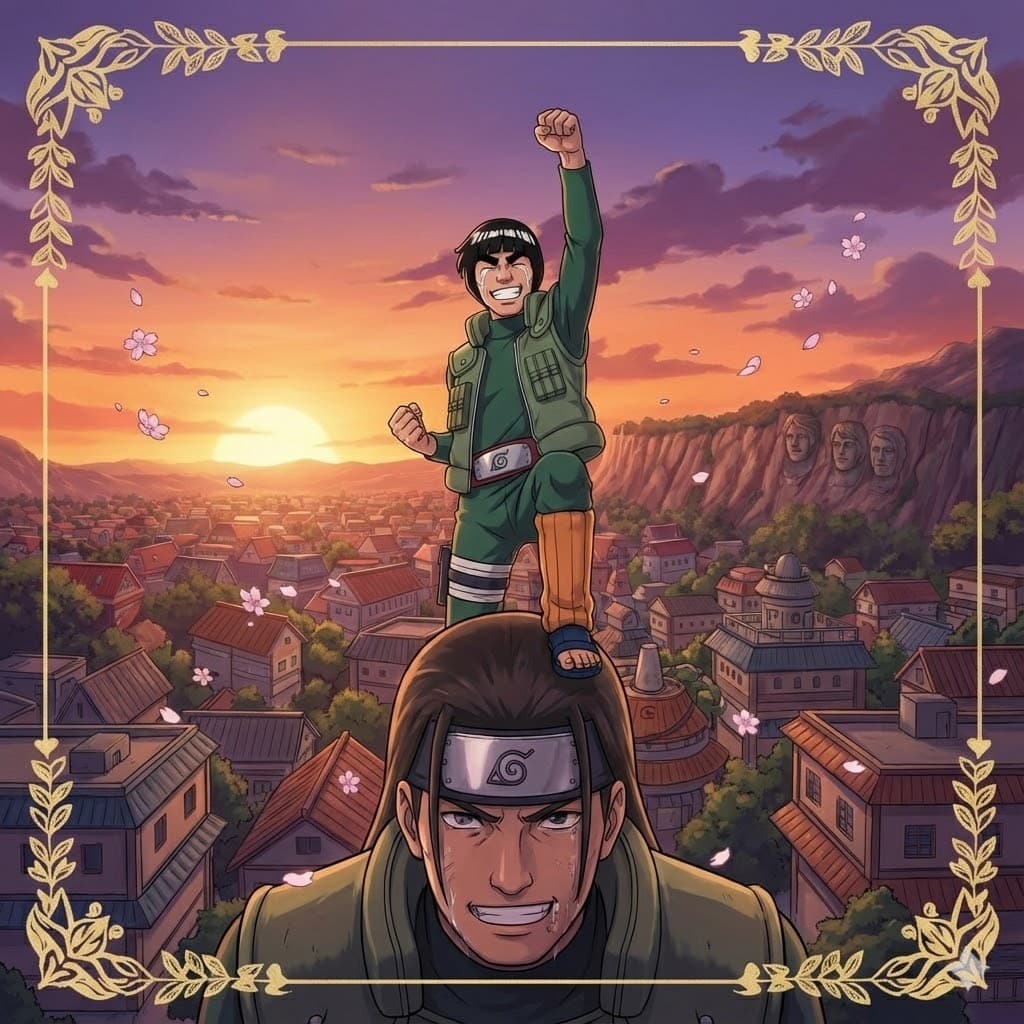
A hero is born from youth that never wavers. — Might Guy, Naruto Series
—What lingers after this line?
Defining “Youth That Never Wavers”
Might Guy’s declaration that “a hero is born from youth that never wavers” captures more than physical adolescence; it names a mental state of relentless optimism and drive. In the Naruto series, Guy’s idea of “youth” symbolizes fiery determination, a refusal to surrender even when logic suggests retreat. Rather than treating youth as a passing phase, he elevates it to a lifelong posture toward struggle and growth. This framing shifts heroism from destiny or talent to a disciplined, enduring attitude. In doing so, the quote invites us to see heroes not as exceptional beings set apart from us, but as people who refuse to let their inner flame be extinguished, no matter how harsh the winds of adversity become.
Might Guy as the Embodiment of His Creed
To understand the quote’s weight, it helps to see how Might Guy lives it. Initially portrayed as comic relief—overly enthusiastic, fashion-challenged, and loud—Guy gradually reveals a formidable core of resilience. Despite lacking prodigious natural gifts like the Uchiha clan, he reaches elite strength through ceaseless training and a stubbornly cheerful spirit. His rivalry with Kakashi Hatake, a genius by all measures, showcases this contrast: where Kakashi has talent, Guy has unshakable perseverance. As battles escalate, especially his confrontation with Madara Uchiha, the series confirms that Guy’s unwavering “youth” is not naïve bravado but the very engine of his heroic power.
From Fixed Destiny to Earned Heroism
This philosophy challenges a common story trope: that heroes are chosen by prophecy or bloodline. Naruto often plays with that idea, but Might Guy’s quote pushes back against passive destiny. Instead, it suggests that heroism is less about what you are born with and more about how long you can keep going without surrendering your ideals. Rock Lee, Guy’s student, dramatizes this shift. Unable to use ninjutsu or genjutsu, Lee invests wholly in taijutsu and hard work, mirroring his mentor’s belief that persistence can rival or surpass natural talent. In this way, the narrative reframes the hero’s journey as something accessible to anyone willing to let their determination outlast their failures.
Sacrifice and the Test of Unwavering Spirit
However, the idea of youth that never wavers is not mere pep-talk; it is tested most severely in sacrifice. When Might Guy opens the Eighth Gate—the “Gate of Death”—against Madara, he knowingly risks his life to buy time for others. His body shatters under the technique’s power, yet his spirit burns brighter than ever, prompting Madara to call him the “strongest” taijutsu user he has faced. Here, unwavering youth is revealed as the courage to give everything for one’s comrades without bitterness or regret. Rather than glorifying recklessness, the scene shows that true heroism blends fierce resolve with a clear-eyed willingness to bear the cost of protecting others.
Applying Guy’s Lesson Beyond the Battlefield
Though born in a world of shinobi, Guy’s maxim extends smoothly into everyday life. “Youth that never wavers” can describe a student who keeps studying after repeated failures, an athlete rebuilding after injury, or anyone pursuing a dream others dismiss as impossible. The Naruto series frequently draws this parallel, suggesting that “nindo” or ninja way is an exaggerated mirror of personal creeds in our own world. By treating challenges as training grounds rather than dead ends, we echo Guy’s approach: turning setbacks into fuel instead of excuses. Thus, the quote encourages readers to nurture a spirit that, regardless of age, refuses to abandon hope, effort, or kindness.
Balancing Idealism with Growth and Maturity
Finally, Might Guy’s slogan of eternal youth does not deny aging or hardship; it redeems them. Even after he is left wheelchair-bound, he continues radiating enthusiasm and humor, proving that unwavering youth is compatible with vulnerability and limitation. In this light, the quote does not advocate denial of reality but a choice about how to face it. We can grow older while still meeting each day with curiosity, courage, and commitment to others’ well-being. By linking heroism to this enduring inner stance, the line from Naruto suggests that anyone who protects their inner flame—who keeps going with heart intact—steps onto the path of the hero, one determined stride at a time.
One-minute reflection
What does this quote ask you to notice today?
Related Quotes
6 selectedMy flames will burn brightest when the world grows darkest. — Might Guy, Naruto Series
Might Guy, Naruto Series
Might Guy’s declaration, “My flames will burn brightest when the world grows darkest,” condenses his entire philosophy into a single promise. Rather than fear hardship, he treats crisis as the very fuel that intensifies...
Read full interpretation →If you believe in yourself, you can open any gate. — Might Guy, Naruto Series
Might Guy, Naruto Series
Might Guy’s line, “If you believe in yourself, you can open any gate,” frames every obstacle as a closed gate rather than an impenetrable wall. A gate implies something designed to move, suggesting that limitations are n...
Read full interpretation →The simplest act of caring is heroic. — Edward Albert
Edward Albert
At first glance, Edward Albert’s quote seems to elevate something modest into something grand. Yet that is precisely its power: it suggests that heroism does not belong only to battlefields, disasters, or public sacrific...
Read full interpretation →Be the hero of your own story. — Unknown
Unknown
This quote encourages individuals to take charge of their own lives and decision-making processes. It emphasizes the importance of being proactive in shaping one's destiny.
Read full interpretation →Great deeds are usually wrought at great risks. — Herodotus
Herodotus
This quote highlights the relationship between monumental achievements and the risks that often accompany them. It suggests that great accomplishments usually require courage and the willingness to take on significant da...
Read full interpretation →When you have to save someone’s life, you have to be a little crazy. — Paul Coelho
Paul Coelho
This quote highlights the selflessness required to save someone’s life, suggesting that extraordinary measures often demand stepping outside of normal behavior or cautious thinking.
Read full interpretation →More From Author
More from Might Guy, Naruto Series →My flames will burn brightest when the world grows darkest. — Might Guy, Naruto Series
Might Guy’s declaration, “My flames will burn brightest when the world grows darkest,” condenses his entire philosophy into a single promise. Rather than fear hardship, he treats crisis as the very fuel that intensifies...
Read full interpretation →If you believe in yourself, you can open any gate. — Might Guy, Naruto Series
Might Guy’s line, “If you believe in yourself, you can open any gate,” frames every obstacle as a closed gate rather than an impenetrable wall. A gate implies something designed to move, suggesting that limitations are n...
Read full interpretation →