
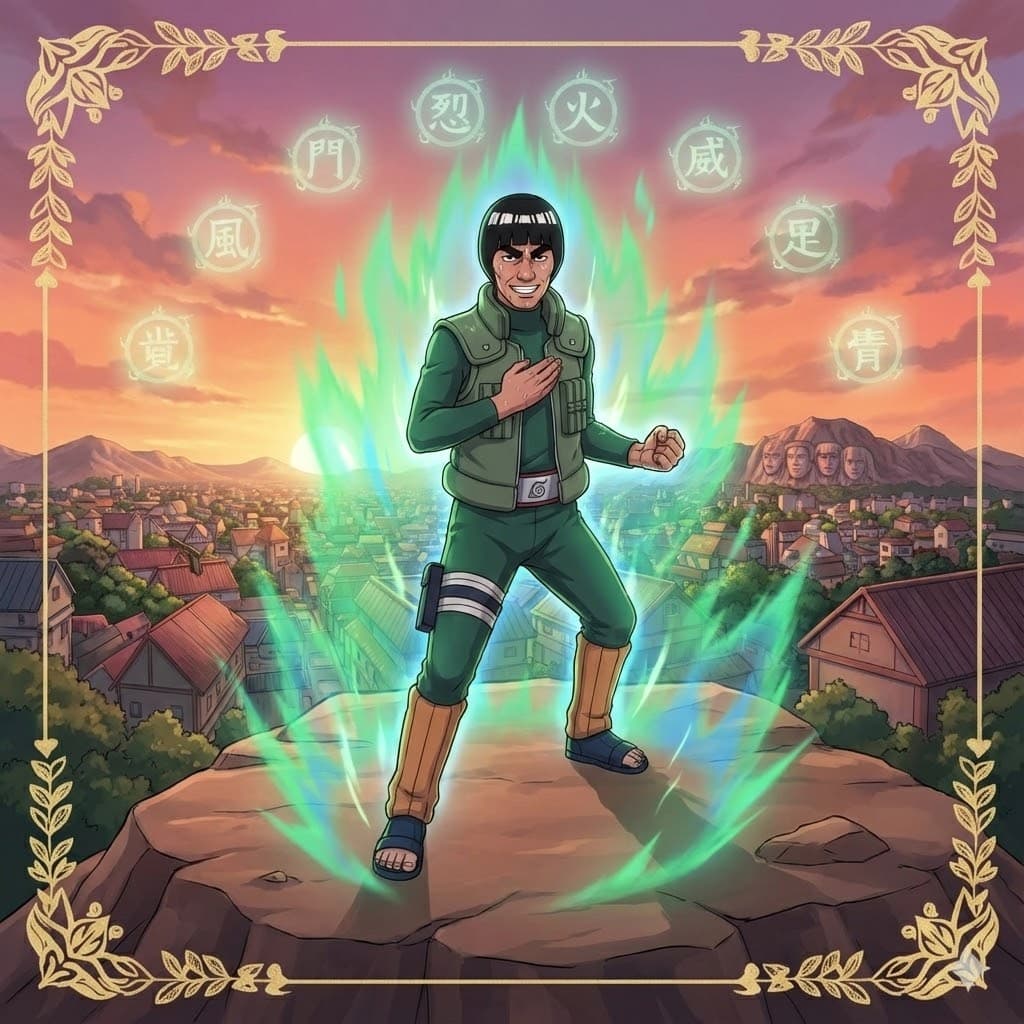
If you believe in yourself, you can open any gate. — Might Guy, Naruto Series
—What lingers after this line?
A Gate as a Metaphor for Limits
Might Guy’s line, “If you believe in yourself, you can open any gate,” frames every obstacle as a closed gate rather than an impenetrable wall. A gate implies something designed to move, suggesting that limitations are not absolute but waiting for the right key. By casting challenges in this way, the quote encourages a mindset in which problems are temporary barriers, not final verdicts on our abilities.
Belief as the Inner Key
Transitioning from the image of the gate, the quote identifies self‑belief as the universal key. In Naruto, Might Guy’s power is not rooted in special bloodlines or rare gifts; instead, it emerges from relentless conviction in his own potential. This mirrors real‑world findings in psychology, where Albert Bandura’s research on self‑efficacy shows that people who trust their capabilities persist longer and perform better, effectively “unlocking” paths that others abandon.
The Naruto Context: Opening the Eight Gates
Within the Naruto universe, “gates” also refer to the Eight Inner Gates, dangerous power limiters in the body. As Guy trains Lee and demonstrates these techniques himself, opening each gate demands intense discipline and unshakable resolve. Thus, when he speaks of opening any gate, he defines belief not as wishful thinking but as the courage to endure pain, risk failure, and still move forward—a lesson dramatized in his battles against nearly impossible odds.
From Shōnen Spirit to Everyday Life
Moving from fiction to daily reality, the shōnen spirit behind Guy’s words translates into how we tackle goals like exams, careers, or recovery from setbacks. Just as Naruto’s underdogs rise through grit and faith in themselves, many ordinary people succeed not because they start ahead, but because they refuse to concede defeat mentally. Belief becomes a stabilizing force that keeps effort alive when results are still invisible.
Balancing Belief with Action and Humility
Finally, the quote gains depth when we balance belief with effort and humility. Might Guy does not merely tell his students to believe; he makes them train painfully hard, acknowledging that conviction without work is empty. At the same time, he respects limits, risking himself for others rather than for ego. In this way, “opening any gate” becomes an ideal where self‑trust fuels disciplined practice and moral purpose, turning potential into tangible achievement.
One-minute reflection
Where does this idea show up in your life right now?
Related Quotes
6 selectedHard work is worthless for those that don’t believe in themselves. — Naruto Uzumaki, Naruto Series
Naruto Uzumaki, Naruto Series
Naruto Uzumaki’s declaration, “Hard work is worthless for those that don’t believe in themselves,” distills a theme that runs through his entire story: effort only transforms lives when it is powered by inner conviction....
Read full interpretation →I’m not gonna run away, I never go back on my word! That’s my nindō: my ninja way. - Naruto Uzumaki
Naruto Uzumaki
At the outset, Naruto’s declaration—never running away and never breaking his word—emerges from isolation. As an orphan shunned for the Nine-Tails within him, he crafts a promise sturdy enough to anchor a drifting identi...
Read full interpretation →Believe in yourself and all that you are. Know that there is something inside you that is greater than any obstacle. – Christian D. Larson
Christian D. Larson
This quote emphasizes the importance of believing in one's own abilities and self-worth. It suggests that confidence in oneself is a fundamental key to overcoming challenges.
Read full interpretation →Believe in your infinite potential. Your only limitations are those you set upon yourself. — Roy T. Bennett
Roy T. Bennett
This quote emphasizes the importance of having confidence in oneself. Believing in your potential is the first step toward achieving greatness.
Read full interpretation →Believe in your infinite potential. Your only limitations are those you set upon yourself. — Roy T. Bennett
Roy T. Bennett
This quote encourages individuals to have confidence in their unlimited potential. It emphasizes the importance of believing in one's abilities to achieve greatness and push beyond perceived limitations.
Read full interpretation →Believe in the magic that is inside you, because what you believe, you become. — Unknown
Unknown
This quote emphasizes the importance of believing in one's own abilities and potential. It suggests that self-belief is a powerful force that can shape one's destiny.
Read full interpretation →More From Author
More from Might Guy, Naruto Series →My flames will burn brightest when the world grows darkest. — Might Guy, Naruto Series
Might Guy’s declaration, “My flames will burn brightest when the world grows darkest,” condenses his entire philosophy into a single promise. Rather than fear hardship, he treats crisis as the very fuel that intensifies...
Read full interpretation →A hero is born from youth that never wavers. — Might Guy, Naruto Series
Might Guy’s declaration that “a hero is born from youth that never wavers” captures more than physical adolescence; it names a mental state of relentless optimism and drive. In the Naruto series, Guy’s idea of “youth” sy...
Read full interpretation →