
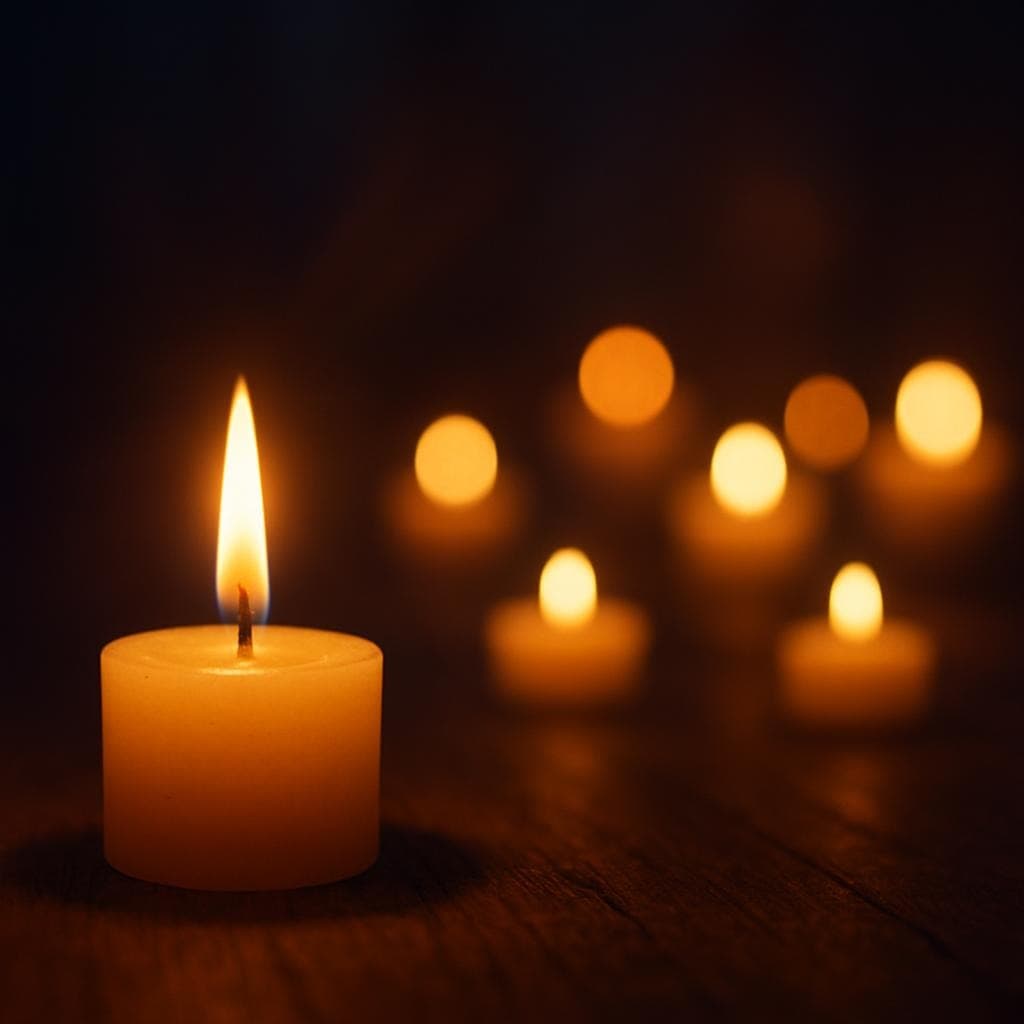
Light a small candle for hope; its glow invites others to kindle warmth. — Desmond Tutu
—What lingers after this line?
A Modest Flame with Immense Symbolism
Desmond Tutu’s image of lighting a small candle captures how even fragile gestures can confront overwhelming darkness. A candle is ordinary, easily extinguished, and yet it remains one of humanity’s oldest symbols of resilience. Much like a lone lantern in a storm, its significance lies not in its size but in what it represents: the refusal to surrender to despair. By focusing on a “small” candle rather than a blazing fire, Tutu underscores that hope often begins quietly, with acts that may seem insignificant at first glance.
Hope as an Invitation, Not a Command
Moving from the image of the candle itself, Tutu emphasizes that its glow “invites others” rather than forces them. Hope here is portrayed as hospitable and contagious, not coercive. The light does not shame the dark; it simply offers an alternative. In the same way, a person who perseveres through hardship can become an unspoken invitation for others to believe that change is still possible. Nelson Mandela’s long imprisonment, for example, did not compel resistance, but his steadfastness inspired many to join the struggle for justice.
From Individual Courage to Shared Warmth
As the metaphor extends, the glow of one candle encourages others to “kindle warmth,” indicating a shift from isolated effort to communal solidarity. Light spreads, but warmth is experienced together; it suggests comfort, safety, and belonging. Just as a single match can ignite a campfire that sustains a group through the night, one person’s hopeful action can spark a chain of responses that turns private courage into a collective movement. In this way, the original act of lighting the candle becomes the seed of community.
The Transformative Power of Small Acts
This progression from a lone flame to shared warmth echoes broader ethical teachings about the impact of small deeds. In many traditions, from the Talmudic saying “Whoever saves one life saves the world entire” to the ripple effects described in modern social psychology, seemingly minor choices can alter the emotional climate around us. A simple word of encouragement, a donation, or a public stand against injustice can function like the first candle, making it easier for others to act bravely. Over time, these accumulated gestures can reshape what a society accepts as normal or possible.
Choosing to Light the Candle Anyway
Ultimately, Tutu’s metaphor confronts us with a decision: whether to curse the darkness or light a candle despite it. The quote does not deny how vast the shadows may be; instead, it suggests that our responsibility is to begin where we are, with whatever light we can muster. One flame may not banish the night, but it changes the immediate space around it and offers others a visible point of orientation. In choosing to strike that first match, we quietly declare that hope is not a feeling we wait for but an action we take together.
One-minute reflection
What feeling does this quote bring up for you?
Related Quotes
6 selectedLet hope be a tool you sharpen every morning and use without apology. — Desmond Tutu
Desmond Tutu
Desmond Tutu’s line treats hope less like a mood and more like a discipline. By calling it a “tool,” he implies something you can hold, choose, and apply—especially when circumstances tempt you toward resignation.
Read full interpretation →Hope becomes habit when fed by persistent effort. — Desmond Tutu
Desmond Tutu
Desmond Tutu’s line reframes hope from a fleeting feeling into something deliberately cultivated. Rather than treating hope as a gift that arrives when circumstances improve, he implies it can be trained—much like a skil...
Read full interpretation →Carry a lantern of kindness into each room of doubt you enter. — Desmond Tutu
Desmond Tutu
Tutu’s image invites us to treat uncertainty not as an enemy but as a dark room awaiting light. A lantern of kindness does not erase complexity; rather, it makes the contours of fear, confusion, and disagreement visible...
Read full interpretation →Keep knocking with hope; even the heaviest doors answer persistent hands. — Desmond Tutu
Desmond Tutu
Desmond Tutu’s image of knocking with hope reframes persistence as an act of relationship rather than force. A door responds not to battering but to rhythm, patience, and trust that someone will answer.
Read full interpretation →In the darkness, there is always a ray of light; that is hope.
Unknown
This quote highlights the idea that no matter how challenging or dire a situation may seem, there is always a glimmer of hope. Hope acts as a guiding light during dark times.
Read full interpretation →Change is the manifestation of hope in action. — Desmond Tutu
Desmond Tutu
This quote suggests that hope is not just a passive feeling but a powerful motivator for action. When people believe in a better future, they take steps to create it.
Read full interpretation →More From Author
More from Desmond Tutu →We are not here to carry the weight of the world alone. Strength is found in the simple, vulnerable act of asking for help. — Desmond Tutu
Desmond Tutu’s words begin with a gentle correction to a common illusion: that dignity means handling everything alone. Instead, he reminds us that human life is fundamentally shared, and that suffering, responsibility,...
Read full interpretation →You don't choose your family. They are God's gift to you, as you are to them. — Desmond Tutu
Desmond Tutu’s reflection begins with a simple but profound truth: family is not usually the result of personal selection. We arrive in the world already woven into relationships, and that lack of choice gives family a d...
Read full interpretation →There is no true joy in a life lived closed up in the little shell of the self. When you take one step to reach out to people, when you meet with others and share their thoughts, you expand your world. — Desmond Tutu
Desmond Tutu begins with a striking image: the self as a little shell, enclosed and protected yet ultimately cramped. In that metaphor, he suggests that a life organized entirely around private comfort and self-concern m...
Read full interpretation →We are made for goodness. We are made for love. We are made for friendliness. We are made for togetherness. — Desmond Tutu
At its heart, Desmond Tutu’s statement presents a hopeful view of human nature. Rather than defining people by selfishness or conflict, he insists that goodness, love, friendliness, and togetherness are not accidental vi...
Read full interpretation →