
Let Persistence Outsing the Relentless Drum of Doubt
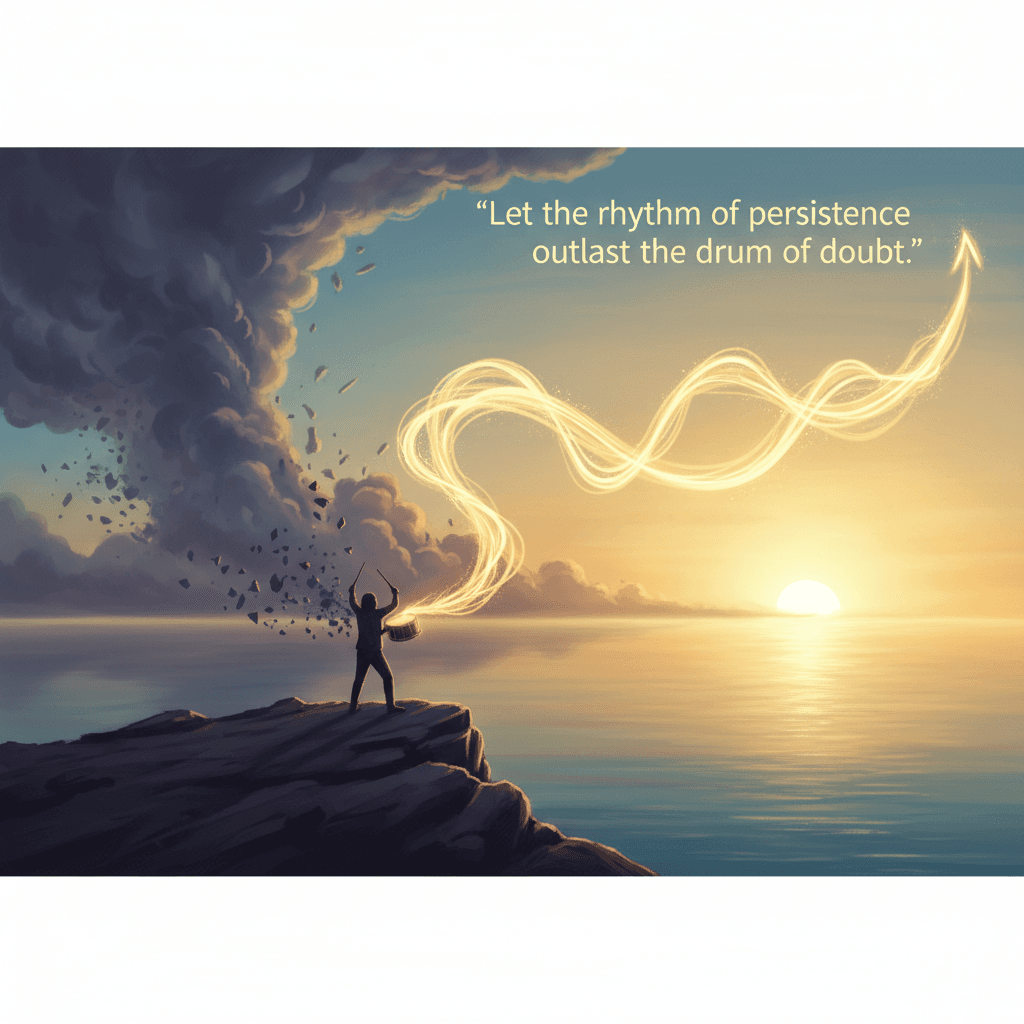
Let the rhythm of persistence outlast the drum of doubt. — Sappho
—What lingers after this line?
One-minute reflection
What does this quote ask you to notice today?
Hearing Sappho’s Metaphor
Sappho’s line, “Let the rhythm of persistence outlast the drum of doubt,” casts inner struggle as a kind of music. Instead of describing perseverance in abstract terms, she imagines it as a steady rhythm that must keep playing even while another, harsher beat—doubt—pounds alongside it. This musical framing matters, because rhythm is not a single note but a pattern repeated over time. Similarly, persistence is not one heroic act; it is the quiet, continuous return to effort, especially when uncertainty becomes loud.
Rhythm as a Practice of Steady Effort
Thinking of persistence as rhythm emphasizes habit over spectacle. A drummer keeps time not by striking harder once, but by striking reliably again and again. In the same way, daily disciplines—writing a page, practicing a skill, reaching out to one more person—create a pattern that gradually shapes a life. Because rhythm is felt in the body, Sappho hints that perseverance is not purely intellectual resolve; it is a full-bodied practice of showing up, even on days when motivation feels faint or absent.
The Drum of Doubt as Inner Noise
By contrast, Sappho’s “drum of doubt” suggests a disruptive, insistent noise that threatens to drown out our chosen rhythm. Doubt often arrives with percussive force: sudden worries, sharp critiques, or memories of past failures that echo in the mind. Psychological research on ‘negative self-talk’ shows how such mental beats can narrow our focus to risk and inadequacy, leaving little room for hope. Yet by calling it a drum, she also implies that doubt is predictable and repetitive; it plays similar patterns whenever we approach something meaningful.
Outlasting, Not Silencing, Uncertainty
Crucially, the line does not demand that we silence doubt; it urges us to outlast it. This distinction softens the unrealistic expectation that confidence must be total before we act. As in a complex piece of music, multiple rhythms can coexist: the anxious beat of uncertainty and the calmer, determined measure of continued effort. Over time, the persistent rhythm becomes the through-line the listener remembers, while the jarring drum fades into background noise. In practical terms, this means moving forward with imperfect belief rather than waiting for fear to disappear.
From Ancient Lyre to Modern Lives
Although Sappho wrote in archaic Greece, the image speaks directly to modern challenges—creative work, activism, entrepreneurship, or personal healing all involve enduring doubt’s percussion. Biographers of figures like Marie Curie or Nelson Mandela often recount long seasons where progress was invisible and skepticism deafening, yet small, repeated actions quietly accumulated into change. By recasting persistence as music that can be practiced, refined, and shared, Sappho invites each person to become a kind of musician of their own fate, choosing every day to keep time with their deepest commitments rather than with their loudest fears.