
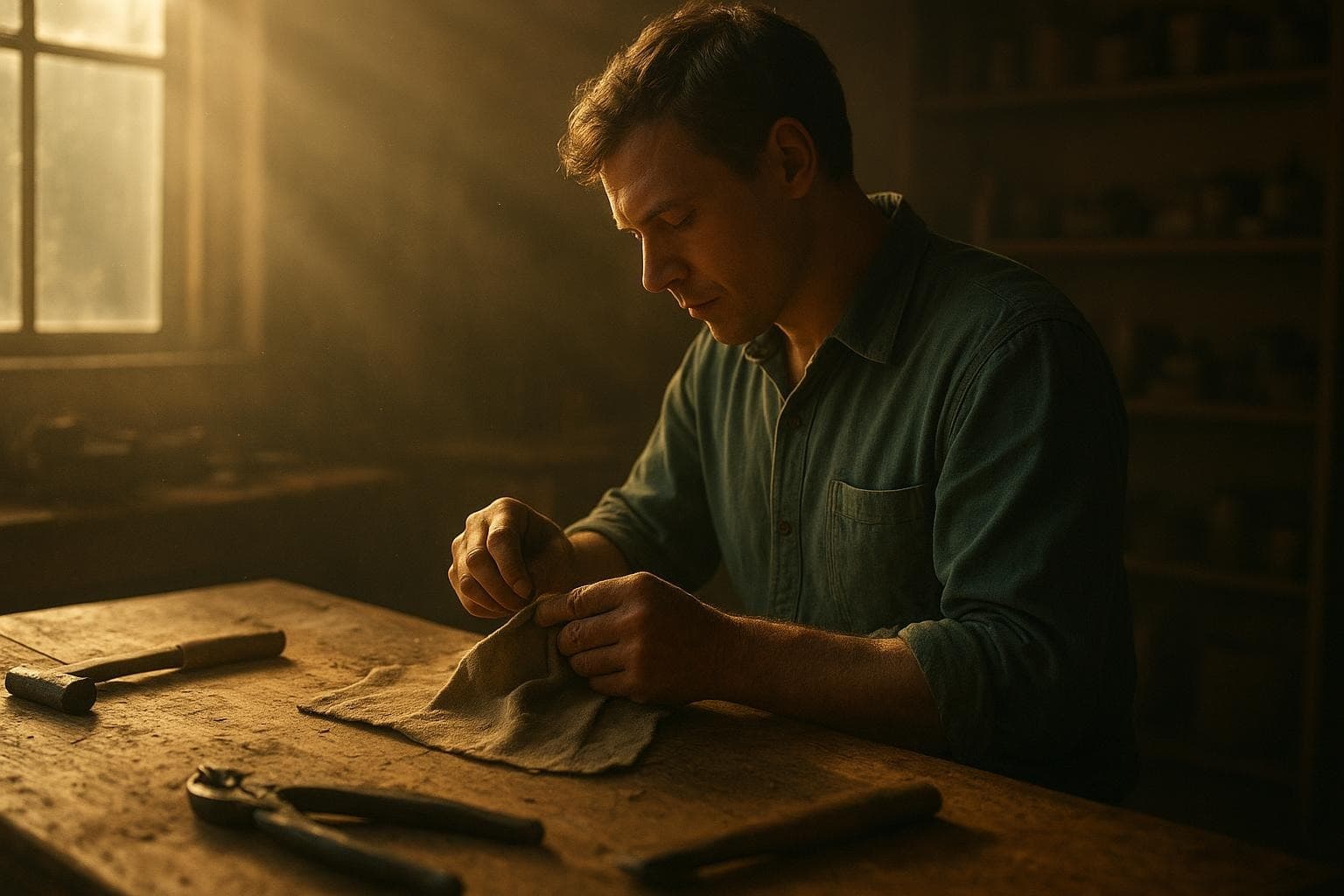
Bravery often looks like ordinary work continued with a steady heart. — bell hooks
—What lingers after this line?
Reframing Courage Beyond Dramatic Acts
bell hooks shifts the image of bravery away from cinematic heroics and toward persistence. In her framing, courage isn’t reserved for emergencies or grand speeches; it appears in the daily choice to keep going, even when the work is tedious, undervalued, or quietly resisted by others. This reframing matters because it expands who gets to be called brave. Instead of celebrating only the visible moment of triumph, hooks invites us to notice the unglamorous continuities—showing up, trying again, and staying committed when there’s no applause—where bravery often actually lives.
The Steady Heart as Emotional Discipline
The phrase “steady heart” suggests not a lack of fear, but a practiced relationship with fear. Rather than being swept into panic, bitterness, or numbness, the steady heart keeps enough inner balance to continue acting in line with one’s values. From there, bravery becomes less a surge of adrenaline and more an emotional discipline—like holding patience during conflict or choosing honesty when it may cost you. In this sense, hooks aligns courage with steadiness: a grounded interior stance that makes consistent action possible.
Ordinary Work as Resistance and Care
“Ordinary work” can include paid labor, caregiving, community organizing, studying, or repairing relationships—tasks that can feel small in isolation. Yet hooks implies that continuing such work can be brave precisely because it takes place in real conditions: exhaustion, inequality, grief, or ongoing discouragement. Seen this way, everyday persistence becomes a form of resistance and care. Like the long-haul efforts of grassroots movements documented in histories of the U.S. civil rights struggle, much of social change is built less on singular events than on repeated, ordinary actions sustained over time.
Why Bravery Often Goes Unnoticed
If bravery looks like “ordinary work,” it can be easy to miss—both in others and in ourselves. Cultural narratives tend to reward the exceptional and the loud, so the person steadily doing the unrecognized tasks may be treated as merely dutiful rather than courageous. This is where hooks’ line becomes corrective: it trains attention toward the hidden costs of continuity. The nurse finishing another shift, the student returning to a difficult subject, the parent remaining tender under pressure—these are not headline moments, yet they can demand profound courage.
A Practical Measure of Courage in Daily Life
Hooks’ quote also offers a simple metric: bravery is what you keep doing when quitting would be understandable. That doesn’t mean never resting or never changing course; it means distinguishing between avoidance and renewal, between giving up from fear and pausing to regain strength. As a result, courage becomes actionable. Instead of waiting to feel heroic, you can practice bravery by recommitting to the next honest step—one email, one conversation, one page, one act of care—done with as much steadiness of heart as you can manage today.
One-minute reflection
What feeling does this quote bring up for you?
Related Quotes
6 selectedTurn ordinary moments into offers of courage; the small invites become revolutions — bell hooks
bell hooks
bell hooks suggests that what appears mundane can actually be a threshold to transformation. A casual conversation, a shared meal, or a brief pause to listen might seem insignificant, yet these are the spaces where value...
Read full interpretation →Brave acts are ordinary moments dressed in persistence — George Eliot
George Eliot
George Eliot’s line, “Brave acts are ordinary moments dressed in persistence,” challenges the familiar image of courage as rare and dramatic. Instead of picturing heroes on battlefields or in burning buildings, she invit...
Read full interpretation →The strength of a person is not measured by their achievements, but by their ability to remain centered when the world around them feels like it is unraveling. — Marcus Aurelius
Marcus Aurelius
At first glance, strength is often associated with visible accomplishments—titles earned, obstacles conquered, or victories displayed for others to admire. Yet this reflection attributed to Marcus Aurelius redirects atte...
Read full interpretation →Be like the cliff against which the waves continually break; it stands firm and tames the fury of the water around it. — Marcus Aurelius
Marcus Aurelius
Marcus Aurelius frames resilience with a coastal image: waves crash with relentless force, yet the cliff remains steady. The point is not that the sea becomes gentle, but that the cliff’s firmness changes what the sea ca...
Read full interpretation →Courage plants its feet in the present and builds tomorrow with steady hands. — Marcus Aurelius
Marcus Aurelius
The quote frames courage not as a dramatic leap, but as a deliberate stance: it “plants its feet in the present.” That image implies stability under pressure—choosing to remain anchored in what is real rather than drifti...
Read full interpretation →Collect tiny brave acts until they become a landscape. — Kenzaburō Ōe
Kenzaburō Ōe
Kenzaburō Ōe’s line, “Collect tiny brave acts until they become a landscape,” reframes courage not as a sudden, heroic explosion but as a slow accumulation of modest gestures. Rather than highlighting one grand sacrifice...
Read full interpretation →More From Author
More from bell hooks →But many of us seek community solely to escape the fear of being alone. Knowing how to be solitary is central to the art of loving. — bell hooks
Bell hooks begins with a quiet but difficult observation: not every search for community is rooted in love. Sometimes, we reach for others because solitude feels threatening, as though being alone exposes a lack within u...
Read full interpretation →Your presence is a form of resistance against a culture that profits from your isolation. Show up for those you love, even when it is inconvenient. — bell hooks
At first glance, bell hooks reframes something ordinary—being present for others—as a political and moral act. Her words suggest that care is not merely private sentiment; rather, it pushes back against a social order th...
Read full interpretation →If you don't build your own sanctuary, you will spend your life living in the wreckage of someone else's expectations. — Bell Hooks
Bell hooks frames sanctuary as more than a physical refuge; it is an inner and outer space where a person can live by values they have consciously chosen. At first glance, the quote sounds like a warning about independen...
Read full interpretation →The art of living is a constant process of refining one's own sanctuary against the tide of external expectations. — bell hooks
At its core, bell hooks presents living not as a finished achievement but as a continuous act of shaping and reshaping the self. The phrase “constant process” suggests that identity, peace, and integrity are never perman...
Read full interpretation →