
How Rule-Breaking Women Reshape Public Memory
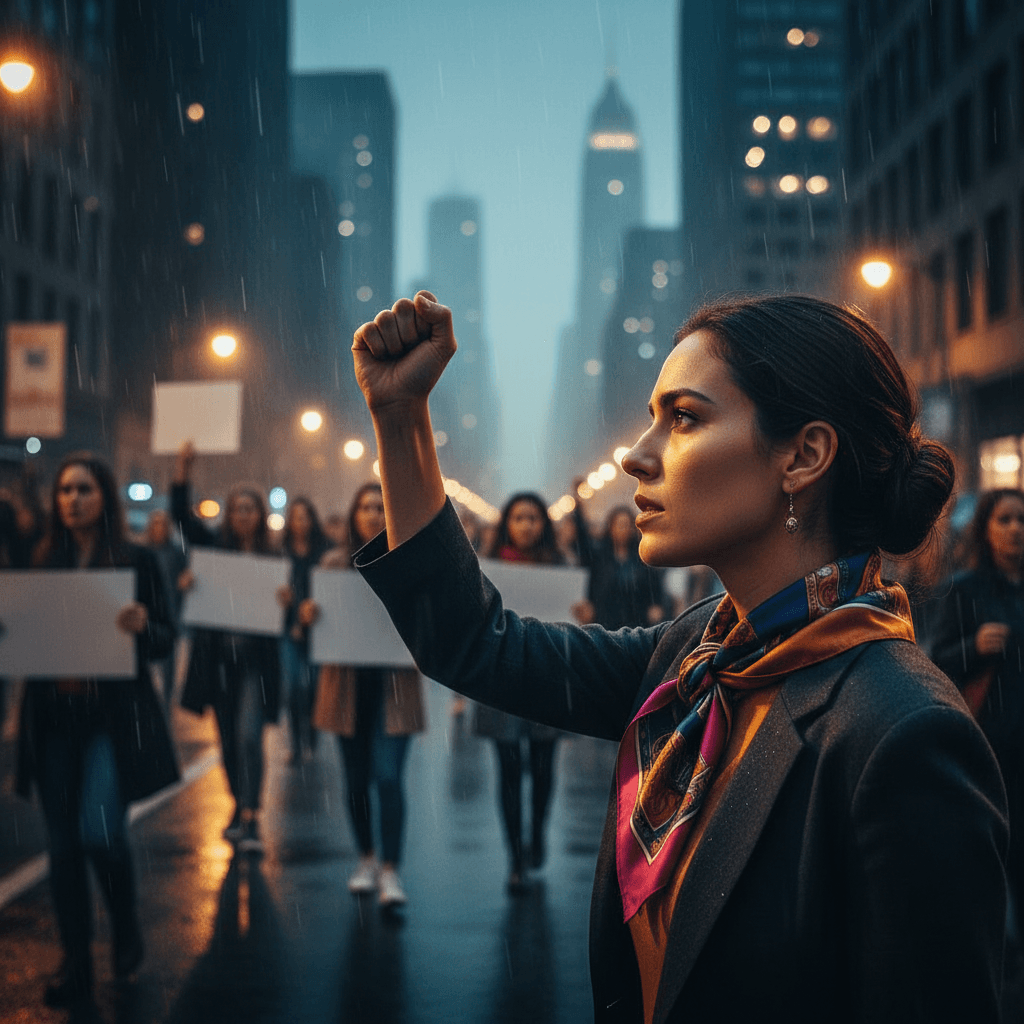
Well-behaved women seldom make history. — Laurel Thatcher Ulrich
A Quote Often Misread as Bad Behavior
Laurel Thatcher Ulrich’s line is frequently taken as a celebration of mischief, but its real target is historical visibility. In many societies, “well-behaved” has meant compliant, quiet, and confined to private life—traits that leave fewer public records behind. As a result, history books can end up overrepresenting the loud, the sanctioned, and the institutionally powerful. From the start, the quote asks a sharper question: who gets documented and why? Ulrich, a historian, was pointing to the way archives and narratives are built, not issuing a blanket endorsement of any particular kind of rule-breaking.
Why Conformity Often Leaves Fewer Traces
To understand the claim, it helps to see history as a paper trail. Women who followed expected roles often contributed through caregiving, informal labor, and community work—vital activities that were less likely to be recorded as “events.” Meanwhile, those who petitioned governments, organized boycotts, wrote polemics, or challenged laws created documents—letters, trials, news coverage—that later became sources. Consequently, “seldom make history” can mean “seldom appear in the archive.” The issue is not that ordinary lives lacked impact, but that the mechanisms of preservation and publication filtered impact through public recognition.
Public Disruption as a Path to Recognition
Building on that, social change usually becomes legible when it interrupts business as usual. Suffragists marching, abolitionists speaking, labor activists striking, or journalists exposing abuses all generate public friction, and friction generates records. In this sense, “misbehavior” is often simply refusing to accept the limits of the acceptable. The pattern repeats across eras: when women enter arenas that were meant to exclude them—politics, law, science, the pulpit—their presence is treated as an anomaly worth noting. The same act that draws condemnation in the moment can become the headline that survives.
Who Defines “Well-Behaved,” and for Whom?
Next, the quote invites scrutiny of the rules themselves. “Well-behaved” is not a neutral description; it’s a social judgment shaped by class, race, religion, and power. A woman’s “proper place” has varied dramatically depending on who is speaking and what they have to gain by enforcing norms. As feminist thinkers such as Simone de Beauvoir in *The Second Sex* (1949) argue, social expectations can function as a cage disguised as virtue. Ulrich’s phrasing highlights how standards of respectability can be used to keep some people invisible—and then to justify their absence from the historical record.
Everyday Women and the Hidden Side of History
Even so, the quote doesn’t mean only rebels matter. Much of Ulrich’s own scholarship emphasized ordinary women whose lives were painstakingly reconstructed through diaries, household accounts, and community records. The deeper point is that historians must work harder to see those lives because traditional narratives privilege public acts over private endurance. Accordingly, the sentence works as both a provocation and a reminder: if we only look for dramatic defiance, we miss the slow, cumulative labor that sustains families, economies, and movements. Expanding what counts as evidence expands who “made history.”
A Challenge to Rewrite What We Celebrate
Finally, Ulrich’s line functions as a call to revise the lens through which greatness is measured. If historical fame hinges on breaking rules, then we should ask whether the rules were unjust, and whether the gatekeepers of memory rewarded disruption selectively. In practice, not all “ill-behavior” is equally tolerated, and some women paid with imprisonment, exile, or death for actions later praised as courageous. The enduring power of the quote is that it unsettles complacency: it suggests that progress often requires someone to be labeled difficult, improper, or unladylike—and it urges readers to notice the people whose refusal to comply opened doors that later generations walked through.