
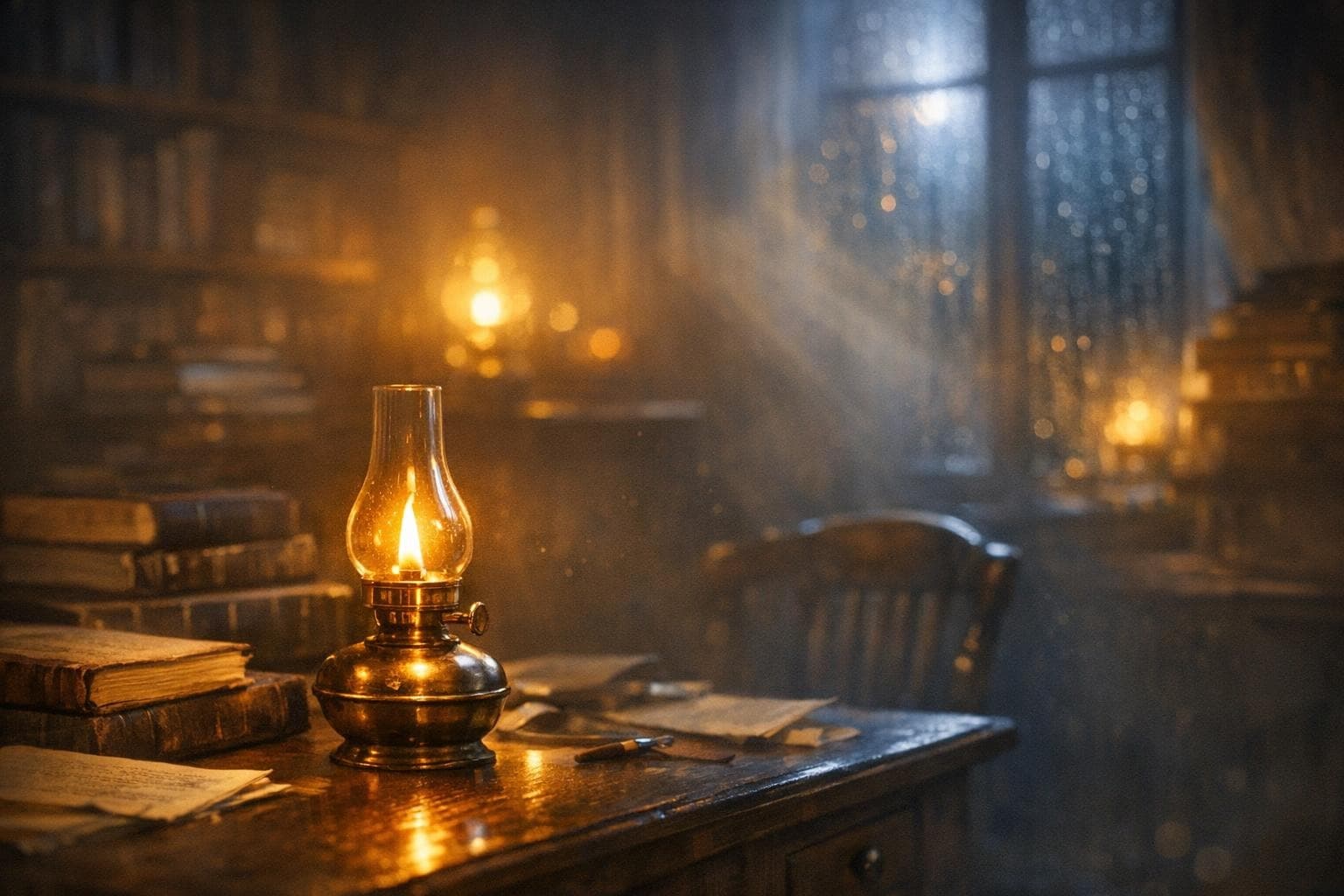
Choose light over gloom; even small lamps banish a dark room. — Fyodor Dostoevsky
—What lingers after this line?
A Moral Choice Toward Illumination
Dostoevsky’s line frames hope as an active decision rather than a lucky mood: “Choose light over gloom.” The phrasing implies agency—an inner vote cast even when circumstances feel fixed. In that sense, light is not only a metaphor for happiness but also for clarity, conscience, and the will to endure. From there, the image of a lamp shifts the focus away from grand rescues and toward attainable actions. Instead of waiting for sunrise, the quote urges a person to strike a match, however small, and let that gesture stand for a larger refusal to surrender.
Why Small Acts Matter More Than They Seem
The second clause—“even small lamps banish a dark room”—insists that scale can be misleading. Darkness feels total because it obscures reference points, yet a modest light reorganizes the whole space at once: edges appear, hazards are avoided, and direction becomes possible. In human terms, this is how seemingly minor choices change the emotional environment. A brief apology, a short walk, a glass of water, or a single honest sentence can interrupt spirals of resentment or despair. The quote’s quiet optimism rests on a practical observation: tiny interventions can have room-sized effects.
Dostoevsky’s World: Suffering Without Nihilism
Although the wording is compact, it aligns with Dostoevsky’s broader preoccupation with suffering and redemption. His novels repeatedly depict characters who stand at the brink of moral darkness yet discover that salvation arrives through humble, concrete goodness rather than triumphant certainty. Consider how Crime and Punishment (1866) links moral regeneration to incremental steps—confession, acceptance of responsibility, and the steady influence of compassion. In that literary universe, light is rarely a floodlight; it is often a candle carried through a corridor, proving the way forward exists even when it is not yet fully visible.
Psychology of Hope: Momentum Beats Magnitude
Modern psychology offers a parallel: hope frequently grows from perceived pathways and the belief that one can take the next step. C. R. Snyder’s Hope Theory (1991) emphasizes agency and routes, suggesting that small, actionable plans can restore a sense of control when life feels overwhelming. This complements Dostoevsky’s lamp metaphor: the first workable action reduces the mental “darkness” of uncertainty. Once a person experiences even a small success—sending the message they dread, paying one bill, making one appointment—the mind updates its forecast from “nothing changes” to “change is possible.”
Ethical Light: How One Person Affects a Room
The image of a “dark room” also suggests a shared space, not just a private mood. A lamp does not only comfort the person holding it; it alters the conditions for everyone present. In communities, a small act of integrity can challenge a norm of cynicism, and a single instance of courage can give others permission to be brave. History and literature alike use this logic: one witness, one protector, one dissenter can puncture a climate of fear. The quote therefore carries an ethical claim: even if you cannot fix everything, you can shift the atmosphere—often more than you expect.
Practicing the Lamp: Choosing Light Daily
If the quote is advice, it is also a method: don’t negotiate with the entire darkness; light something manageable. The “lamp” might be routine (sleep, food, movement), truth-telling (naming what hurts), or connection (asking for help, offering it). Each is small enough to attempt and strong enough to reorient a day. Over time, these small lights accumulate, and the room stays less dark because it is visited by illumination repeatedly. In that way, Dostoevsky’s counsel becomes less a lofty slogan and more a daily discipline—choosing, again and again, the smallest brightness that can be honestly sustained.
One-minute reflection
What's one small action this suggests?
Related Quotes
6 selectedTo live without hope is to cease to live. — Fyodor Dostoevsky
Fyodor Dostoevsky
Dostoevsky suggests that hope is a fundamental driving force that gives life its meaning. Without hope, an individual loses the will and motivation to continue living.
Read full interpretation →Act with clarity of purpose; even the smallest light dissolves darkness. — Marcus Aurelius
Marcus Aurelius
Marcus Aurelius’ words distill a central Stoic conviction: life should be lived on purpose, not by accident. To “act with clarity of purpose” means knowing why you do what you do, and aligning action with principle rathe...
Read full interpretation →In the darkness, there will always be stars shining.
Unknown
This quote conveys a message of hope and positivity. Even in the darkest times or periods of difficulty, there will always be sources of light and inspiration, symbolized by the stars.
Read full interpretation →In the darkness, there is always a ray of light; that is hope.
Unknown
This quote highlights the idea that no matter how challenging or dire a situation may seem, there is always a glimmer of hope. Hope acts as a guiding light during dark times.
Read full interpretation →Sometimes, it is during the darkest nights that we can see the brightest stars.
Unknown
This quote suggests that it is often during the most challenging and difficult times in life that we are able to find hope and inspiration. Just as stars shine brightest in the darkest skies, moments of clarity and brill...
Read full interpretation →Just because your light flickers does not mean it is about to go out. — Yohancé Salimu
Yohancé Salimu
At first glance, Yohancé Salimu’s line separates appearance from reality. A flicker suggests instability, fatigue, or interruption, yet it does not automatically signal extinction.
Read full interpretation →More From Author
More from Fyodor Dostoevsky →If you want to overcome the whole world, overcome yourself. — Fyodor Dostoevsky
Dostoevsky’s line reframes ambition by shifting the arena of struggle from the public world to the private self. Instead of measuring strength by dominance over others, he implies that the most consequential victories ha...
Read full interpretation →You will burn and you will burn out; you will be healed and come back again. — Fyodor Dostoevsky
Dostoevsky’s line treats suffering not as a single dramatic episode but as a recurring rhythm: intensity, collapse, recovery, and return. Instead of promising a smooth ascent toward improvement, he describes a life that...
Read full interpretation →You will burn and you will burn out; you will be healed and come back again. — Fyodor Dostoevsky
Dostoevsky’s line frames suffering as rhythmic rather than final: first the blaze of effort or emotion, then the collapse, then the slow work of recovery, and finally the return. Instead of treating burnout as a personal...
Read full interpretation →You will burn and you will burn out; you will be healed and come back again. — Fyodor Dostoevsky
Dostoevsky’s line frames suffering as rhythmic: first the blaze of intensity, then the inevitability of burnout, and finally the possibility of renewal. Instead of treating exhaustion as a final verdict, he suggests it i...
Read full interpretation →