
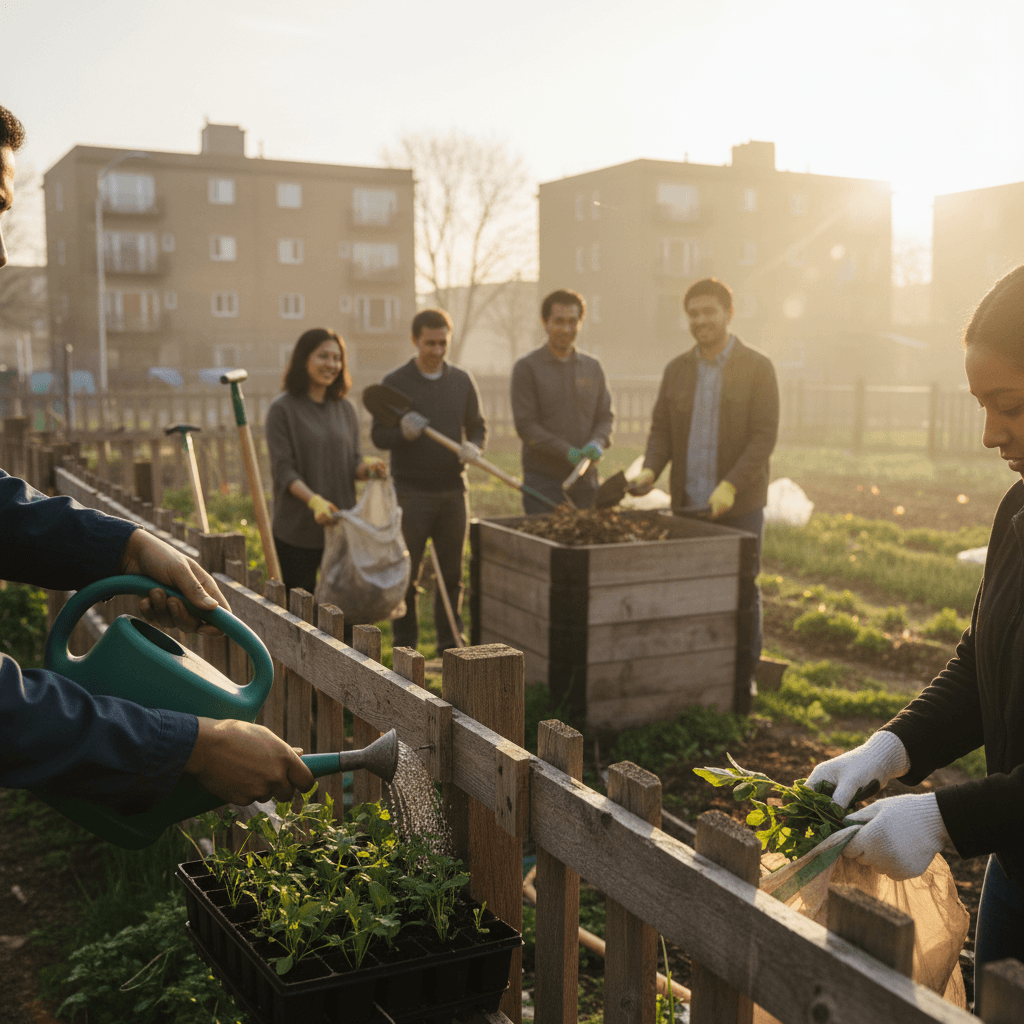
Build common ground through persistent, unglamorous acts of care. — Angela Davis
—What lingers after this line?
What “Common Ground” Really Requires
Angela Davis’s line reframes common ground as something made rather than found. Instead of waiting for perfect agreement, she implies that shared life is constructed through repeated choices that keep people connected even amid difference. In that sense, common ground is less a philosophical midpoint and more a lived practice—one that must withstand stress, misunderstanding, and unequal power. From there, the quote nudges us to see unity as an outcome of effort. If relationships and coalitions are built, then they can also be rebuilt, but only through a kind of work that is steady enough to outlast moments of conflict.
Why Care Must Be Persistent
The emphasis on persistence highlights time as a moral ingredient. A single generous gesture can inspire, yet it rarely changes conditions; repeated care, however, becomes reliable, and reliability is what makes people feel safe enough to collaborate. This echoes the practical logic of organizing: trust accumulates slowly, and it is often the accumulation—not any grand speech—that makes coordinated action possible. Consequently, persistence also functions as a test of sincerity. When care continues after attention fades, it signals that someone is committed to a shared future rather than a fleeting performance of concern.
The Power of the “Unglamorous”
By calling these acts unglamorous, Davis points to the kind of labor that typically goes unnoticed: checking in on a neighbor, making sure a meeting is accessible, cooking for someone who is exhausted, or doing the administrative work that keeps a community effort alive. These tasks rarely earn praise, yet they form the infrastructure of solidarity. In fact, the unglamorous is often where inequalities hide, because invisible labor is easy to offload onto the same people again and again. Recognizing the value of such work is therefore not only sentimental; it is political, because it asks who is carrying the burdens of togetherness.
Care as a Bridge Across Differences
Care can create connection even when viewpoints diverge, because it addresses immediate needs and shared vulnerabilities. Someone may disagree with your analysis, but still remember that you showed up at the hospital, helped with childcare, or stayed late to clean up; these moments can soften defensiveness and open room for future dialogue. Moreover, care shifts interaction from abstract debate to concrete responsibility. In that shift, people often discover overlapping values—dignity, safety, stability—that become the practical basis for cooperation even when ideology does not neatly align.
From Personal Practice to Collective Change
The quote also suggests a pathway from intimate ethics to social transformation: habits of care scale into institutions and movements. Mutual aid traditions, for instance, rely on ordinary routines—food distribution, transportation networks, shared funds—that sustain communities during crises and, over time, challenge the idea that survival should be individually managed. Finally, Davis’s framing implies that lasting change is maintained the same way it is born: through maintenance. Rights and reforms do not persist on inspiration alone; they endure when people keep tending to each other and to the structures they’ve built, especially when doing so is tiring, repetitive, and largely unseen.
One-minute reflection
What's one small action this suggests?
Related Quotes
6 selectedWhat divides us pales in comparison to what unites us. — Ted Kennedy
Ted Kennedy
Ted Kennedy’s line begins by shifting the reader’s focus from conflict to common ground. Rather than denying that differences exist, it argues that they are smaller in moral significance than the ties people already shar...
Read full interpretation →Nobody can discover the world for somebody else. Only when we discover it for ourselves does it become common ground and a common bond. — Wendell Berry
Wendell Berry
Wendell Berry begins with a simple but demanding truth: no one can hand another person a fully lived understanding of the world. Facts can be taught, maps can be drawn, and advice can be offered, yet genuine knowledge re...
Read full interpretation →I know there is strength in the differences between us. I know there is comfort, where we overlap. — Ani DiFranco
Ani DiFranco
Ani DiFranco’s line holds two ideas in careful balance: difference gives us strength, while similarity gives us comfort. At first glance, these might seem contradictory, yet together they describe how strong relationship...
Read full interpretation →The cure for burnout is not 'self-care'; it is all of us caring for one another. — Emily Nagoski
Emily Nagoski
Emily Nagoski’s line pivots burnout away from a private failing and toward a shared condition created by overload, low control, and chronic stress. By rejecting “self-care” as the primary cure, she challenges the common...
Read full interpretation →Ours is not the task of fixing the entire world all at once, but of stretching out to mend the part of the world within our reach. — Clarissa Pinkola Estés
Clarissa Pinkola Estés
Clarissa Pinkola Estés begins by stripping away the fantasy of total repair. The quote quietly challenges the heroic impulse to “fix everything,” suggesting that such ambition can become a form of avoidance—grand, exhaus...
Read full interpretation →A single steady effort outshines a burst of fleeting will. — Angela Davis
Angela Davis
Davis’s line redirects attention from dramatic spurts of resolve to the quieter power of reliability. Willpower can spark action, yet sparks alone do not boil the water; a consistent flame does.
Read full interpretation →More From Author
More from Angela Davis →A single steady effort outshines a burst of fleeting will. — Angela Davis
Davis’s line redirects attention from dramatic spurts of resolve to the quieter power of reliability. Willpower can spark action, yet sparks alone do not boil the water; a consistent flame does.
Read full interpretation →Life can be found in the most unexpected places. — Angela Davis
This quote highlights that life, growth, and hope may emerge from places or situations where one least anticipates them. Even in difficult or seemingly barren circumstances, positive outcomes can arise.
Read full interpretation →Inspiring change starts with taking the first step. — Angela Davis
This quote highlights the importance of overcoming fear and hesitations to initiate action. Inspiring change often starts with the bold decision to take that crucial first step.
Read full interpretation →In every moment, you have the power to create something new. — Angela Davis
This quote emphasizes that individuals have the ability to shape their own lives. Every moment presents an opportunity to make changes, take action, and create something meaningful.
Read full interpretation →