
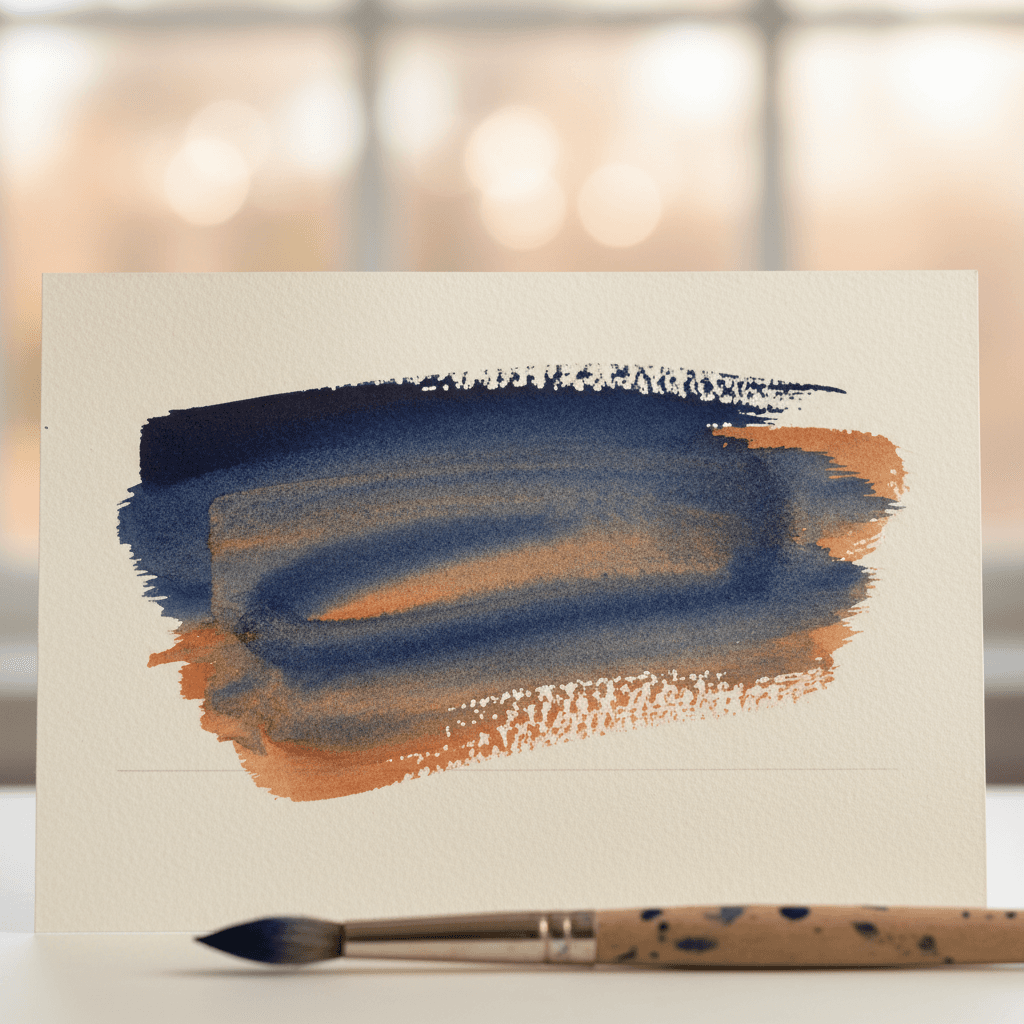
Celebrate the imperfect stroke; it teaches more than the faultless line. — E. E. Cummings
—What lingers after this line?
A Praise of Productive Flaws
Cummings’ line reframes imperfection as an active teacher rather than a defect to erase. The “imperfect stroke” suggests a mark made in motion—evidence of effort, risk, and choice—while the “faultless line” can imply caution so tight it leaves nothing new behind. In that contrast, the quote doesn’t dismiss skill; it challenges the assumption that correctness is the highest form of learning. This idea naturally opens into a broader claim about growth: what advances us is not the absence of error, but the information error reveals. A wobble in the stroke shows where control slips, where attention narrows, or where a new style might begin.
Mistakes as Feedback, Not Verdicts
From there, the imperfect stroke becomes a kind of data point. When something goes wrong, it pinpoints the boundary of current ability and clarifies what to practice next. In contrast, a “faultless line” can be silent—pleasing, but less diagnostic—because it doesn’t expose the hidden mechanics that made it work. This is why learners often improve fastest when they can see their missteps clearly. The crooked curve teaches proportion; the uneven shading teaches patience and pressure. Error, in other words, functions less like a condemnation and more like a map.
Art’s History of Valuing the Human Trace
Stepping outward into artistic tradition, many forms celebrate the visible trace of the maker. Japanese aesthetics of wabi-sabi explicitly value the incomplete and irregular, treating them as signs of life rather than failure. Similarly, the energy in a sketch—construction lines, revisions, and all—can communicate more immediacy than a polished rendering that hides its process. In that light, Cummings’ “stroke” evokes not only visual art but also handwriting and poetry: the mark that carries breath, tempo, and individuality. What looks imperfect may actually be the most honest record of perception in real time.
The Psychology of Learning Through Error
Turning to how people actually acquire skills, research on learning consistently finds that grappling with errors strengthens memory and understanding. Robert A. Bjork’s work on “desirable difficulties” (1994) describes how challenges that feel messy in the moment often lead to better long-term retention, precisely because the mind must reconstruct and adjust. That connects directly back to the quote: the imperfect stroke forces correction, and correction creates insight. When we tolerate the discomfort of being slightly wrong, we gain the flexibility that “faultless” performance can sometimes disguise.
Perfectionism’s Quiet Cost
At this point, the “faultless line” starts to look less like a triumph and more like a temptation. Perfectionism can narrow experimentation, because the safest path is to repeat what already works. Over time, that safety can turn into creative stagnation—no new strokes, no surprising outcomes, no chance discoveries. Cummings’ celebration is therefore also a warning: if we only permit ourselves what we can execute flawlessly, we may never attempt what would change our style, deepen our craft, or expand our voice. Learning demands room to be unfinished.
A Practical Ethic for Making and Living
Finally, the quote offers an ethic: aim for meaning before polish, and treat missteps as part of the record rather than proof of inadequacy. In practice, that could mean saving drafts, keeping “failed” sketches, or revisiting awkward passages, because they preserve the trail of decisions that led to improvement. Seen this way, the imperfect stroke is not merely acceptable—it is essential. It teaches humility, reveals technique, and invites experimentation, so that the line that eventually becomes “faultless” is not sterile correctness but earned clarity.
One-minute reflection
Where does this idea show up in your life right now?
Related Quotes
6 selectedTo create, one must first question everything. — E. E. Cummings
E. E. Cummings
The quote highlights that creativity and invention require a willingness to challenge assumptions and traditions.
Read full interpretation →We don't create to be perfect; we create to be present. The imperfections are not errors, but the fingerprints of our humanity. — Wabi-sabi philosophy, via Leonard Koren
sabi philosophy, via Leonard Koren
At its core, this reflection shifts the purpose of creation away from flawless results and toward lived attention. To create ‘to be present’ means engaging fully with the moment, allowing the act itself to matter as much...
Read full interpretation →Embrace the imperfect start; masterpieces begin with a single uneven stroke. — Henri Matisse
Henri Matisse
Matisse’s invitation reframes the first mark—not as a test of genius but as a door that opens the work. By blessing the wobble at the beginning, he liberates us from the paralysis of pristine expectations.
Read full interpretation →I wanted a perfect ending. Now I've learned, the hard way, that some poems don't rhyme, and some stories don't have a clear beginning, middle, and end. — Gilda Radner
Gilda Radner
Gilda Radner’s quote begins with a deeply human wish: the desire for a perfect ending. Most people instinctively want life to resemble a well-made story, with conflicts resolved, wounds explained, and every emotional thr...
Read full interpretation →Imperfection inspires invention, imagination, and creativity. — Mary Sharratt
Mary Sharratt
Mary Sharratt’s insight begins with a reversal of ordinary expectations: imperfection is not merely something to fix, but something that awakens possibility. When a plan fails, a surface cracks, or an idea refuses to fit...
Read full interpretation →The painting has a life of its own. I try to let it come through. — Jackson Pollock
Jackson Pollock
At first glance, Jackson Pollock’s remark gives the painting an almost independent existence, as though the canvas carries its own pulse before the artist fully understands it. Rather than describing painting as pure con...
Read full interpretation →More From Author
More from E. E. Cummings →The hardest battle is being nobody but yourself in a world that wants you to be everyone else. — e. e. cummings
e. e.
Read full interpretation →Compose motion from silence; even quiet choices become music. — E. E. Cummings
Cummings’ line begins by treating silence not as emptiness, but as material—something you can shape into motion. Instead of waiting for noise, inspiration, or permission, the speaker suggests beginning wherever you are,...
Read full interpretation →Dare to be odd, then build the world that honors your strange truth. — E. E. Cummings
E. E.
Read full interpretation →Begin where you are with what astonishes you; astonishment fuels creation. — E.E. Cummings
E.E. Cummings invites us to begin not with grand plans but with the immediacy of our own surroundings.
Read full interpretation →