
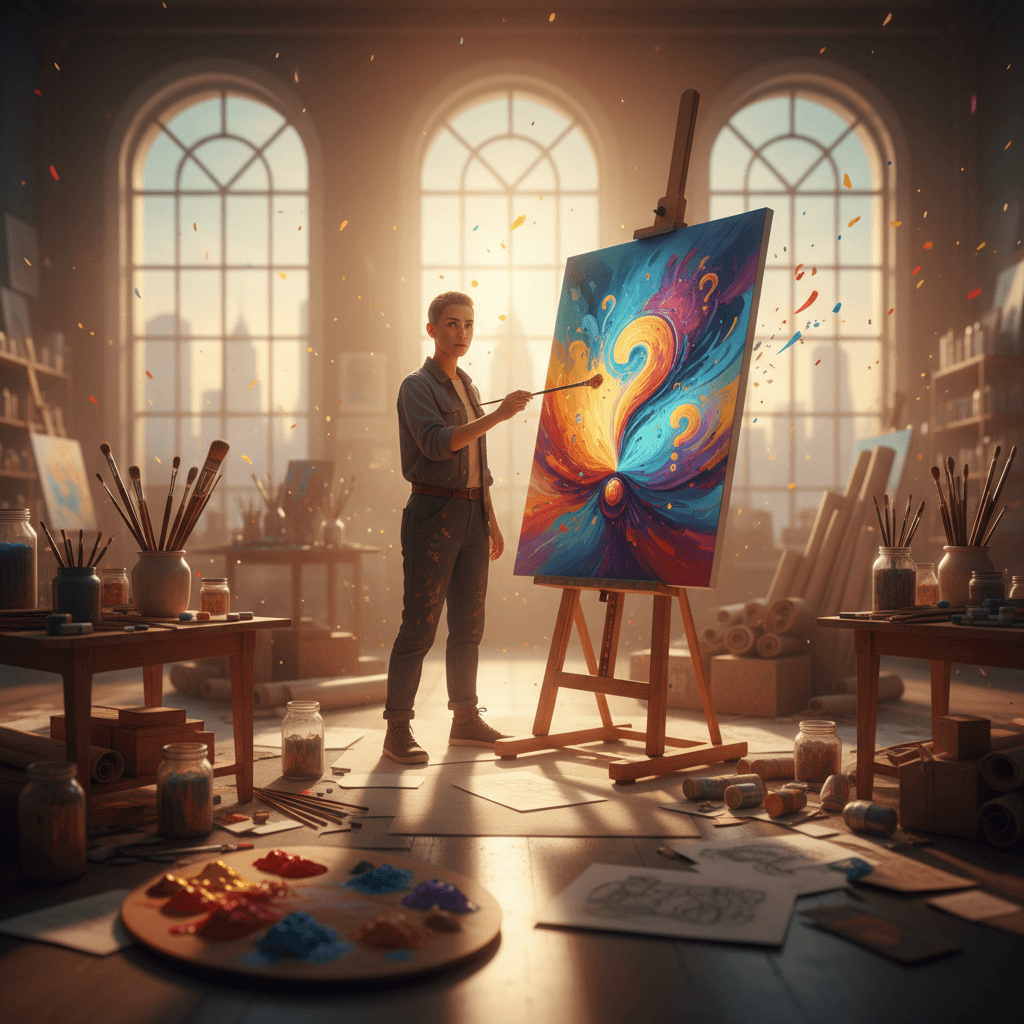
Hold fast to your creative stubbornness and let your art answer the world’s questions. — Toni Morrison
—What lingers after this line?
Stubbornness as a Chosen Discipline
Toni Morrison’s phrase “creative stubbornness” reframes stubbornness from a flaw into a practice: the steady refusal to dilute one’s vision for easier approval. Rather than describing mere contrariness, she points to an artist’s commitment to keep working when the world is indifferent, distracted, or demanding something more marketable. From there, “hold fast” adds a sense of pressure—implying that art is made in resistance to forces that would soften it. Morrison’s own career illustrates this resolve; novels like Beloved (1987) insisted on portraying slavery’s afterlives with lyrical force, even when such truths were uncomfortable for mainstream tastes.
Why the World’s Questions Can’t Be Dodged
If stubbornness is the stance, the reason for it is the world’s constant questioning: Who matters? What is remembered? What is denied? Morrison suggests that artists do not escape these questions; they live inside them, and their work becomes a site where unanswered tensions can be held without simplification. Consequently, “the world’s questions” are not just intellectual puzzles but moral and social demands—questions raised by injustice, grief, and longing. James Baldwin’s essays, such as The Fire Next Time (1963), similarly treat art as an arena where a society interrogates itself, not to reach a neat verdict, but to face what it has tried not to see.
Letting the Work Speak Instead of the Artist
Morrison’s instruction to “let your art answer” shifts attention away from personal explanation and toward the finished creation. Instead of arguing on every battlefield or translating the work into slogans, the artist is invited to trust form, character, image, and voice as the most truthful language they have. This also implies restraint: not every response needs to be immediate or argumentative. Poetry and fiction can answer indirectly, by shaping empathy and perception. For example, Mary Shelley’s Frankenstein (1818) responds to questions about creation, responsibility, and ambition not through a treatise, but through a story that continues to educate the imagination centuries later.
Art as a Different Kind of Evidence
Because Morrison speaks of “answers,” she acknowledges art’s persuasive power—but not in the way a courtroom or laboratory operates. Artistic answers are experiential: they make a reader feel the weight of a choice, inhabit a perspective, or recognize a pattern that facts alone may not animate. In this sense, art becomes evidence of interior life and collective memory. Morrison’s Beloved (1987) offers a felt account of haunting and survival that complements historical documentation by translating trauma into a lived presence on the page. The answer is not a statistic; it is an awakened capacity to perceive and remember.
The Risk of Refusal—and Its Necessity
Holding fast to a stubborn vision carries risk: rejection, misunderstanding, and the temptation to self-censor. Morrison’s message quietly concedes that the world may not reward the artist for integrity, yet she argues that yielding too early costs more—the loss of originality, the flattening of voice, the abandonment of the work’s real subject. Therefore, “creative stubbornness” becomes an ethical choice as much as an aesthetic one. Many artists have faced this trade-off; the painter Vincent van Gogh sold little in his lifetime, yet his persistence left a visual language that later generations recognized as indispensable. The refusal to bend can be the very condition that makes art last.
Answering Through Craft, Not Noise
Finally, Morrison’s counsel points toward craft as the route by which stubbornness becomes meaningful. Stubbornness without skill can harden into repetition, but stubbornness guided by revision, research, and careful listening becomes clarity. In other words, the “answer” arrives not just through conviction, but through the patient labor that shapes conviction into form. As this closes the circle, the quote suggests a method for living as an artist: stay faithful to the work, let it mature on its own terms, and allow its finished presence to meet the world’s questions with depth rather than volume. The artist’s most durable response is the work itself—well-made, unafraid, and unmistakably their own.
Recommended Reading
As an Amazon Associate, we earn from qualifying purchases.
One-minute reflection
Where does this idea show up in your life right now?
Related Quotes
6 selectedCreate beauty that speaks; courage becomes visible through art. — Toni Morrison
Toni Morrison
Toni Morrison’s line binds aesthetics to bravery, suggesting that true beauty does not merely adorn—it testifies. When artists create forms that speak, they translate private risk into public language, allowing courage t...
Read full interpretation →The role of art has never been to escape reality, but to help us understand it. — Toni Morrison
Toni Morrison
At first glance, art is often treated as a refuge from hardship, a private world where pain can be softened or forgotten. Toni Morrison overturns that expectation by arguing that art’s deeper purpose is not avoidance but...
Read full interpretation →The ability to endure is the discipline of the soul. — Toni Morrison
Toni Morrison
Toni Morrison’s line shifts endurance from a mere survival trait into a deliberate inner practice: a discipline cultivated in the soul. Rather than glorifying pain for its own sake, she suggests that the capacity to cont...
Read full interpretation →You are your best thing. — Toni Morrison
Toni Morrison
Toni Morrison’s line, “You are your best thing,” quietly overturns a common habit: looking outward for proof of worth. Instead of treating love, status, or achievement as the final measure, the quote plants value inside...
Read full interpretation →Keep a stubborn heart and a flexible plan. — Toni Morrison
Toni Morrison
Toni Morrison’s sentence splits strength into two complementary forms: a “stubborn heart” that refuses to surrender what matters, and a “flexible plan” that accepts reality’s constant revisions. Rather than treating grit...
Read full interpretation →Open your hands and the world will learn how to fit in them. — Toni Morrison
Toni Morrison
Toni Morrison’s line sounds gentle, yet it carries a bracing claim: the way you hold yourself teaches the world how to approach you. “Open your hands” evokes release—of tight control, fear, and the reflex to clutch what...
Read full interpretation →More From Author
More from Toni Morrison →The role of art has never been to escape reality, but to help us understand it. — Toni Morrison
At first glance, art is often treated as a refuge from hardship, a private world where pain can be softened or forgotten. Toni Morrison overturns that expectation by arguing that art’s deeper purpose is not avoidance but...
Read full interpretation →The ability to endure is the discipline of the soul. — Toni Morrison
Toni Morrison’s line shifts endurance from a mere survival trait into a deliberate inner practice: a discipline cultivated in the soul. Rather than glorifying pain for its own sake, she suggests that the capacity to cont...
Read full interpretation →You are your best thing. — Toni Morrison
Toni Morrison’s line, “You are your best thing,” quietly overturns a common habit: looking outward for proof of worth. Instead of treating love, status, or achievement as the final measure, the quote plants value inside...
Read full interpretation →Keep a stubborn heart and a flexible plan. — Toni Morrison
Toni Morrison’s sentence splits strength into two complementary forms: a “stubborn heart” that refuses to surrender what matters, and a “flexible plan” that accepts reality’s constant revisions. Rather than treating grit...
Read full interpretation →