
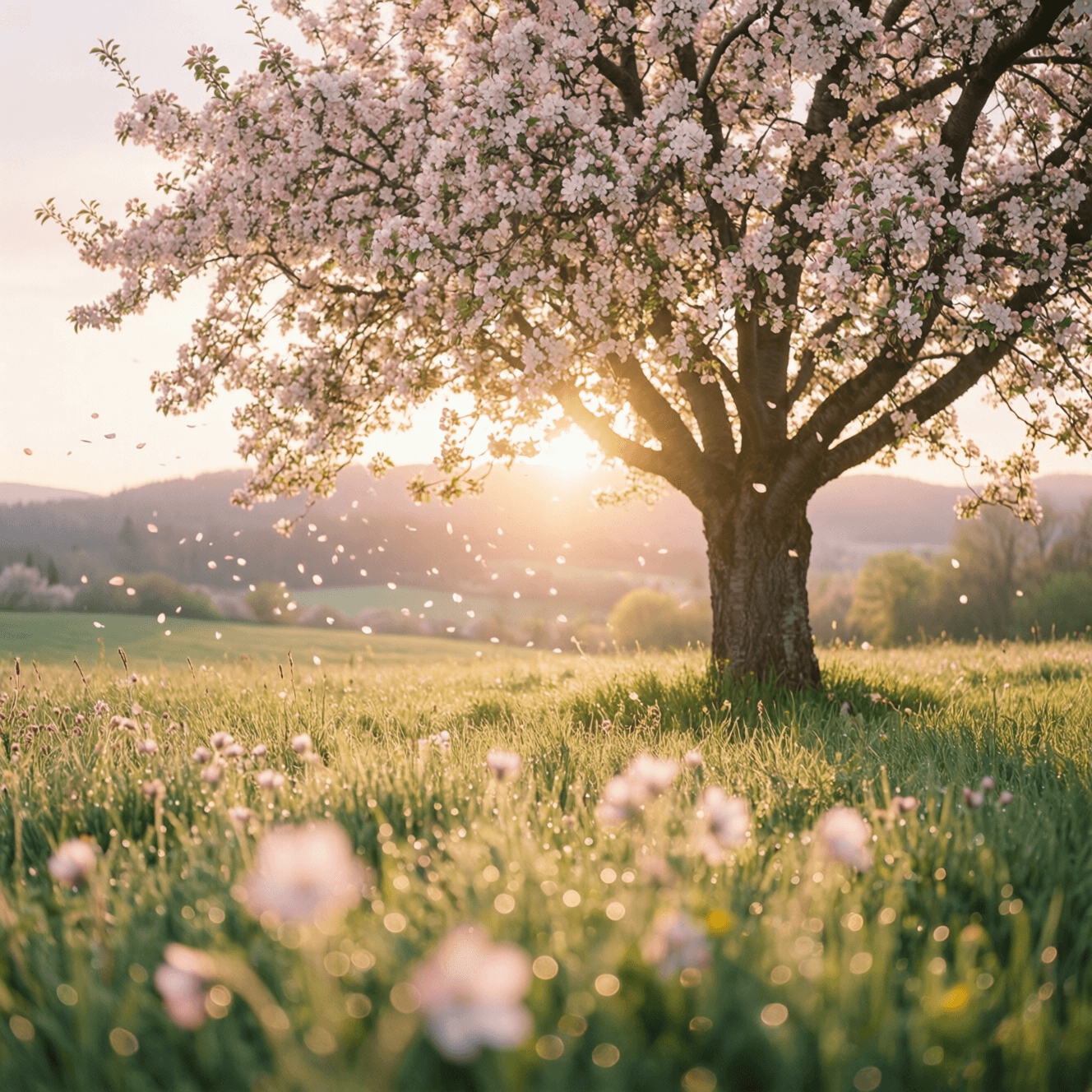
A tree does not post its blossoms; it simply blooms. — Unknown
—What lingers after this line?
The Image of Effortless Expression
The quote begins with a simple contrast: a tree does not announce its blossoms, yet its beauty arrives all the same. In that comparison, “posting” stands in for seeking validation, while “blooming” suggests an unforced, natural expression of what something is. The tree’s work is real—rooting, absorbing, growing—yet it doesn’t require an audience to make the season meaningful. From there, the line nudges us to reconsider how often we treat visibility as proof of value. Like blossoms that appear because the tree is ready, the quote implies that the most honest growth is frequently quiet, emerging from inner timing rather than public performance.
Growth as a Private Process
Building on that image, the tree reminds us that development happens offstage. Roots expand in darkness, rings form slowly, and buds set long before they open; the visible bloom is only the final moment of a long, unseen process. In human terms, competence, character, and creativity often mature in the same hidden way—through practice, repetition, and patience. This is why the metaphor feels grounding: it shifts attention away from immediate recognition and back to steady cultivation. Instead of asking whether others noticed, it suggests asking whether you are becoming more capable, more honest, or more alive in your own season.
A Critique of Performative Living
Next, the quote reads as a gentle critique of performative habits encouraged by social media: the urge to document, announce, and package every milestone. The problem isn’t sharing itself, but the subtle trade it can create—doing things for the post rather than for the thing. A tree doesn’t curate its blossoms; it doesn’t angle them for approval or measure their worth by reactions. In that sense, the line invites a quieter standard of success. If your choices are continually filtered through how they will appear, you may lose the direct experience of living them—whereas “simply blooming” means letting the work stand on its own.
Integrity and Intrinsic Motivation
From critique, the quote naturally turns toward integrity: doing what is right or meaningful even when no one is watching. Philosophers have long treated this as a measure of character; for instance, Plato’s *Republic* (c. 375 BC) explores whether a person would remain just without external consequences, a thought experiment that parallels the tree’s indifferent calm toward praise. Similarly, modern motivation research distinguishes intrinsic motivation—acting for inherent satisfaction—from extrinsic rewards. The tree becomes a symbol of the intrinsic: it flowers because that is what it is made to do, not because it will be applauded.
Seasonality, Patience, and Trust
Finally, the quote offers comfort about timing. Trees do not bloom year-round; they wait, they shed, they endure winter, and then they return. That seasonal rhythm suggests that periods of quiet, rest, or invisibility are not failures but necessary phases that precede renewal. Taken together, the message feels both practical and humane: focus on nourishment rather than noise, process rather than announcement. When your moment comes, let it arrive naturally—like blossoms that open not to impress, but because the time is right.
Recommended Reading
As an Amazon Associate, we earn from qualifying purchases.
One-minute reflection
What does this quote ask you to notice today?
Related Quotes
6 selectedThe river does not stop to look at the stars, but it reflects their light in every curve.
Unknown
This quote symbolically represents the continuous flow of life. Just as a river does not halt its journey, but still reflects the stars along its path, life goes on, incorporating moments of beauty and inspiration along...
Read full interpretation →Xijiang Moon Xin Qiji Traveling at night along the yellow sand road, fireflies dance in the air. The sound of wind accompanies the rain, blowing over the red plum trees. Do not say that you travel early, as there are always others who travel even earlier.
Unknown
The poem uses vivid imagery to describe the natural scenery at night. The fireflies dancing in the air and the combination of wind and rain create a mystical, evocative atmosphere.
Read full interpretation →Talent means nothing, while experience, acquired in humility and with hard work, means everything. — Patrick Süskind
Patrick Süskind
At first glance, Patrick Süskind’s statement seems deliberately extreme, because few people truly believe talent means nothing at all. Yet that sharp phrasing serves a purpose: it shifts attention away from natural gifts...
Read full interpretation →We have forgotten how to be good guests, how to walk lightly on the earth as its other creatures do. — Barbara Ward
Barbara Ward
Barbara Ward’s line begins as a moral correction: humanity has behaved less like a guest and more like an owner. By saying we have forgotten how to be “good guests,” she implies that restraint, gratitude, and humility on...
Read full interpretation →Gratitude is a way of saying that we are not the masters of our own existence. — Henri Nouwen
Henri Nouwen
Henri Nouwen’s statement begins with a quiet but radical insight: gratitude is more than politeness or positive thinking. At its deepest level, it is an admission that life is received, not manufactured entirely by our o...
Read full interpretation →We cultivate a very small field, but we love it, knowing that God does not require great achievements but a heart that holds back nothing. — Thubten Chodron
Thubten Chodron
At its core, Thubten Chodron’s quote overturns the common belief that worth depends on scale. The image of a “very small field” suggests a life of modest responsibilities, limited influence, or quiet service.
Read full interpretation →More From Author
More from Unknown →The language is the substrate. The architecture is the contract.
The line sets up a deliberate pairing: language lies beneath everything, while architecture governs everything above it. In other words, what you can express determines what you can build, and what you commit to structur...
Read full interpretation →A scroll is not a break; it is a trap disguised as rest. — Unknown
The quote begins by challenging a familiar story we tell ourselves: that a brief scroll is a harmless pause between tasks. On the surface, it looks like recovery—no effort, no decision, no commitment.
Read full interpretation →Don't let your ice cream melt while you're counting someone else's sprinkles. — Unknown
The quote uses ice cream as a simple stand-in for life’s fleeting pleasures: what you have is delicious, but it won’t last forever if you ignore it. Meanwhile, “counting someone else’s sprinkles” captures the habit of mo...
Read full interpretation →If your absence doesn't affect them, your presence never mattered. — Unknown
The quote frames absence as a revealing experiment: remove yourself, and the reaction—concern, curiosity, indifference—becomes a kind of data. If nothing changes when you’re gone, it suggests your role was never integrat...
Read full interpretation →