
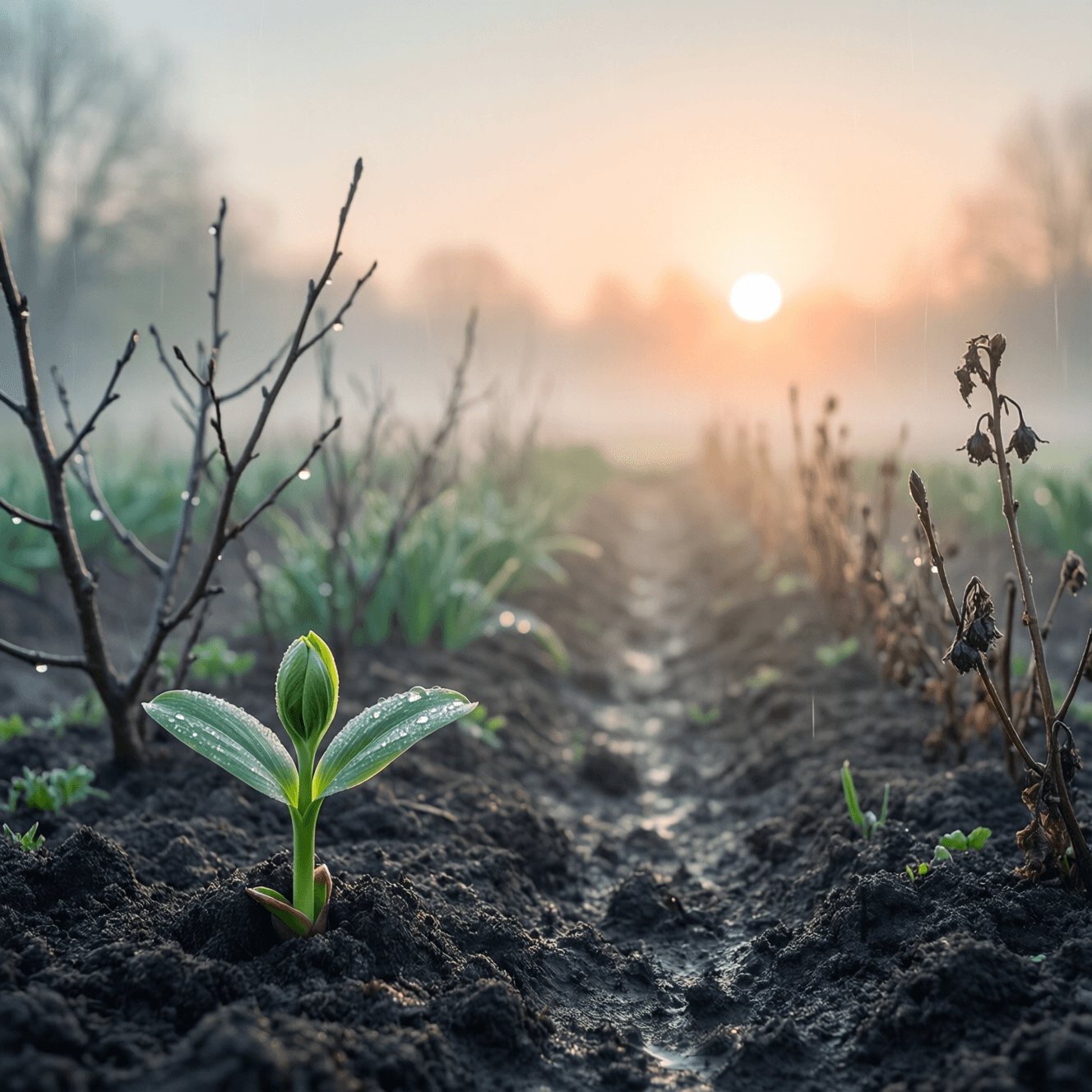
You do not have to be blooming to be growing. — Morgan Harper Nichols
—What lingers after this line?
Redefining What Progress Looks Like
Morgan Harper Nichols’ line challenges a popular assumption: that growth must be visible, impressive, or immediately rewarding. By separating “blooming” from “growing,” she reframes progress as something that can be real even when it isn’t obvious to others—or even to us. This distinction matters because many people judge their development only by external markers: promotions, accolades, finished projects, or a confident public persona. Yet the quote invites a gentler metric: if you are learning, healing, practicing, or becoming more honest with yourself, you are growing, even if nothing looks “successful” on the surface.
The Hidden Work Beneath the Surface
To deepen the metaphor, blooming is often the visible stage, but growing includes the unseen stages that make blooming possible. Before a plant flowers, it builds roots, strengthens stems, and gathers resources. In much the same way, a person may be cultivating resilience, boundaries, or skills long before any outward change appears. Because this work is quiet, it can be easy to dismiss it as stagnation. However, the quote nudges us to recognize that internal development—like rebuilding confidence after failure or practicing consistency in small habits—is not “lesser” growth. It is, frequently, the foundation for everything that later becomes visible.
Escaping Comparison and Performance Pressure
Once we accept that growth can be invisible, it becomes easier to step out of the comparison trap. Social settings—and especially social media—reward “blooming” moments: announcements, highlights, and before-and-after transformations. Nichols’ statement implicitly resists that performance-driven timeline. In practical terms, this can relieve the pressure to prove you are doing well. Someone might be in a season of therapy, grief, retraining for a new career, or simply learning how to rest—none of which comes with instant public proof. By honoring growth without spectacle, you grant yourself permission to move at the pace your life actually requires.
Small Steps as Real Evidence of Change
From there, the quote encourages a focus on incremental progress rather than dramatic outcomes. Growth often arrives as small, repeatable choices: writing one page, walking ten minutes, studying a little each day, apologizing without defensiveness, or saying “no” when you used to people-please. Consider a simple anecdote: a musician may not be ready for a concert, yet daily scales and finger exercises are unmistakable growth. Similarly, a person may not feel “in their prime,” yet consistently showing up for their commitments is a kind of training. Blooming may be the performance, but growing is the rehearsal that makes it possible.
Patience, Seasons, and the Timing of Blooming
The metaphor also implies seasons. Not every season is meant for blooming; some are for rooting, resting, or recovery. This aligns with a broader wisdom found in many traditions that emphasize timing—Ecclesiastes 3:1 notes, “To everything there is a season,” capturing the idea that life moves in phases with different purposes. Seen this way, the absence of bloom is not necessarily failure; it may be an appropriate stage of preparation. The quote becomes a reminder to practice patience with yourself: blooming is not a constant state, and demanding it too early can lead to burnout, frustration, or shallow progress that lacks support.
A Gentler Standard for Self-Respect
Finally, Nichols’ message offers a compassionate standard for self-evaluation. If you only respect yourself when you are “blooming,” you risk tying worth to output, beauty, or achievement. By affirming growth even in ordinary or difficult moments, you build a steadier form of self-regard. This doesn’t deny ambition; instead, it supports sustainable ambition. When you can say, “I’m not blooming yet, but I’m still growing,” you stay connected to hope without forcing premature results. Over time, that mindset turns growth into a lived practice—and blooming becomes a byproduct rather than a demand.
One-minute reflection
Where does this idea show up in your life right now?
Related Quotes
6 selectedThere is nothing wrong with slowness. All around you in nature, a billion different things move at a slow pace, just as they are supposed to. — Morgan Harper Nichols
Morgan Harper Nichols
Morgan Harper Nichols begins by challenging a common modern anxiety: the fear that moving slowly means falling behind. Her words reframe slowness not as failure, but as a natural and even necessary rhythm.
Read full interpretation →Patience is not passive waiting; it is the courage to stand in the middle of a process and trust that the bloom is coming. — Mary Oliver
Mary Oliver
At first glance, patience is often mistaken for mere delay or resignation, yet Mary Oliver overturns that assumption immediately. In her view, patience is not passive waiting but an active inner stance: a decision to rem...
Read full interpretation →Good character is not formed in a week or a month. It is created little by little, day by day. — Heraclitus
Heraclitus
Heraclitus reminds us that good character is not a sudden achievement but a gradual construction. Like a path worn into the earth by repeated footsteps, integrity, patience, courage, and kindness emerge through daily pra...
Read full interpretation →The soul is trained for courage when we show patience under hardships. — Diogenes
Diogenes
Diogenes’ statement begins with a striking reversal: courage is not merely proven in sudden danger but trained through endurance. By saying the soul is strengthened when we show patience under hardship, he presents brave...
Read full interpretation →Patience is not merely a virtue but a fundamental component of craftsmanship; it is the quiet companion that guides the steady hand. — Tadao Ando
Tadao Ando
At first glance, Tadao Ando’s words seem to praise patience as a moral quality, but he goes further by placing it at the center of making. Craftsmanship is not only skill with tools or mastery of materials; it is the dis...
Read full interpretation →Patience is not passive waiting. Patience is active acceptance of the process required to attain your goals and dreams. — Ray Davis
Ray Davis
Ray Davis’s words begin by correcting a common misunderstanding: patience is not the same as doing nothing. Passive waiting suggests resignation, as if time alone will deliver success.
Read full interpretation →More From Author
More from Morgan Harper Nichols →There is nothing wrong with slowness. All around you in nature, a billion different things move at a slow pace, just as they are supposed to. — Morgan Harper Nichols
Morgan Harper Nichols begins by challenging a common modern anxiety: the fear that moving slowly means falling behind. Her words reframe slowness not as failure, but as a natural and even necessary rhythm.
Read full interpretation →Your body remembers every moment you ignored yourself. Let today be different. — Morgan Harper Nichols
At first glance, Morgan Harper Nichols’s line suggests that the body is more than a physical shell; it is a living archive of our habits, hurts, and silences. Every time a person overrides exhaustion, suppresses grief, o...
Read full interpretation →You are worth the quiet moment. You are worth the deeper breath. You are worth the time it takes to slow down, be still, and rest. — Morgan Harper Nichols
At its core, Morgan Harper Nichols’s reflection challenges the modern habit of treating rest as something earned only after exhaustion. By saying “you are worth” the quiet moment, the deeper breath, and the time to slow...
Read full interpretation →Boundaries are not a wall to keep people out, but a gate to keep your peace in. — Morgan Harper Nichols
At first glance, boundaries are often mistaken for barriers, as if setting limits automatically signals rejection. Morgan Harper Nichols reframes that assumption by describing boundaries as a gate rather than a wall.
Read full interpretation →