
Healing Requires Boundaries and Self-Prioritization
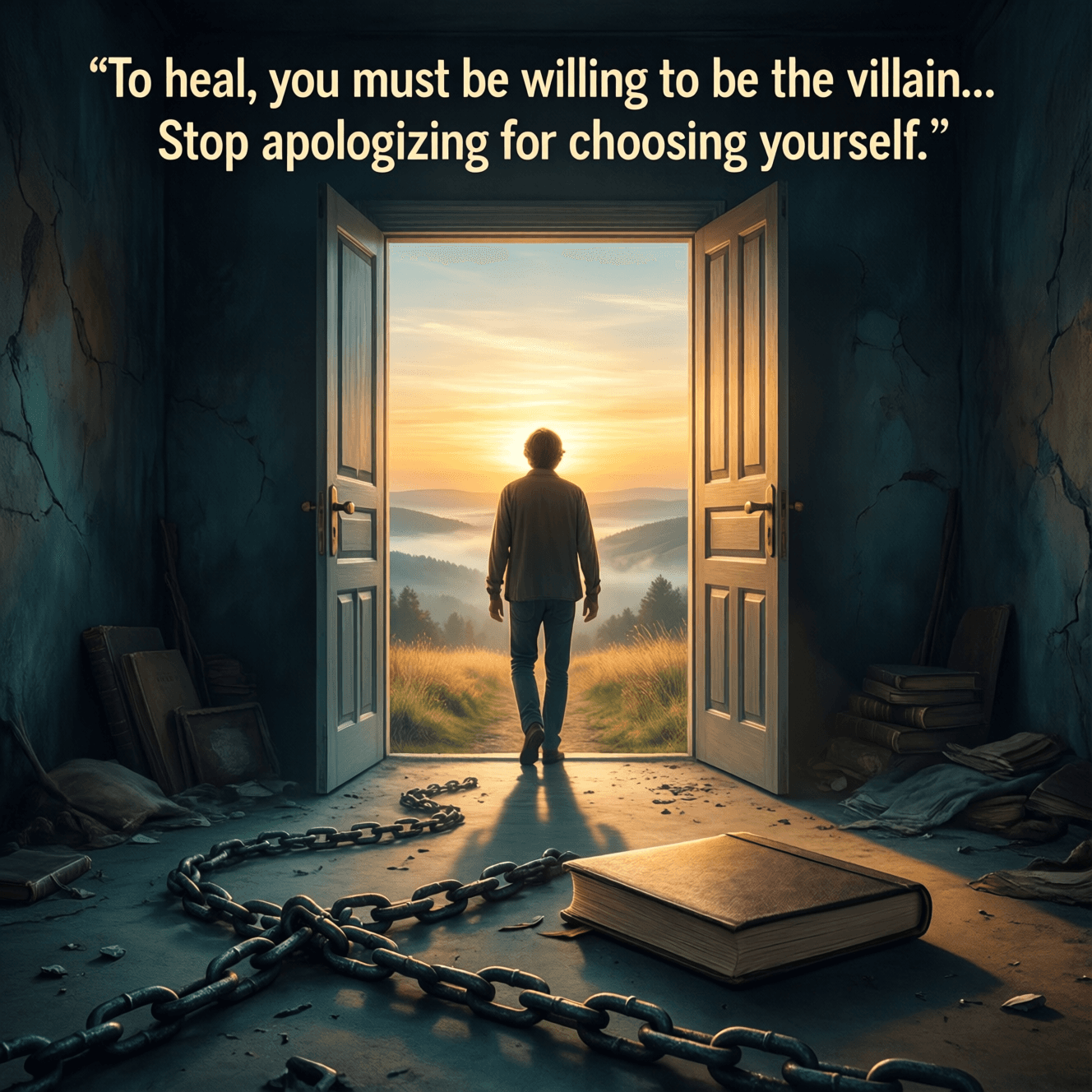
To heal, you must be willing to be the villain in the stories of people who benefited from your lack of boundaries. Stop apologizing for choosing yourself. — Unknown
—What lingers after this line?
One-minute reflection
What's one small action this suggests?
Why Healing Can Look Like Harm
The quote begins with an unsettling truth: personal healing often changes the roles people assign us. When you start saying “no,” limiting access, or refusing unfair demands, others may interpret that shift as selfishness. In their version of events, you become the “villain” not because you caused new harm, but because you stopped absorbing harm quietly. This reframes healing as a relational event, not merely an inner one. As you recover your time, energy, and autonomy, the social ecosystem around you reacts—especially if it was built on your compliance.
Who Benefits From Your Lack of Boundaries
Next, the quote highlights the hidden economy of boundarylessness: someone was gaining from it. That benefit might have been practical—free labor, constant emotional support, unquestioned availability—or psychological, such as control and reassurance. When those benefits become normal, your needs can be treated as inconveniences rather than realities. From there, it becomes easier to see why pushback happens when you change. The loss others experience is real, but it does not automatically make your boundary wrong; it may simply reveal an arrangement that was never sustainable or fair.
The Fear of Being Misunderstood
Even so, many people remain stuck because they dread being seen as cruel, ungrateful, or difficult. This fear is especially strong for those conditioned to equate goodness with self-sacrifice, where love is proven by overgiving. In that context, boundary-setting can trigger guilt, as if protecting yourself is a moral failure. However, the quote suggests a pivot: you may need to tolerate misunderstanding to become well. If the only way to stay “good” in someone’s eyes is to stay depleted, then the image is being purchased at too high a cost.
Stopping the Reflex to Apologize
The line “Stop apologizing for choosing yourself” addresses a common reflex: preemptive apology as emotional self-defense. People often soften boundaries with excessive explanations—“I’m so sorry, I feel terrible”—hoping the other person won’t retaliate. But repeated apologizing can accidentally communicate that the boundary is unreasonable and that you’re open to negotiation. Instead, the quote nudges toward clean, respectful clarity. Choosing yourself does not require hostility; it requires firmness. In many situations, the most compassionate approach is a direct statement that honors your limits without pleading for permission.
Becoming the Villain as a Milestone
Then comes the core claim: being cast as the villain can be a sign you are doing necessary work. When a relationship relied on your silence, your new voice will sound like betrayal. When it relied on your availability, your unavailability will be framed as abandonment. These narratives protect the old arrangement by making your growth seem like a problem. Over time, accepting this role—without embracing cruelty—can be liberating. It marks a shift from managing others’ comfort to managing your own well-being, which is often what healing demands.
What Choosing Yourself Actually Looks Like
Finally, the quote points toward a practical ethic: self-prioritization is not a dramatic declaration, but a pattern of consistent choices. It can mean declining calls you don’t have energy for, setting expectations about money or time, refusing disrespect, or ending dynamics that depend on your constant flexibility. As these choices accumulate, the people who can adapt will often remain, sometimes with healthier terms. Those who cannot may leave or criticize. Either outcome clarifies your relationships—and, in the long run, supports the central promise of the quote: healing is easier when your life is no longer organized around being endlessly agreeable.