
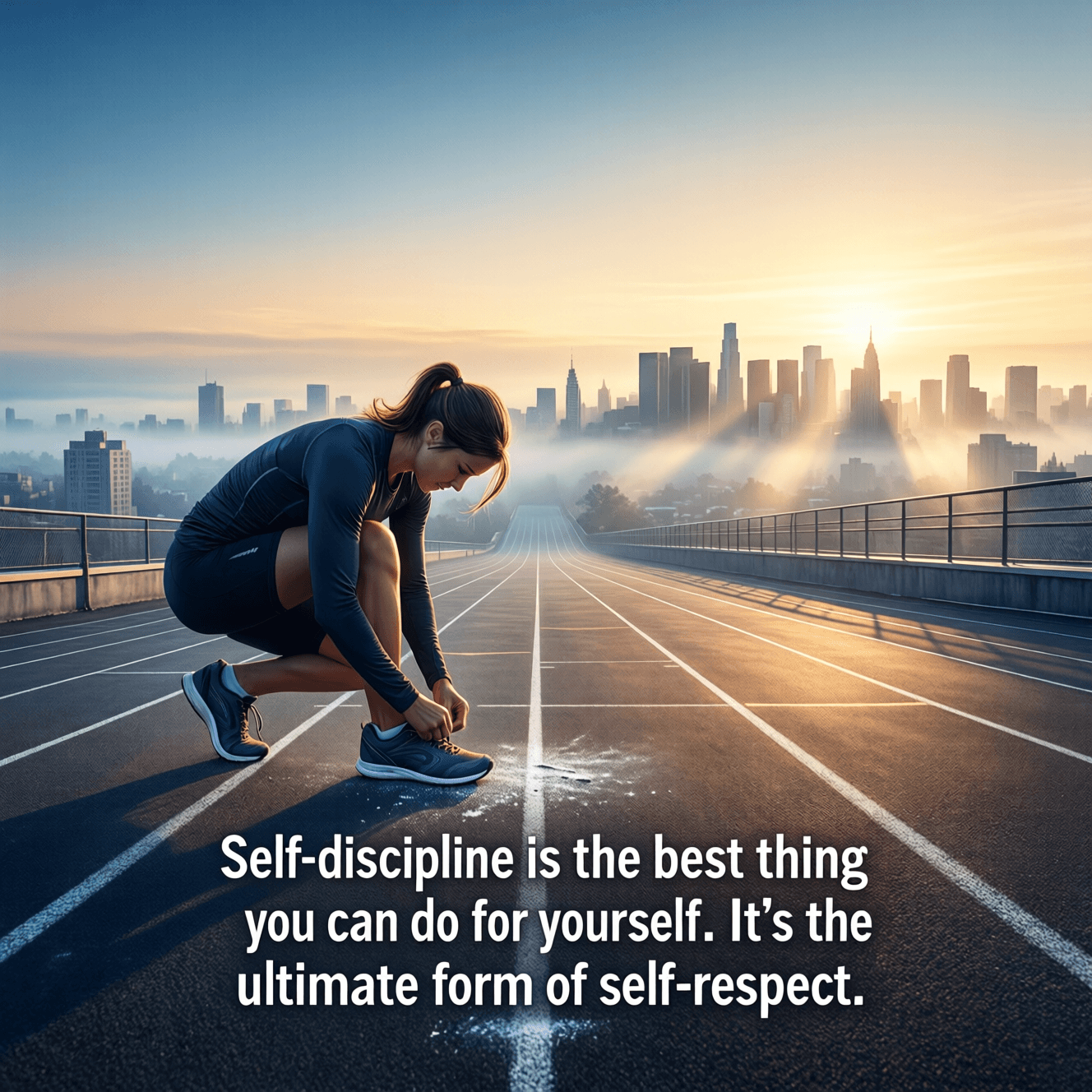
Self-discipline is the best thing you can do for yourself. It's the ultimate form of self-respect. — Henry Rollins
—What lingers after this line?
Discipline as an Act of Care
Henry Rollins frames self-discipline not as punishment but as a gift you give yourself—a steady, practical form of self-care. Instead of waiting for motivation or perfect conditions, discipline commits you to your own well-being in small, repeatable ways, like sleeping on time, training consistently, or finishing what you start. From there, the quote nudges discipline out of the realm of productivity hacks and into something more personal: a declaration that you are worth effort. In that sense, each kept promise becomes evidence—not to others, but to yourself—that your life deserves structure and attention.
Keeping Promises to Yourself
A key implication is that self-discipline is essentially promise-keeping. When you decide, “I’ll study an hour a day,” or “I won’t numb out with habits that harm me,” you’re making a contract with your future self. Following through strengthens trust in your own word, while repeated breakage quietly erodes it. This is why Rollins links discipline to self-respect: respect grows when your actions align with your stated values. Over time, even modest routines—writing a page, saving a little money, walking after dinner—create a track record that says, “I can rely on me,” which is a profound kind of internal stability.
Self-Respect Versus Self-Esteem
Where self-esteem often depends on feelings or external approval, self-respect is more behavior-based: it’s earned through choices you can stand behind. That distinction matters because feelings fluctuate, but standards can remain steady. In this light, discipline becomes a way to treat yourself with dignity even on days when confidence is low. Philosophically, this echoes the ancient emphasis on character and habit; Aristotle’s Nicomachean Ethics (4th century BC) argues that virtue is formed through repeated action rather than momentary intention. Building a disciplined life similarly turns abstract ideals into lived identity, bridging who you admire with what you actually do.
Freedom Through Structure
Although discipline can sound restrictive, its deeper payoff is freedom. When you manage your impulses and direct your time, you’re less at the mercy of cravings, avoidance, or drifting priorities. The structure you choose proactively prevents the chaos you’d otherwise endure reactively. Consider a simple example: someone who prepares meals and plans workouts isn’t trapped by a rigid schedule; they’re liberated from daily negotiations and guilt. In that way, discipline isn’t merely control—it’s a strategy for reducing the mental noise that steals attention from the work, relationships, and health you value most.
The Quiet Power of Daily Practice
Rollins’ statement also implies that discipline is less about grand transformation and more about daily practice. The “best thing” is often unglamorous: repeating a baseline standard regardless of mood. This is where many people stumble, because they chase intensity rather than consistency. Yet consistency compounds. James Clear’s Atomic Habits (2018) popularizes the idea that small habits, repeated, produce outsized change over time. Seen through Rollins’ lens, each repetition is also a vote of respect for yourself—proof that your long-term welfare outranks short-term comfort.
Discipline Without Self-Cruelty
Finally, calling discipline “self-respect” suggests it should be firm but not abusive. Respect doesn’t mean relentless perfectionism; it means honest standards paired with humane recovery when you fall short. A respectful approach asks, “What system helps me improve?” rather than, “How do I punish myself for failing?” This closing idea completes the quote’s arc: discipline is not about becoming someone else, but about honoring who you are and who you’re trying to become. By setting boundaries, following through, and adjusting with maturity, you practice the ultimate respect—taking responsibility for your own life.
One-minute reflection
What feeling does this quote bring up for you?
Related Quotes
6 selectedDiscipline is the highest form of self-love. It is the ability to choose what you want most over what you want right now. — Jim Rohn
Jim Rohn
At first glance, self-love is often associated with kindness, rest, or indulgence, yet Jim Rohn’s quote shifts the meaning in a more demanding direction. He argues that real care for oneself is not merely about feeling g...
Read full interpretation →The discipline of desire is the backbone of character. — Will Durant
Will Durant
At first glance, Will Durant’s line suggests that character is not built by suppressing desire, but by governing it. Desire is the engine of human action: it pushes us toward pleasure, ambition, recognition, and comfort.
Read full interpretation →We can secure other people's approval if we do right and try hard; but our own is worth a hundred of it. — Mark Twain
Mark Twain
At its heart, Mark Twain argues that external approval is attainable through good conduct and honest effort, yet it remains secondary to a deeper judgment: our own. Praise from others can reassure us, but it is often cha...
Read full interpretation →It is not true belonging if you have to betray yourself in order to stay. — Anthon St. Maarten
Anthon St. Maarten
At its heart, Anthon St. Maarten’s line draws a firm boundary between acceptance and self-erasure.
Read full interpretation →Discipline is a choice. It's simply consistently choosing the hard right over the easy wrong. — James C. Collins
James C. Collins
At its core, Collins reframes discipline not as a personality trait but as a repeated act of will. The quote strips away the mystique around self-control and presents it as something practical: each day offers a series o...
Read full interpretation →The discipline of writing something down is the first step toward making it happen. — Lee Iacocca
Lee Iacocca
Lee Iacocca’s remark begins with a simple but powerful observation: ideas remain fragile while they stay in the mind. The moment a goal is written down, however, it gains shape, boundaries, and a sense of seriousness.
Read full interpretation →More From Author
More from Henry Rollins →