
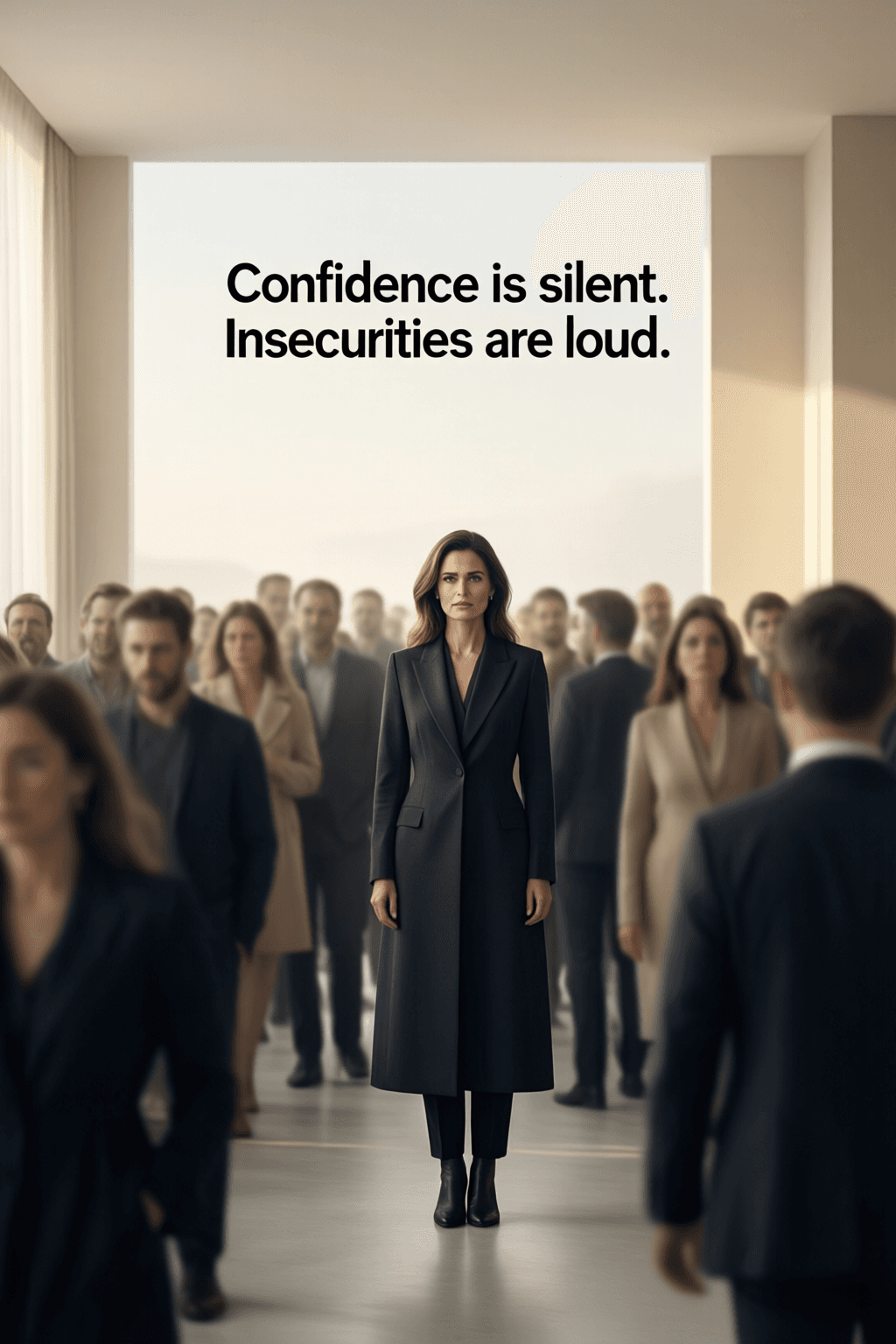
Confidence is silent. Insecurities are loud. — Tom Brady
—What lingers after this line?
The Quiet Nature of Self-Assurance
At first glance, Tom Brady’s line draws a sharp contrast between two inner states: confidence and insecurity. Real confidence does not need constant display because it rests on evidence, preparation, and self-trust. A person who knows their abilities usually feels little need to announce them, since their calm presence already communicates certainty. In that sense, silence becomes a form of strength. Rather than seeking validation through boasts or defensive talk, confident people often conserve their energy for action. Brady’s own career, shaped by disciplined performance under pressure, gives the quote added credibility: repeated execution can speak more persuasively than self-promotion ever could.
Why Insecurity Tries to Be Heard
By contrast, insecurity often produces noise because it is looking for reinforcement from the outside. When people feel uncertain about their worth, they may overexplain, brag, interrupt, or exaggerate in order to hide the unease beneath. The volume is not proof of strength; rather, it can be a shield against doubt. This pattern appears everywhere from locker rooms to boardrooms. In fact, social psychologist Alfred Adler’s early work on compensation argued that people sometimes overstate superiority to cover feelings of inadequacy. Brady’s observation fits that tradition neatly: loudness can be less a sign of dominance than a clue that something fragile is being protected.
Actions That Outweigh Announcements
From there, the quote naturally shifts attention from speech to behavior. If confidence is silent, then it proves itself not through claims but through consistency. A prepared athlete, skilled leader, or capable artist may seem understated, yet their reliability steadily builds trust in others. This idea recalls the old proverb, often attributed in spirit if not exact wording across traditions, that actions speak louder than words. Consider how elite performers are often most composed before major moments: they are focused on execution, not theatrics. As a result, Brady’s sentence becomes more than a personality observation; it is also a standard for credibility in everyday life.
Silence as Composure, Not Passivity
Still, the quote should not be mistaken for advice to become timid or mute. Silence here suggests composure rather than withdrawal. A confident person can speak firmly when needed, but their words tend to be measured because they are not driven by panic, envy, or the need to dominate every room. This distinction matters because healthy confidence includes both restraint and clarity. Nelson Mandela’s reflections in Long Walk to Freedom (1994) often present courage not as noisiness, but as mastery over fear. In a similar way, Brady’s contrast implies that quiet self-possession can be more commanding than any dramatic display.
A Mirror for Everyday Relationships
Ultimately, the quote resonates because it helps decode ordinary human interactions. In friendships, workplaces, and families, the loudest certainty is not always the most trustworthy. Often, the person who listens carefully, speaks sparingly, and follows through consistently is the one with the deepest confidence. Therefore, Brady’s insight works as both observation and invitation. It asks us to notice when our own noise comes from fear rather than conviction, and then to build a steadier foundation underneath. When confidence grows from genuine competence and self-acceptance, it no longer needs spectacle; its presence is felt before it is ever declared.
Recommended Reading
As an Amazon Associate, we earn from qualifying purchases.
One-minute reflection
What's one small action this suggests?
Related Quotes
6 selectedTrue confidence is not the loudest voice in the room; it is the one that doesn't need to speak to be felt. — Brené Brown
Brené Brown
At first glance, Brené Brown’s line challenges a common cultural assumption: that confidence must announce itself. Many people are taught to associate certainty with volume, dominance, or constant self-assertion.
Read full interpretation →Confidence is silent. Insecurities are loud. Do not feel the need to broadcast your worth to a world that doesn't understand your path. — Rumi
Rumi
At its core, this saying contrasts two very different emotional states: confidence, which rests quietly within, and insecurity, which seeks constant outward expression. The point is not that confident people never speak,...
Read full interpretation →Confidence is silent. Insecurities are loud. — Aja Monet
Aja Monet
At first glance, Aja Monet’s line draws a sharp contrast between two inner states and how they reveal themselves outwardly. Confidence, she suggests, does not need spectacle.
Read full interpretation →Confidence is silent. Insecurities are loud. — Unknown (Attributed to Joyce Brothers)
Unknown (Attributed to Joyce Brothers
Confidence, as the quote suggests, often manifests quietly rather than through ostentatious displays. Those who possess genuine self-assurance tend not to broadcast their strengths or seek constant validation.
Read full interpretation →Don't be intimidated by what you don't know. That can be your greatest strength. — Sara Blakely
Sara Blakely
At first glance, Sara Blakely’s quote sounds like a simple encouragement, yet it points to a deeper truth: ignorance is not always a weakness. When people are not trapped by assumptions about how things are “supposed” to...
Read full interpretation →Confidence doesn't mean being fearless. Confidence is knowing you are capable of handling the fear. — Amy Poehler
Amy Poehler
At first glance, people often imagine confidence as a polished kind of fearlessness, as though brave individuals simply do not tremble. Amy Poehler’s quote overturns that myth by suggesting that confidence begins not wit...
Read full interpretation →More From Author
More from Tom Brady →