
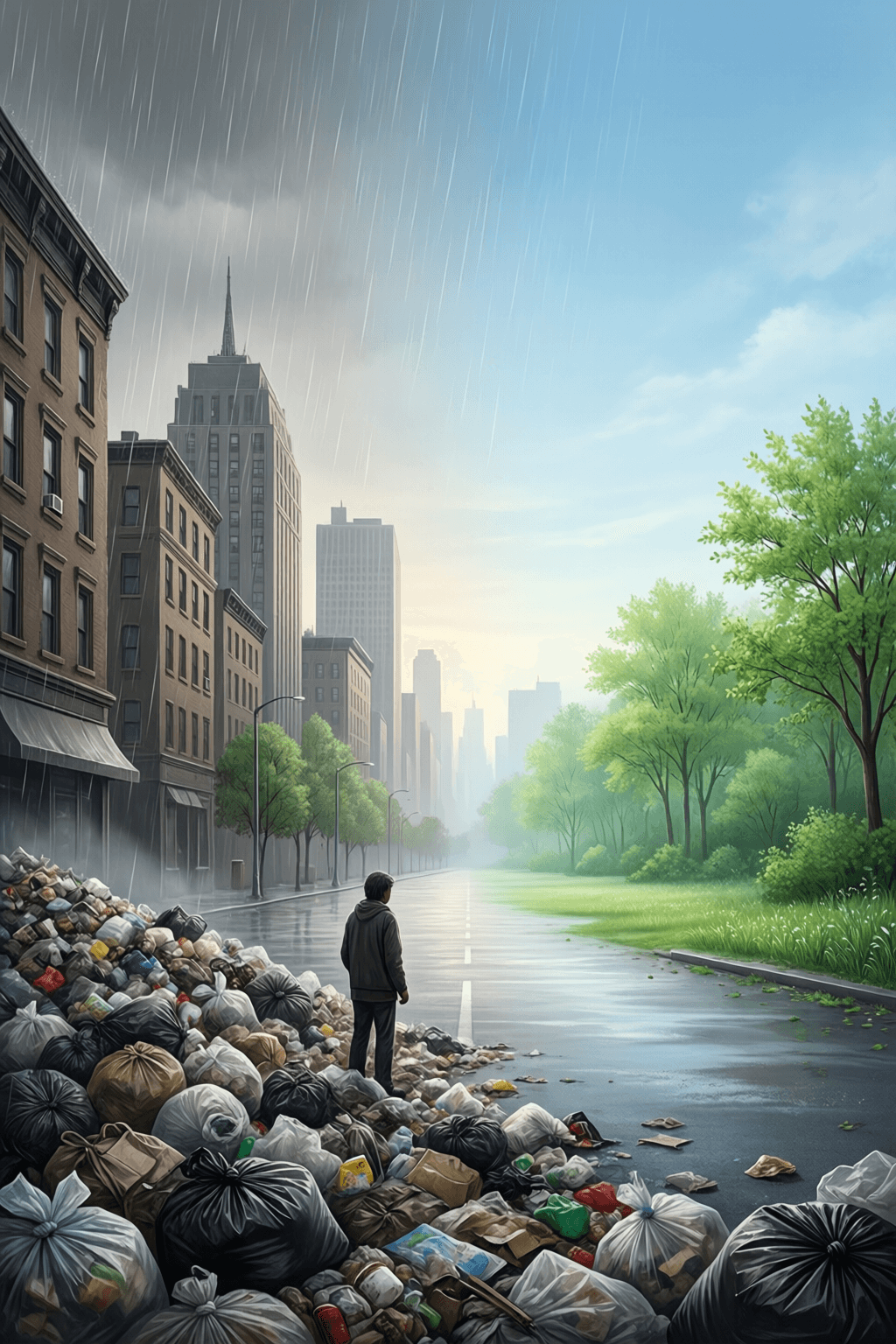
Some day we will look back on these years of suffocation in bullshit in the same way we look back on all the years people lived in, and died from, their garbage. — Brad Blanton
—What lingers after this line?
A Harsh Metaphor for Everyday Dishonesty
At first glance, Brad Blanton’s line shocks with its bluntness, yet that bluntness is precisely the point. By calling falsehood and pretense “suffocation in bullshit,” he frames emotional dishonesty not as a minor social habit but as a toxic atmosphere people breathe every day. In this view, evasions, polite lies, and self-deceptions accumulate until they become as invasive as physical waste. From there, the comparison to earlier eras of filth becomes clearer. Just as past societies normalized unsanitary living conditions before understanding their cost, modern people may normalize manipulative language, avoidance, and social performance without fully grasping the psychic damage they cause.
The Historical Parallel to Public Waste
Blanton’s metaphor gains force because history offers a literal precedent. Before modern sanitation, cities routinely lived among refuse, and disease followed; for example, accounts of nineteenth-century London before major sewer reforms describe streets and waterways overwhelmed by human and industrial waste, conditions that contributed to repeated cholera outbreaks. What seemed ordinary was, in hindsight, intolerable. Likewise, the quote suggests that future generations may judge our culture’s emotional environment in much the same way. What feels normal now—spin, euphemism, strategic silence—may later appear as a form of collective contamination that people once accepted only because they had not imagined an alternative.
Bullshit as a Cultural System
Moving beyond insult, the word “bullshit” also points to a specific kind of speech: language unconcerned with truth. Philosopher Harry Frankfurt’s On Bullshit (2005) famously distinguishes lying from bullshit by arguing that the liar still respects truth enough to conceal it, whereas the bullshitter is indifferent to whether statements are true at all. That distinction sharpens Blanton’s complaint. In this light, suffocation comes not merely from being deceived but from living in a climate where sincerity itself is weakened. Politics, advertising, corporate jargon, and even intimate relationships can become saturated with performance, making direct speech feel risky or naïve. The result is not a single falsehood but a whole system that clouds perception.
The Personal Cost of Emotional Pollution
As the metaphor turns inward, its deepest target may be the damage done to individual lives. When people constantly suppress what they feel, say what is expected, or hide behind acceptable scripts, they often lose contact with their own experience. Blanton, known for Radical Honesty (1996), argued that much anxiety, resentment, and relational confusion grows in precisely this gap between what one feels and what one says. Consequently, the quote implies that emotional suffering is not always private or accidental; it can be produced by a culture that rewards falseness. Just as polluted air harms bodies gradually, habitual dishonesty may erode trust, intimacy, and self-knowledge slowly enough that people mistake the symptoms for ordinary life.
Why Future Generations May Judge Us Severely
Seen this way, the phrase “some day we will look back” introduces a moral reversal. It imagines a future in which people possess clearer standards for emotional and social truth, just as public health eventually established clearer standards for sanitation. What now appears sophisticated—careful image management, strategic ambiguity, curated identity—may later look primitive and cruel. This retrospective judgment matters because it exposes the complacency of the present. Every age tends to assume its own habits are inevitable, yet history repeatedly shows that normalized harm can become obvious once new language and new norms emerge. Blanton’s quote presses readers to consider whether honesty might one day seem as basic as clean water.
A Call to Clearer Speech and Cleaner Living
Ultimately, the line is more than cultural criticism; it is a demand for reform at both personal and collective levels. If bullshit functions like waste, then honesty becomes a kind of sanitation: not always pleasant, but necessary for health. Clear speech, uncomfortable truth-telling, and genuine self-disclosure are presented not as moral luxuries but as conditions for breathable human life. Therefore, the quote leaves readers with a practical challenge. Rather than waiting for history to condemn an age of evasion, one can begin now by reducing the small falsities that clog relationships and public discourse. In that sense, Blanton’s provocation is not merely cynical—it is an appeal to live in cleaner emotional air.
One-minute reflection
What feeling does this quote bring up for you?
Related Quotes
2 selectedThe house was burning, but all you could smell was the coffee. You are stuck between leaving and staying because toxicity is a dangerous kind of electricity. — Samantha Shannon
Samantha Shannon
At first glance, Samantha Shannon’s image is startlingly simple: a house is burning, yet the most noticeable sensation is the smell of coffee. That contrast captures how danger can hide beneath ordinary comforts.
Read full interpretation →Whatever your main struggle is, it is insignificant in the face of your death; it is petty and unimportant and has no meaning at all. — Brad Blanton
Brad Blanton
At first glance, Brad Blanton’s statement sounds severe, yet its force comes from using death as the ultimate scale of value. When every ambition, resentment, and anxiety is placed beside the certainty of mortality, many...
Read full interpretation →More From Author
More from Brad Blanton →