
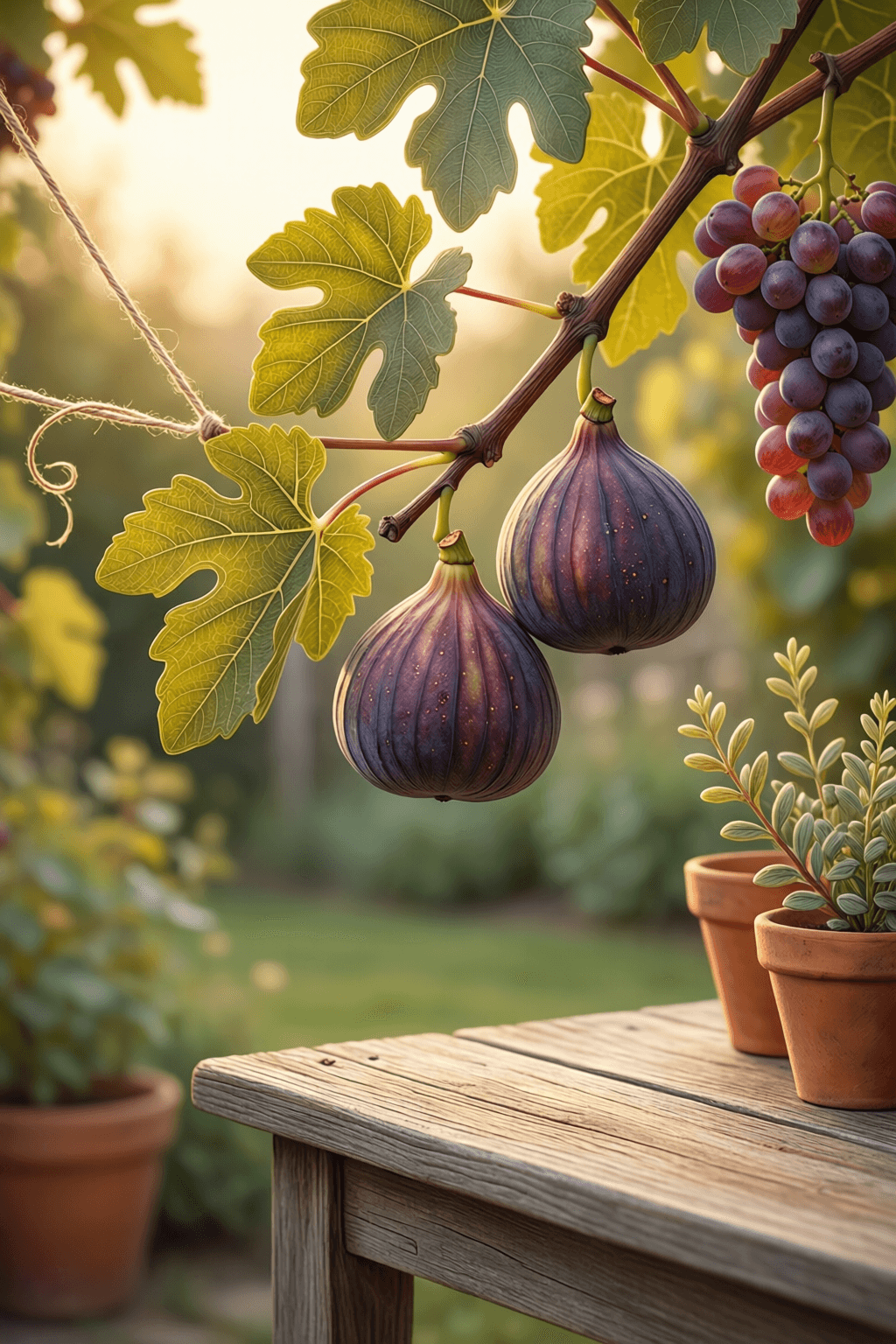
No great thing is created suddenly, any more than a bunch of grapes or a fig. If you tell me that you desire a fig, I answer you that there must be time. — Epictetus
—What lingers after this line?
Patience at the Heart of Achievement
Epictetus begins with a plain but memorable comparison: greatness does not appear all at once, just as fruit does not spring ripe from the branch in a single instant. By pairing human ambition with the slow growth of grapes and figs, he reminds us that time is not an obstacle to excellence but one of its essential ingredients. In other words, the delay we often resent is frequently the very process that makes achievement possible. From this starting point, the quote gently corrects a common human impatience. We may desire mastery, success, wisdom, or recognition immediately, yet nature itself teaches a different rhythm. The Stoic lesson is clear: if we want something genuinely worthwhile, we must also want the seasons of effort, waiting, and maturation that bring it into being.
Why Nature Becomes the Teacher
The image of grapes and figs is more than decorative; it is philosophical shorthand for organic development. A fig tree must be planted, rooted, watered, exposed to weather, and given its proper season before fruit appears. Likewise, a great character, a meaningful work, or a strong institution emerges through stages that cannot be skipped without damaging the final result. This natural metaphor fits Epictetus’s wider Stoic outlook, especially in the Discourses (early 2nd century AD), where he repeatedly urges students to respect what lies within their control and to accept the timing of what does not. Therefore, the fruit image teaches more than patience alone: it teaches alignment with reality. To demand instant ripeness is not merely unrealistic; it is a refusal to understand how growth actually works.
The Discipline of Becoming
Once this metaphor settles in, the quote begins to speak less about waiting passively and more about enduring the discipline of becoming. Time alone does not create greatness; rather, time joined with repeated effort does. A vineyard unattended will not yield noble fruit, and a person who only wishes for excellence without practicing it will remain stuck in desire. Seen this way, Epictetus shifts attention from craving outcomes to cultivating habits. Musicians practice scales for years before playing with ease, and athletes train through countless ordinary days before reaching remarkable performance. The same pattern appears in philosophy and moral life: patience is not idleness but sustained fidelity to a long process. Greatness ripens through repetition long before it is visible to others.
A Stoic Reply to Impatience
At the same time, the quote offers a subtle rebuke to the modern hunger for immediacy. We often treat delays as signs of failure, yet Epictetus would likely say that such frustration comes from confused expectations. If a person asks for a fig in winter, the problem is not the tree but the demander’s ignorance of seasons. Likewise, when we expect instant wisdom, influence, or fulfillment, we set ourselves against the structure of life itself. This is why Stoicism prizes inner adjustment as much as external effort. Marcus Aurelius, writing in Meditations (c. 180 AD), similarly reflects on cooperating with nature rather than resisting it. In that sense, Epictetus is training desire to become intelligent. He asks us not merely to want great things, but to want them in the only way they can truly arrive.
Greatness as Moral and Creative Maturity
As the saying broadens, it applies not only to visible success but to inward formation. Courage, self-command, judgment, and resilience are not sudden possessions acquired by inspiration alone. They are formed gradually, often through disappointment, restraint, and repeated choices that seem small at the time. Thus, the quote points toward a deeper definition of greatness: not spectacle, but maturity. Creative work follows the same law. Plato’s Republic (c. 375 BC) imagines education itself as a long shaping of the soul, while later artists and thinkers—from Leonardo da Vinci’s notebooks to Beethoven’s sketchbooks—show how masterpieces emerge from revision rather than lightning-like perfection. Epictetus therefore invites us to honor slow refinement. The finest results, whether ethical or artistic, usually bear the marks of long cultivation.
Learning to Trust the Season
Finally, the wisdom of the passage lies in its calming realism. It does not deny desire; in fact, it acknowledges that wanting a fig is perfectly natural. What it challenges is the fantasy that wanting alone should be enough. By reminding us that fruit and greatness alike require time, Epictetus offers a way to live with ambition without becoming consumed by restlessness. That makes the quote enduringly practical. When progress feels invisible, we can remember that many important processes are hidden while they develop: roots spread before branches thicken, and understanding deepens before confidence appears. In the end, trusting the season is not resignation but steadiness. It is the mature confidence that what is worth becoming is worth allowing to ripen.
Recommended Reading
As an Amazon Associate, we earn from qualifying purchases.
One-minute reflection
Why might this line matter today, not tomorrow?
Related Quotes
6 selectedQuietly persist, for great things are not created suddenly. — Epictetus
Epictetus
Epictetus compresses a profound truth into a few words: meaningful accomplishment rarely appears in a dramatic instant. Instead, it emerges through steady, often unnoticed effort sustained over time.
Read full interpretation →No great thing is created suddenly. — Epictetus
Epictetus
This quote emphasizes that achieving greatness requires patience, as all significant accomplishments take time to come to fruition.
Read full interpretation →The craft of living is a slow art, requiring the courage to be ordinary and the patience to be consistent. — Parker Palmer
Parker Palmer
Parker Palmer’s line frames living not as a sudden achievement but as a craft, something formed through repetition, attention, and humility. By calling it a “slow art,” he shifts the focus away from dramatic breakthrough...
Read full interpretation →When you plant seeds in the garden, you don't dig them up every day to see if they have sprouted yet. You simply water them and clear away the weeds; you know that the seeds will grow in time. — Thubten Chodron
Thubten Chodron
Thubten Chodron’s image of planting seeds turns patience into something practical and visible. Once a seed is placed in the soil, constant interference does not help it grow; in fact, it can damage what is beginning invi...
Read full interpretation →Gardening is the slowest of the performing arts. — Mac Griswold
Mac Griswold
Mac Griswold’s remark transforms gardening from a practical chore into a form of performance, one staged not on a theater floor but in soil, weather, and seasons. At first glance, the comparison seems surprising; yet the...
Read full interpretation →Anything worth having is worth waiting for, and everything worth doing is worth doing with patience. — Confucius
Confucius
At its core, this saying ties value to delay. Confucius suggests that truly meaningful things do not arrive instantly; instead, they ask us to endure uncertainty, effort, and time.
Read full interpretation →More From Author
More from Epictetus →With each person you meet, remind yourself that you share a common humanity. — Epictetus
At its core, Epictetus’s advice asks for a disciplined shift in perception. Rather than meeting others as rivals, strangers, or obstacles, we are urged to begin with a deeper truth: each person participates in the same f...
Read full interpretation →Self-mastery begins the moment you decide that your internal peace is more valuable than the external approval you were chasing. — Epictetus
At its core, this saying frames self-mastery as a decisive inner shift. The moment a person values peace of mind over praise, status, or acceptance, power begins to move inward rather than outward.
Read full interpretation →Just as one person delights in improving his farm, and another his horse, so I delight in attending to my own improvement day by day. — Epictetus
Epictetus frames self-improvement as a form of steady, almost ordinary care. Just as a farmer inspects his fields or a horse owner trains and grooms with patience, he finds joy in tending to his own character.
Read full interpretation →Don't hope that events will turn out the way you want, welcome events in whichever way they happen: this is the path to peace. — Epictetus
Epictetus begins with a sharp reversal of ordinary habit: instead of trying to bend life to our wishes, he asks us to loosen our grip on outcomes. In the Stoic tradition, expressed in the Enchiridion (2nd century AD), pe...
Read full interpretation →