
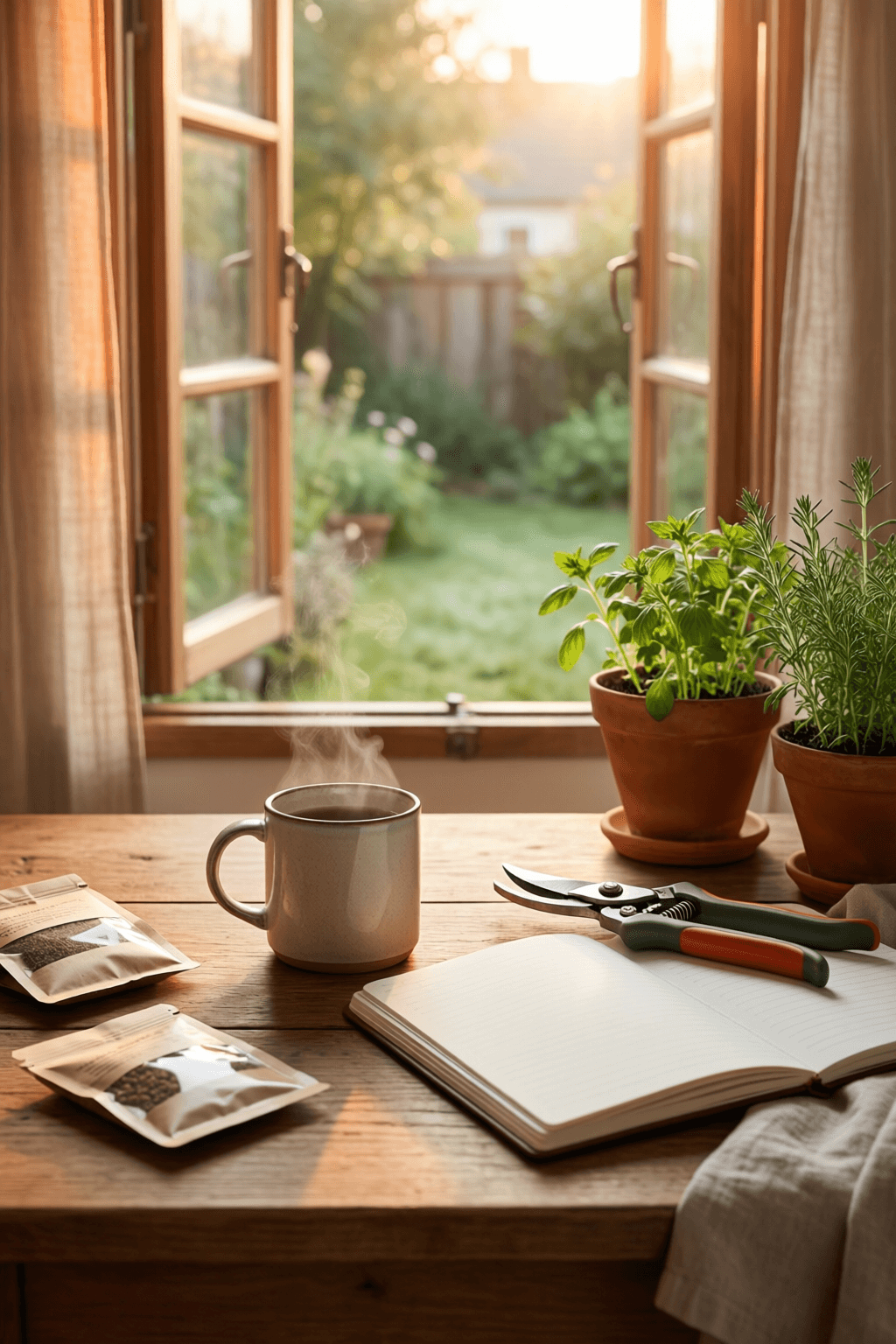
Instead of hustling to build a life that looks good, what if you slowed down and cultivated a life that feels good. — Erica Layne
—What lingers after this line?
A Shift from Appearance to Experience
Erica Layne’s quote begins by challenging a familiar modern reflex: the urge to “hustle” toward a life that looks impressive from the outside. In doing so, she contrasts external validation with internal well-being, suggesting that a beautiful image is not the same as a nourishing reality. The line invites readers to pause and ask whether their ambitions are shaped by genuine desire or by social performance. From there, the quote opens a quieter alternative. To cultivate a life that feels good is to prioritize lived experience over display—peace over prestige, rhythm over rush. Rather than rejecting achievement altogether, Layne reframes success as something intimate and embodied.
The Culture of Constant Performance
This idea becomes sharper when placed against contemporary culture, where social media often rewards visibility more than depth. Platforms built around curated images can encourage people to assemble lives that appear enviable, even when those lives feel exhausting behind the scenes. As sociologist Erving Goffman’s *The Presentation of Self in Everyday Life* (1956) suggests, much of human behavior can become a performance shaped by audience expectation. Consequently, Layne’s words read as a subtle act of resistance. They question the assumption that busyness, optimization, and public proof of success are signs of a meaningful life. In that sense, slowing down is not laziness; it is a refusal to confuse applause with fulfillment.
The Wisdom of Slowing Down
Once that illusion is exposed, the phrase “slowed down” takes on deeper significance. Slowing down is not simply moving less; it is making enough space to notice what restores you and what depletes you. Philosophical traditions have long defended this kind of deliberate pace. For instance, Epicurus’s *Letter to Menoeceus* (c. 300 BC) argues that the good life depends less on excess acquisition than on tranquility, friendship, and freedom from unnecessary disturbance. In practical terms, this means reclaiming attention from urgency. A slower life may include fewer dramatic milestones, yet it often allows for greater clarity, healthier relationships, and a stronger sense of presence. Thus, the quote suggests that peace is not a byproduct of success—it may be the measure of it.
Cultivation Rather Than Consumption
Notably, Layne uses the word “cultivated,” and that choice matters. Cultivation implies patience, repetition, and care, much like tending a garden that cannot be forced into bloom overnight. Unlike hustle culture, which promises rapid transformation, cultivation acknowledges that a satisfying life is grown through small decisions made consistently over time. Because of this, the quote favors practice over spectacle. A life that feels good may be built from ordinary elements: unhurried mornings, honest work, manageable commitments, and relationships that do not require performance. In the same spirit, Thoreau’s *Walden* (1854) reflects on deliberate living as a way to separate what is essential from what is merely habitual.
Redefining What Success Means
As the quote unfolds, it ultimately asks for a new definition of success. If a life looks good but feels empty, anxious, or alien, then its polish has concealed a serious cost. By contrast, a life that feels good may not always appear glamorous, yet it offers coherence between outer choices and inner needs. This redefinition has moral as well as emotional weight. It asks individuals to become accountable to their own well-being rather than endlessly meeting borrowed standards. In that way, Layne’s insight echoes Alain de Botton’s *Status Anxiety* (2004), which examines how social comparison distorts self-worth and narrows our sense of what a good life can be.
A More Humane Way to Live
Finally, the quote leaves readers not with an abstract ideal but with a practical invitation: choose a humane pace and a sincere life. That may mean disappointing certain cultural expectations while becoming more faithful to your own temperament. Yet this tradeoff is precisely the point, because the goal is no longer admiration from afar but contentment from within. Seen this way, Layne’s sentence is less a rejection of ambition than a call to align ambition with well-being. It encourages a life designed for inhabiting, not merely displaying—a life measured by ease, meaning, and emotional truth rather than by how convincingly it can be marketed.
One-minute reflection
What feeling does this quote bring up for you?
Related Quotes
6 selectedCreate a life that feels good on the inside, not just one that looks good on the outside. — Unknown
Unknown
The quote emphasizes the importance of cultivating a life that brings internal happiness and satisfaction, rather than solely focusing on external appearances and material success.
Read full interpretation →Clutter is not just the stuff on your floor; it's anything that stands between you and the life you want to be living. — Peter Walsh
Peter Walsh
At first glance, Peter Walsh’s quote seems to address physical mess, yet it quickly expands into something much broader. Clutter, in his view, is not merely a pile of objects on the floor; rather, it is any obstacle—mate...
Read full interpretation →Do the work of naming the highest, eulogy-worthy priorities in your life. Then do the work of putting them at the center of your life, every day. — Brooke McAlary
Brooke McAlary
Brooke McAlary’s quote begins with a difficult but clarifying task: identifying the priorities so important they would belong in your eulogy. In other words, she asks us to look beyond errands, ambitions, and social nois...
Read full interpretation →The best parts of your life are the ones that happen when absolutely no one is looking. — Pema Chödrön
Pema Chödrön
Pema Chödrön’s quote turns attention away from applause and toward the private texture of living. At first glance, it suggests that life’s richest moments are not always the dramatic ones shared with an audience, but the...
Read full interpretation →Intentional living is the art of making our own choices before others' choices make us. — Richie Norton
Richie Norton
Richie Norton’s quote frames intentional living as an active rather than passive way of being. At its core, it argues that a meaningful life is shaped by deliberate decisions made in advance, not by drifting along with e...
Read full interpretation →Edit your life frequently and ruthlessly. It's your masterpiece after all. — Nathan W. Morris
Nathan W. Morris
Morris frames life not as a fixed identity but as an ongoing creation—something drafted, tested, and refined over time. By calling it a “masterpiece,” he implies both ownership and intention: you are not merely living th...
Read full interpretation →More From Author
More from Erica Layne →