
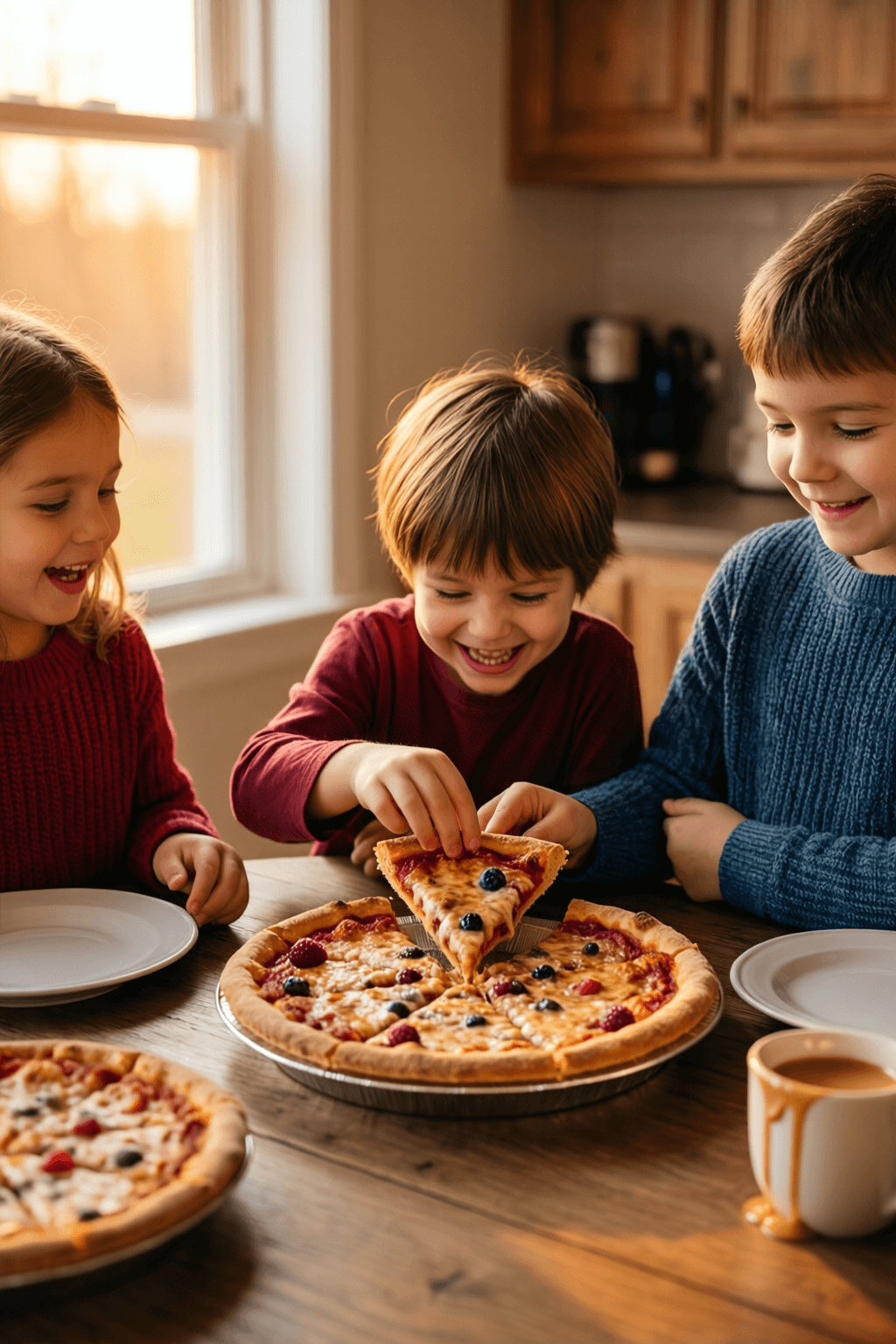
The advantage of growing up with siblings is that you become very good at fractions. — Robert Brault
—What lingers after this line?
Humor Rooted in Everyday Sharing
At first glance, Robert Brault’s remark sounds like a simple joke, yet its wit comes from an ordinary childhood truth: siblings mean constant division. Whether it is the last slice of pizza, time with a parent, or space in the back seat, children in larger families quickly learn that very little belongs to one person alone. In that sense, fractions are not merely mathematical symbols but a lived experience. Because of this, the quote transforms a school subject into a social reality. Brault gently suggests that arithmetic begins long before the classroom, in the negotiations and compromises of family life. The humor lands precisely because so many people recognize the scene immediately.
Fractions as a Family Survival Skill
Moving beyond the punchline, the quote implies that siblings teach practical reasoning. A child with brothers or sisters often has to calculate what is fair: half for me, half for you, or perhaps one-third each if another hand suddenly reaches in. In this way, fairness and mathematics become intertwined through daily repetition. Consequently, growing up with siblings can sharpen an instinct for proportion. A cake cut unevenly or a toy monopolized for too long becomes a lesson in balance. What sounds like comedy, then, also reflects how family routines quietly train children to think in parts, shares, and comparisons.
The Mathematics of Fairness
More importantly, Brault’s observation points to a moral dimension behind the math. Fractions are about dividing wholes, and sibling life constantly raises the question of how a whole should be divided fairly. Philosophers from Aristotle’s Nicomachean Ethics (4th century BC) onward linked justice with proportionality, and even in a household, that principle appears in miniature. Thus, the quote works because it connects numbers to ethics. A child protesting, 'That’s not fair,' is often making a rough mathematical argument without naming it as such. Siblings, therefore, become early instructors not only in arithmetic but also in the deeply human desire for equitable treatment.
Lessons Beyond the Dinner Table
From there, the meaning widens. Sharing with siblings is not limited to food or toys; it extends to attention, privacy, chores, and responsibility. One child may get half the room, another half the evening’s help with homework, and everyone some fraction of the household’s resources. These experiences teach that life rarely offers unlimited portions. As a result, the quote hints at a broader education in scarcity and cooperation. Children learn that coexistence requires adjustment, patience, and occasional sacrifice. The language of fractions becomes a metaphor for how people live together in any community, balancing individual wants against collective needs.
A Light Joke With Lasting Insight
Finally, Brault’s line endures because it compresses a rich social truth into a playful image. Like many aphorisms, it succeeds by making the familiar seem newly clever. The joke about fractions is funny precisely because it reveals how deeply family life shapes everyday intelligence. In the end, growing up with siblings may not literally guarantee mathematical excellence, but it often fosters a quick sense of division, fairness, and negotiation. What begins as comic exaggeration ultimately becomes an affectionate tribute to the subtle education that happens at home.
Recommended Reading
As an Amazon Associate, we earn from qualifying purchases.
One-minute reflection
Why might this line matter today, not tomorrow?
Related Quotes
2 selectedDo what you must, and your friends will adjust. — Robert Brault
Robert Brault
This quote emphasizes the importance of staying true to oneself and one's duties. It implies that individuals should prioritize their own responsibilities and values, trusting that true friends will understand and suppor...
Read full interpretation →Life becomes easier when you learn to accept an apology you never got. — Robert Brault
Robert Brault
The quote suggests that true inner peace can be found by letting go of grudges and resentment, even if those who wronged you never acknowledge their mistakes. Accepting the absence of an apology can bring emotional relie...
Read full interpretation →More From Author
More from Robert Brault →Do what you must, and your friends will adjust. — Robert Brault
This quote emphasizes the importance of staying true to oneself and one's duties. It implies that individuals should prioritize their own responsibilities and values, trusting that true friends will understand and suppor...
Read full interpretation →Life becomes easier when you learn to accept an apology you never got. — Robert Brault
The quote suggests that true inner peace can be found by letting go of grudges and resentment, even if those who wronged you never acknowledge their mistakes. Accepting the absence of an apology can bring emotional relie...
Read full interpretation →