
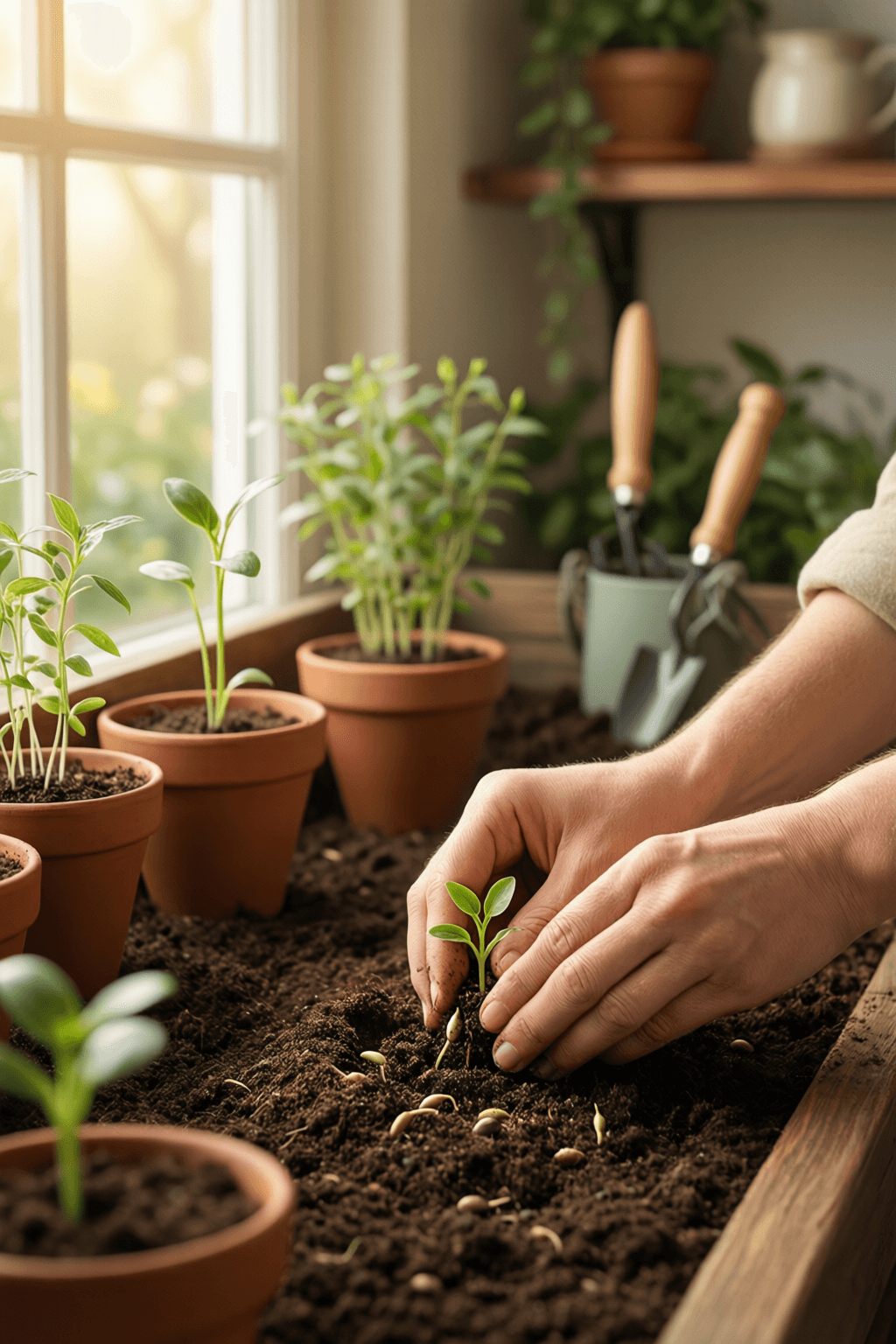
We were planting seeds of change, the fruit of which we might never see. We had to be patient. — Michelle Obama
—What lingers after this line?
A Metaphor for Long-Term Work
Michelle Obama’s quote frames social progress through the language of cultivation: people plant seeds now, even when the harvest may come much later. In that image, change is not sudden or theatrical but gradual, organic, and dependent on care. The metaphor also humbles the individual, suggesting that meaningful work often outlives the person who begins it. From there, the statement shifts attention away from immediate reward and toward responsibility. To plant a seed is to act in faith, trusting that unseen growth is still real. In this way, the quote honors efforts whose success cannot be instantly measured, whether in public service, education, or community life.
Patience as a Civic Virtue
Building on that metaphor, the call for patience becomes more than personal advice; it becomes a civic virtue. Democracies, institutions, and cultural attitudes rarely transform overnight, and those who work within them must often accept slow, uneven progress. Michelle Obama’s words therefore recognize a truth familiar to reformers: endurance is part of the work itself. History reinforces this perspective. Martin Luther King Jr.’s final book, Where Do We Go from Here: Chaos or Community? (1967), reflects on the long, unfinished struggle for justice, while the U.S. civil rights movement shows how decades of organizing preceded visible legislative victories. Patience, then, is not passivity but disciplined persistence.
Working Beyond One’s Own Lifetime
The quote grows even more powerful when it admits that the ‘fruit’ may never be seen by those who planted the seeds. That acknowledgment resists the modern desire for quick outcomes and personal recognition. Instead, it proposes a more generous ethics: one generation labors so that another may live differently. This idea has deep historical echoes. In Plato’s Republic (c. 375 BC), the just city depends on citizens who value the common good over immediate self-interest. Similarly, many grassroots movements are sustained by people whose names are forgotten, even though their labor becomes the foundation for later progress. Michelle Obama’s line gives dignity to that often invisible sacrifice.
Hope Without Certainty
At the same time, planting seeds does not guarantee a harvest. Weather changes, soil fails, and growth can stall; by extension, social change is vulnerable to backlash, delay, and disappointment. Michelle Obama’s statement is moving precisely because it does not promise certainty. Rather, it asks people to continue acting meaningfully despite incomplete control over results. This is where hope enters the quote. Not naive optimism, but a steadier form of hope grounded in action. Vaclav Havel’s Disturbing the Peace (1986) similarly describes hope as something independent of immediate success. In that sense, patience becomes the emotional discipline that allows hope to survive reality.
Leadership Through Example
Consequently, the quote also reveals a particular style of leadership: one centered on stewardship rather than spectacle. A leader who speaks of seed-planting emphasizes preparation, mentoring, and institution-building over dramatic personal triumphs. The focus shifts from ‘What did I achieve today?’ to ‘What conditions did I help create for tomorrow?’ That perspective is especially resonant in educational and civic settings, where the strongest outcomes often appear years later. A teacher may never fully witness the impact of a lesson; a community organizer may not live to see a policy’s ultimate effects. Yet Michelle Obama’s words suggest that such deferred influence is not failure but the natural rhythm of meaningful leadership.
An Invitation to Humble Persistence
Ultimately, the quote leaves readers with an ethic of humble persistence. It asks people to keep working, even when recognition is absent, results are delayed, and the future remains uncertain. In doing so, it counters a culture of instant gratification with a quieter but more durable model of purpose. As a final thought, the agricultural image returns us to a basic truth: growth is often invisible before it becomes undeniable. Roots deepen long before fruit appears. By embracing that rhythm, Michelle Obama offers not only encouragement but also a moral framework for anyone committed to change—start faithfully, nurture patiently, and trust that some good will ripen beyond your sight.
One-minute reflection
Where does this idea show up in your life right now?
Related Quotes
6 selectedPatience is not passive waiting. Patience is active acceptance of the process required to attain your goals and dreams. — Ray Davis
Ray Davis
Ray Davis’s words begin by correcting a common misunderstanding: patience is not the same as doing nothing. Passive waiting suggests resignation, as if time alone will deliver success.
Read full interpretation →Slow progress today is often stable progress tomorrow. Fast growth collapses easily. Slow growth holds. — Timeless Type
Timeless Type
At first glance, slow progress can feel discouraging, especially in a culture that praises speed, sudden breakthroughs, and visible success. Yet the quote reminds us that what seems unimpressive today may become the foun...
Read full interpretation →Where you stand determines what you see and what you do not see; a change in where you stand changes everything. — Søren Kierkegaard
Søren Kierkegaard
Kierkegaard’s insight begins with a simple but unsettling claim: vision is never neutral. Where we stand—socially, emotionally, spiritually, or intellectually—determines not only what comes into view but also what remain...
Read full interpretation →Sometimes you have to slow down to go fast. — Jeff Olson
Jeff Olson
Jeff Olson’s line begins with a practical paradox: speed is not always created by rushing. Sometimes the quickest path forward requires pausing long enough to see the road clearly, correct mistakes early, and choose acti...
Read full interpretation →Everything that is great in life is the product of slow growth; the newer, and greater, and higher, and nobler the work, the slower is its growth. — William George Jordan
William George Jordan
William George Jordan’s reflection begins with a quiet but demanding truth: the most meaningful achievements rarely arrive quickly. He suggests that greatness is not manufactured in sudden bursts but cultivated through t...
Read full interpretation →You cannot force ideas. Successful ideas are the result of slow growth. — Alexander Graham Bell
Alexander Graham Bell
Alexander Graham Bell’s statement begins with a quiet warning against impatience: ideas cannot be commanded into maturity simply because we desire results. Like plants, they require conditions, time, and repeated attenti...
Read full interpretation →More From Author
More from Michelle Obama →Confidence is not absence of fear; it is the quiet recognition that you have survived every hard day so far. — Michelle Obama
At first glance, confidence is often mistaken for boldness without hesitation, yet Michelle Obama’s words gently overturn that myth. She frames confidence not as the absence of fear, but as a steadier inner knowledge: yo...
Read full interpretation →I've learned that it's harder to hate up close. — Michelle Obama
Michelle Obama’s observation begins with a simple but powerful truth: distance makes it easier to turn people into abstractions, while closeness restores their full humanity. When we know others only as labels, stereotyp...
Read full interpretation →Inspiration on its own was shallow; you had to back it up with hard work. — Michelle Obama
Michelle Obama’s remark begins with a necessary correction to a popular myth: feeling inspired is not the same as accomplishing something meaningful. Inspiration can ignite ambition, but on its own it is fleeting, emotio...
Read full interpretation →We need to do a better job of putting ourselves higher on our own to-do list. — Michelle Obama
Michelle Obama’s line reframes self-care as something sturdier than an occasional treat; it is a task worthy of the same seriousness we give work, family, and obligations. By saying we must put ourselves “higher” on the...
Read full interpretation →