
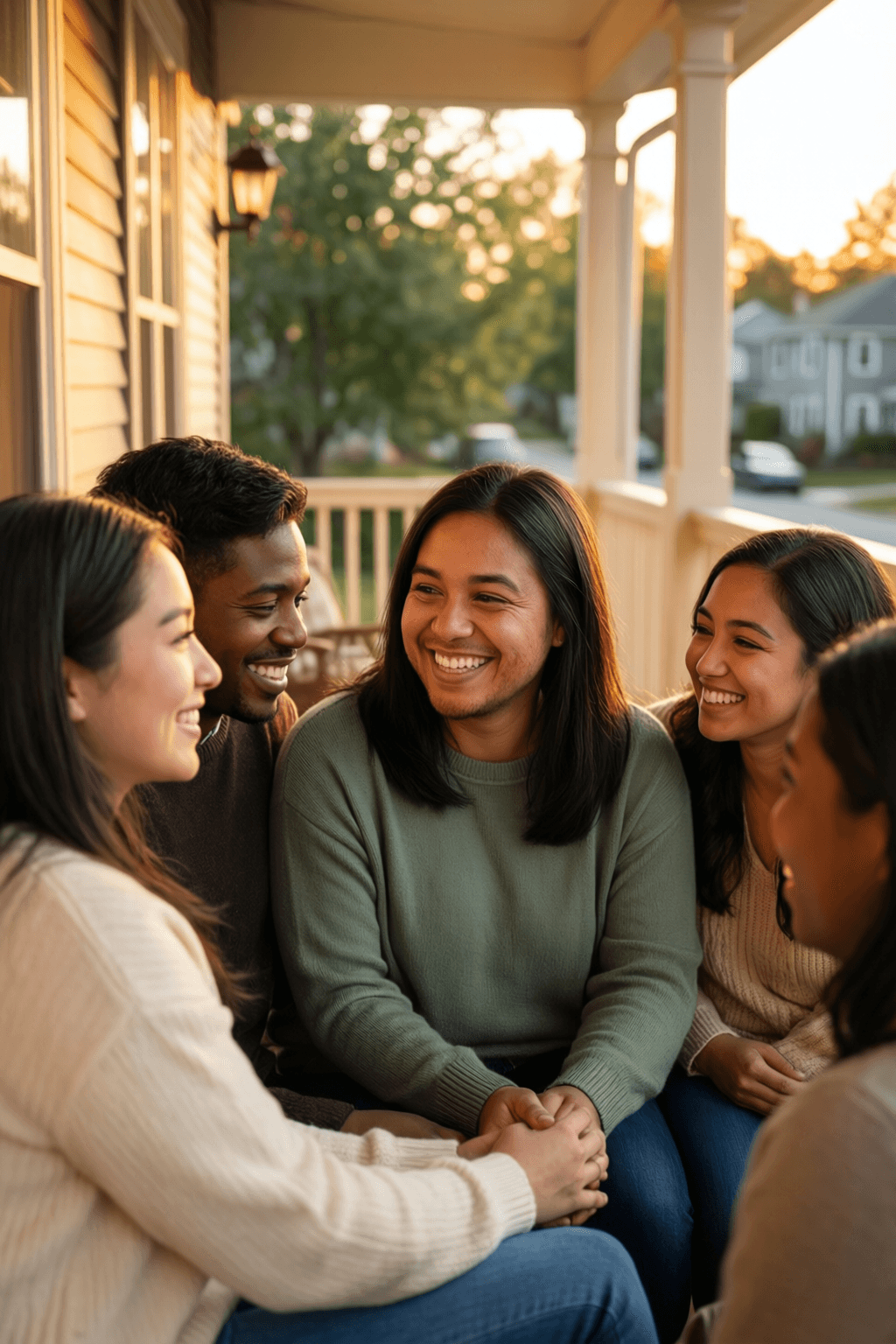
One of the most important things about being a human being is feeling like you belong. — Dr. Bruce Perry
—What lingers after this line?
Belonging as a Basic Human Need
Dr. Bruce Perry’s statement begins with a simple but profound truth: human beings do not thrive in isolation. To feel that one belongs is to feel recognized, safe, and woven into a larger social fabric. In that sense, belonging is not a luxury added to life after survival needs are met; rather, it is deeply tied to how people experience dignity, meaning, and emotional stability. From this starting point, the quote invites us to see identity as relational. We become ourselves partly through connection with family, friends, communities, and cultures. When those bonds are present, people often feel grounded; when they are absent, even outward success can feel hollow.
The Brain’s Need for Connection
Seen through the lens of neuroscience, Perry’s insight becomes even more compelling. Dr. Bruce Perry’s work in trauma and child development, including themes explored in What Happened to You? (2021, with Oprah Winfrey), emphasizes that the human brain develops in relationship. Especially in early life, repeated experiences of care, attunement, and inclusion help regulate stress and build a sense of safety. As a result, belonging is not merely emotional language but a biological necessity. When people feel accepted, their nervous systems can settle; conversely, chronic exclusion or neglect can keep the body on alert. The quote therefore points beyond sentiment, suggesting that connection helps shape the very architecture of human well-being.
What Happens When Belonging Is Missing
However, the power of belonging becomes most visible when it is denied. Social exclusion can produce loneliness, shame, and a painful sense of invisibility. Psychologist Abraham Maslow’s 1943 paper “A Theory of Human Motivation” placed love and belonging among core human needs, implying that without them, higher forms of flourishing become much harder to reach. In everyday life, this absence appears in subtle and dramatic ways alike: the child ignored at school, the worker who feels disposable, the immigrant made to feel unwelcome. In each case, the wound is not only social but existential. People begin to wonder not just where they fit, but whether they matter.
Belonging Shapes Resilience and Healing
Because exclusion can wound so deeply, the presence of belonging often becomes a force for repair. Perry’s broader clinical perspective consistently suggests that healing from adversity happens through safe, steady relationships rather than through insight alone. A trusted teacher, a patient friend, or a supportive community can gradually restore a person’s sense that they are not alone in the world. This is why resilience is rarely an entirely solitary achievement. Although personal strength matters, it usually grows in the context of connection. In other words, people recover not simply by becoming tougher, but by finding spaces where they are welcomed, understood, and allowed to exist without fear.
From Personal Feeling to Social Responsibility
The quote also expands outward from individual psychology to collective ethics. If belonging is central to being human, then families, schools, workplaces, and nations all bear responsibility for creating environments where people feel included. Maya Angelou’s often-cited reflection—people remember how you made them feel—captures this social dimension, because everyday gestures of respect can quietly affirm a person’s place in the world. Consequently, belonging is not just a private emotion; it is a public value. Policies, institutions, and cultural norms can either reinforce alienation or cultivate participation. Perry’s words therefore challenge societies to ask not only how to help people survive, but how to help them feel fully human.
A Universal Truth in Ordinary Life
Ultimately, the force of the quote lies in its universality. Nearly everyone can recall a moment of genuine inclusion—a table where they were welcomed, a team that needed them, a friendship in which they could relax into themselves. Those ordinary experiences often carry extraordinary weight because they answer a quiet human question: Do I have a place here? By ending on that familiar note, Perry’s insight feels both scientific and deeply humane. Belonging gives people more than companionship; it offers emotional shelter, identity, and hope. In that way, feeling that one belongs is not just one important part of being human—it is one of the conditions that makes a human life feel livable.
Recommended Reading
As an Amazon Associate, we earn from qualifying purchases.
One-minute reflection
What does this quote ask you to notice today?
Related Quotes
4 selectedA sense of belonging is a fundamental psychological need, not a luxury. It is the soil in which our well-being takes root and grows. — Milla Titova
Milla Titova
At its core, Milla Titova’s quote argues that belonging is not an optional social bonus but a basic human requirement. By calling it a “fundamental psychological need,” she places connection alongside the conditions that...
Read full interpretation →Belonging isn't about fitting in. It's about feeling valued and accepted, just as you are. — Mahek Uttamchandani
Mahek Uttamchandani
At its core, Mahek Uttamchandani’s quote draws a sharp line between two experiences that are often confused. Fitting in usually asks a person to adjust, soften, or hide parts of themselves in order to match a group’s exp...
Read full interpretation →Belonging is the innate desire to be part of something larger than ourselves. — Brené Brown
Brené Brown
Brené Brown’s statement begins with a simple but powerful claim: belonging is not a luxury or a social bonus, but an innate desire. In other words, the wish to be included, recognized, and woven into a wider whole is bui...
Read full interpretation →A sense of belonging is the best medicine for the human heart; it is the feeling that we are part of something larger than ourselves. — Maya Angelou
Maya Angelou
Maya Angelou’s insight begins with a simple but profound truth: emotional healing rarely happens in isolation. By calling belonging “the best medicine,” she suggests that the heart is restored not only through comfort, b...
Read full interpretation →