
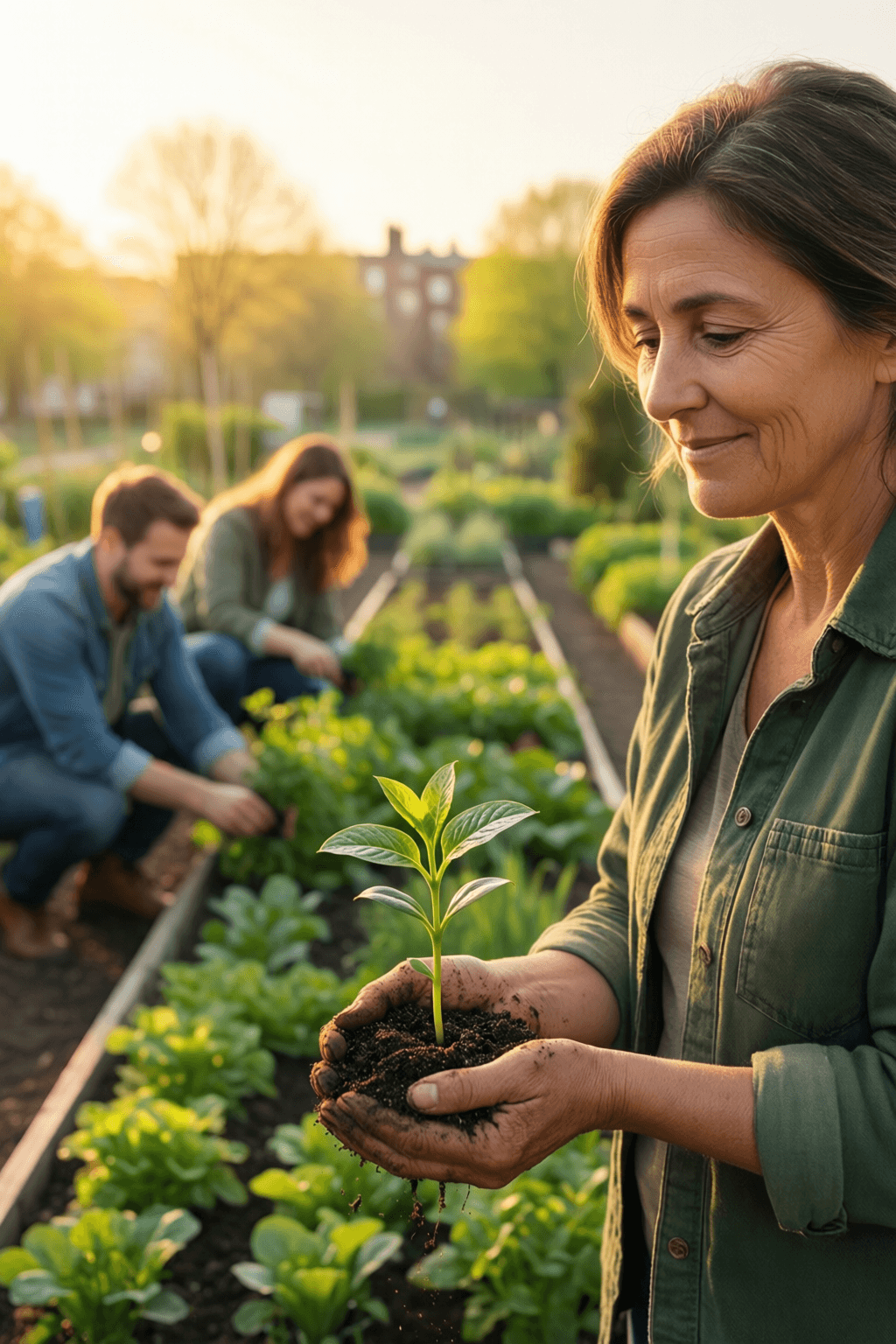
We are powerful because we have survived, and that is what it is all about—survival and growth. — Audre Lorde
—What lingers after this line?
Power Born from Endurance
At its core, Audre Lorde’s statement redefines power not as domination, status, or control, but as the hard-won strength that comes from continuing despite adversity. To survive is already to have resisted erasure, and Lorde frames that endurance as a profound form of authority. In this way, survival is not merely a passive condition; it is evidence of inner force. Moreover, the quote shifts attention from abstract ideals to lived experience. People who have endured loss, oppression, or struggle often carry a knowledge that cannot be taught secondhand. Their power lies in having persisted, and that persistence becomes the foundation for everything that follows.
Survival as a Collective Story
At the same time, Lorde’s use of “we” expands the meaning beyond individual resilience. She speaks in a communal register, suggesting that survival is often shared—built through families, friendships, movements, and cultures that help people endure what would otherwise overwhelm them. As a result, power emerges not only from personal will but from collective memory and mutual care. This idea echoes throughout Lorde’s essays in Sister Outsider (1984), where she repeatedly insists that marginalized people transform silence and pain into language and action. Seen this way, survival becomes a shared inheritance: one generation’s endurance creates the conditions for the next generation’s voice.
Growth Beyond Mere Endurance
Yet Lorde does not stop at survival alone; she immediately joins it to growth. That transition matters because surviving hardship is not the endpoint of a meaningful life. Instead, survival creates the possibility of becoming more conscious, more expansive, and more fully oneself. Growth, then, is what turns endurance into transformation. In practical terms, this means pain need not have the final word. A person may carry scars from struggle, but those scars can accompany deeper wisdom, sharper purpose, or stronger solidarity with others. Lorde’s phrasing suggests that real power lies in this movement forward—from staying alive to actively becoming.
Resistance Against Erasure
Furthermore, the quote carries political force, especially in light of Lorde’s lifelong work as a Black feminist, poet, and activist. For communities pushed to the margins, survival itself can be an act of resistance. Simply remaining present, speaking, creating, and loving in a world structured against one’s flourishing becomes a declaration of power. This perspective recalls Lorde’s The Cancer Journals (1980), in which she writes candidly about illness, fear, and embodiment while refusing invisibility. Her survival is never portrayed as quiet endurance alone; rather, it is tied to testimony, self-definition, and refusal. Consequently, growth is not separate from resistance but one of its clearest outcomes.
A Philosophy of Continuing On
Taken together, the quote offers a philosophy grounded in motion: survive, then grow; endure, then transform. Lorde presents life not as a search for untouched innocence or perfect safety, but as a process of meeting difficulty and emerging with greater depth. In that sense, power is dynamic, always shaped by what one has overcome and what one chooses to build next. Finally, this message remains compelling because it is both realistic and hopeful. It does not deny suffering, yet neither does it surrender to it. Instead, Lorde reminds us that the fact of survival is already meaningful—and when joined to growth, it becomes a source of lasting strength.
One-minute reflection
What's one small action this suggests?
Related Quotes
6 selectedOver the years I've grown more comfortable with making people uncomfortable because that is when growth can happen. You need a little conflict. — Jamie Lee Curtis
Jamie Lee Curtis
Jamie Lee Curtis’s reflection begins with a hard-won realization: discomfort is not always a sign that something has gone wrong. Often, it signals that a person, group, or relationship has reached the edge of its familia...
Read full interpretation →Everything that is great in life is the product of slow growth; the newer, and greater, and higher, and nobler the work, the slower is its growth. — William George Jordan
William George Jordan
William George Jordan’s reflection begins with a quiet but demanding truth: the most meaningful achievements rarely arrive quickly. He suggests that greatness is not manufactured in sudden bursts but cultivated through t...
Read full interpretation →If you aren't in over your head, how do you know how tall you are? — T. S. Eliot
T. S. Eliot
At first glance, Eliot’s question turns self-knowledge into a matter of pressure rather than comfort. We do not truly learn our limits while standing safely on familiar ground; instead, we discover our height only when c...
Read full interpretation →Today's tears water tomorrow's gardens. — Matshona Dhliwayo
Matshona Dhliwayo
At first glance, Matshona Dhliwayo’s line transforms grief into something unexpectedly fertile. Tears, usually seen as signs of pain or loss, become water for a future garden, suggesting that suffering is not merely endu...
Read full interpretation →Whatever challenge you might find yourself in has a solution. It is very much possible that it is not an obvious one, but it is an opportunity—to grow, to create, to transform. — Dalai Lama
Dalai Lama
At its core, this reflection insists that no challenge is entirely closed off from resolution. The Dalai Lama does not promise that every answer will be easy or immediate; instead, he shifts attention toward possibility...
Read full interpretation →It's okay to be a little bit of a mess. Even the moon has phases, and it's still the most beautiful thing in the night sky. — Sanober Khan
Sanober Khan
At its heart, Sanober Khan’s line offers relief from the exhausting pressure to appear composed at all times. By saying it is acceptable to be ‘a little bit of a mess,’ the quote reframes disorder not as failure but as p...
Read full interpretation →More From Author
More from Audre Lorde →Community does not mean that we all agree on everything. It means that we respect each other enough to stay in the room. — Audre Lorde
At its core, Audre Lorde’s statement challenges the comforting but shallow idea that community is built on sameness. Instead, she argues that real belonging depends on the willingness to remain present with one another e...
Read full interpretation →Caring for myself is not self-indulgence, it is self-preservation. — Audre Lorde
Audre Lorde’s line begins by dismantling a familiar accusation: that tending to oneself is frivolous or vain. By rejecting “self-indulgence,” she separates care from consumption, suggesting that rest, nourishment, and em...
Read full interpretation →Caring for myself is not self-indulgence, it is self-preservation. — Audre Lorde
Audre Lorde’s statement pivots on a crucial reframing: what many dismiss as “self-indulgence” can be, in reality, the basic work of staying alive and whole. By pairing “caring for myself” with “self-preservation,” she ch...
Read full interpretation →Caring for myself is not self-indulgence, it is self-preservation. — Audre Lorde
Audre Lorde’s statement turns a common accusation on its head: what some call “self-indulgence” may actually be the basic work of staying whole. By drawing a sharp line between luxury and necessity, she insists that care...
Read full interpretation →