
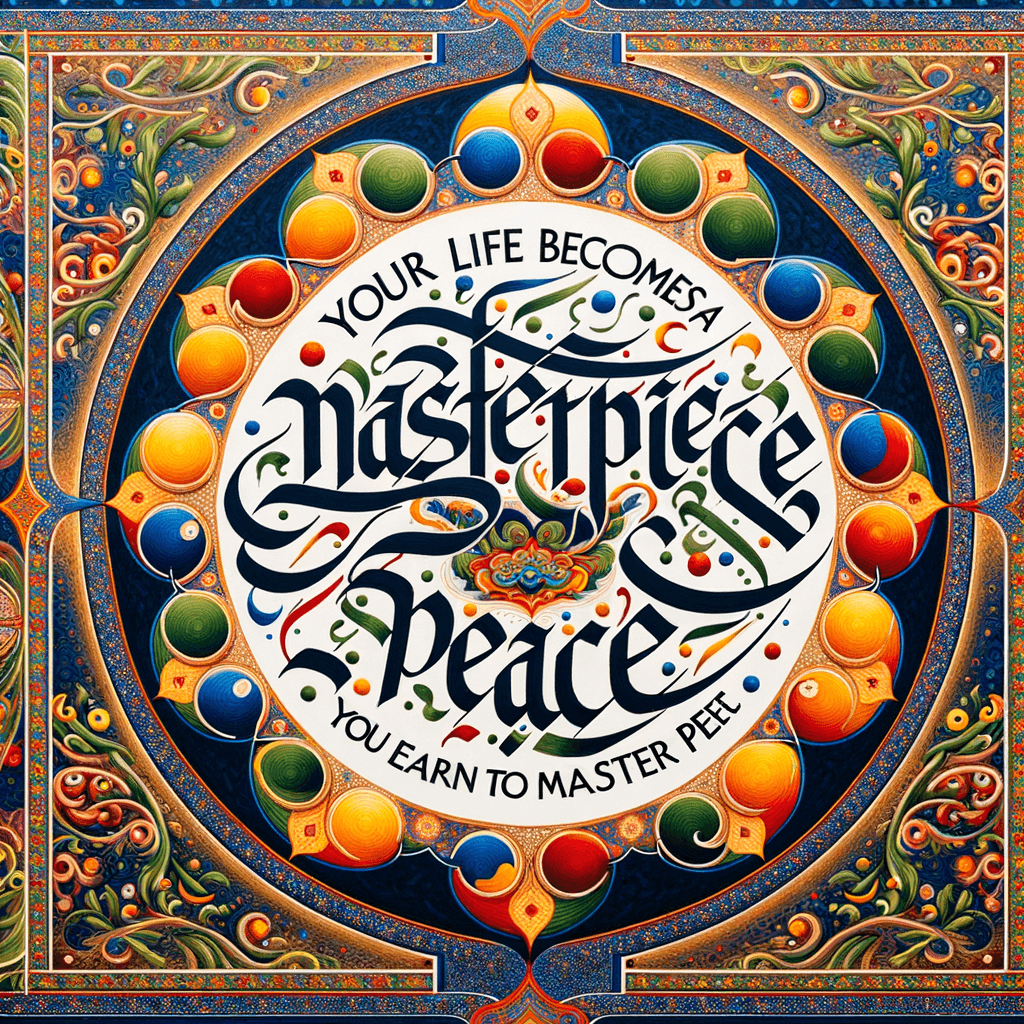
Your life becomes a masterpiece when you learn to master peace. — Sri Sri Ravi Shankar, India.
—What lingers after this line?
Importance of Inner Peace
This quote illustrates the significance of inner peace in achieving a fulfilling and valuable life. It suggests that when individuals cultivate peace within themselves, they can create a life that is harmonious and beautifully crafted.
Life as an Art Form
Describing life as a 'masterpiece' implies that life is an art that can be shaped and refined. Just like an artist meticulously crafts a painting, individuals can shape their lives through mindful choices and inner tranquility.
Mastery of Emotions
The concept of 'mastering peace' refers to developing emotional resilience and control over one's reactions and feelings. It highlights that achieving lasting peace requires effort and practice.
Peace as a Foundation for Success
The quote suggests that peace is a foundational element for achieving true success and happiness. Without inner peace, external accomplishments may feel hollow or unsatisfying.
Philosophical and Cultural Context
Sri Sri Ravi Shankar is a well-known spiritual leader from India, founder of the Art of Living Foundation. His teachings often focus on meditation, stress relief, and the importance of peace in personal growth and societal harmony, reflecting India's rich spiritual heritage.
One-minute reflection
Why might this line matter today, not tomorrow?
Related Quotes
6 selectedMake your life a masterpiece; imagine no limitations on what you can be, have, or do. — Brian Tracy
Brian Tracy
This quote encourages individuals to recognize and embrace their boundless potential. It challenges the idea of self-imposed limitations and inspires people to pursue their dreams without restriction.
Read full interpretation →If it costs my peace, it's outside my boundary. — Adam J. Jackson
Adam J. Jackson
At its core, Adam J. Jackson’s line reframes boundaries as more than rules we impose on others; they become protections for our inner life.
Read full interpretation →Like water which can clearly mirror the sky and the trees only so long as its surface is undisturbed, the mind can only reflect the true image of the Self when it is tranquil and wholly relaxed. — Indra Devi
Indra Devi
Indra Devi begins with a simple natural image: calm water reflects the sky and trees only when its surface is still. In the same way, she suggests that the mind reveals truth not through strain or agitation, but through...
Read full interpretation →Sometimes, protecting your peace is the better choice. — Marcus Aurelius
Marcus Aurelius
At first glance, the saying frames peace not as passivity but as discipline. To protect one’s peace is to recognize that not every conflict deserves entry into the mind.
Read full interpretation →Never be in a hurry; do everything quietly and in a calm spirit. Do not lose your inner peace for anything whatsoever. — Saint Francis de Sales
Saint Francis de Sales
At first glance, Saint Francis de Sales offers simple advice about slowing down, yet his counsel reaches far beyond time management. In urging us never to be in a hurry, he frames haste as a spiritual danger: it scatters...
Read full interpretation →We are not rest-filled people who occasionally become restless; we are restless people who sometimes find rest. — Henri J. M. Nouwen
Henri J.M. Nouwen
Henri J. M.
Read full interpretation →More From Author
More from Sri Sri Ravi Shankar, India. →