
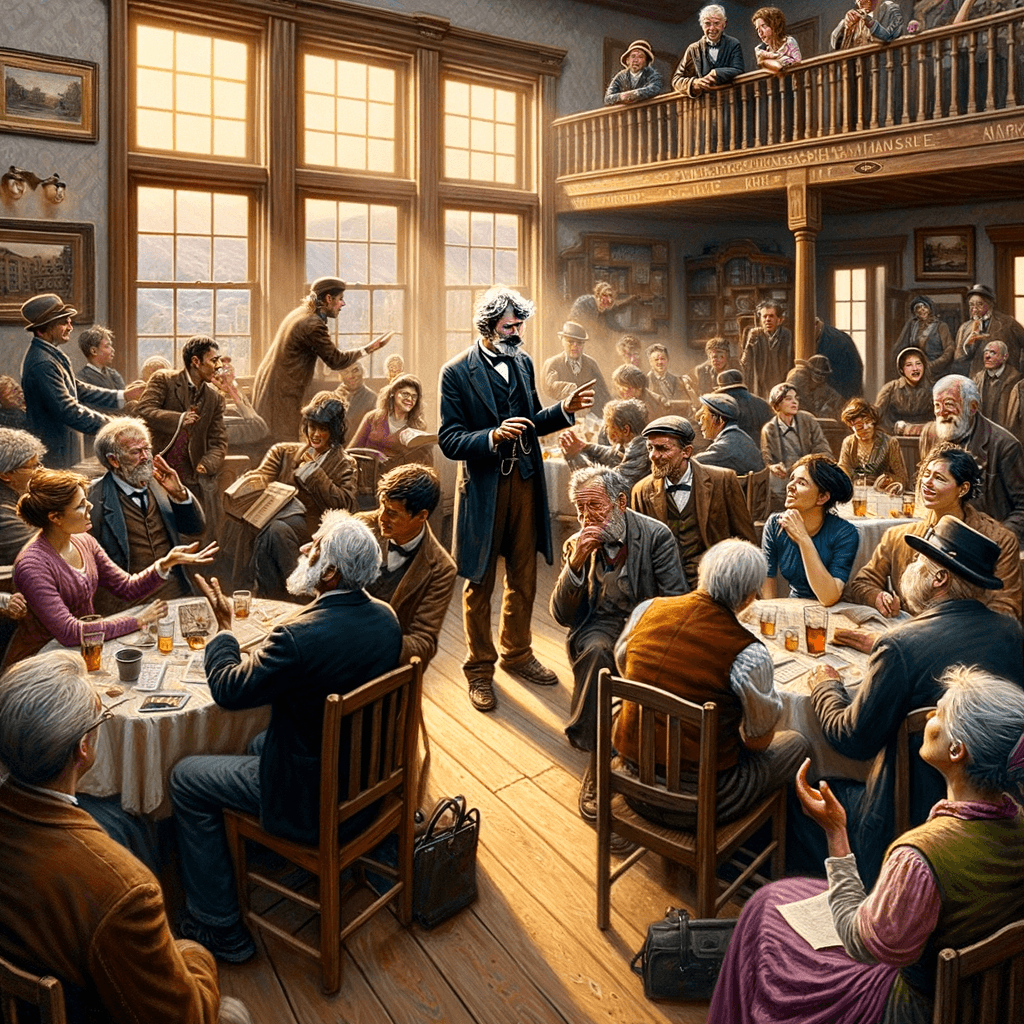
Kindness is the language which the deaf can hear and the blind can see. — Mark Twain
—What lingers after this line?
Universal Understanding
This quote suggests that kindness transcends physical limitations. It is a language understood by all, regardless of their ability to hear or see, emphasizing that kindness can bridge gaps between people.
Impact of Kindness
It highlights the powerful impact that acts of kindness can have on individuals. Kindness is a non-verbal communication that resonates deeply with people, impacting their emotions and spirits.
Inclusivity and Empathy
The quote stresses the importance of inclusivity and empathy. Kindness can connect individuals on a human level, fostering a sense of belonging and understanding in a diverse world.
Human Connection
It suggests that kindness serves as a means of connecting people. Even those who may not fully engage in conventional communication can feel and recognize acts of kindness, creating bonds between individuals.
Mark Twain's Legacy
Mark Twain, an iconic American author known for his wit and social commentary, used this quote to underscore the significance of kindness in human interactions. His works often challenged social norms and encouraged compassion toward others.
One-minute reflection
What's one small action this suggests?
Related Quotes
6 selectedThe best way to cheer yourself is to try to cheer someone else up. — Mark Twain
Mark Twain
This quote suggests that happiness and positivity are contagious. When you make an effort to lift someone else's spirits, you'll likely find your own mood improving as well.
Read full interpretation →Family is not just a place we come from, but a sanctuary we build every day through the small, intentional acts of kindness we offer one another. — Daisaku Ikeda
Daisaku Ikeda
At first glance, Ikeda’s quote gently shifts the meaning of family away from mere ancestry or birthplace. He suggests that family is not defined only by bloodlines or shared history, but by what people actively create to...
Read full interpretation →Boundaries do not make you less kind; they make you more capable of being kind without resentment. — Brené Brown
Brené Brown
At first glance, Brené Brown’s quote challenges a common assumption that kindness means endless availability. Instead, she reframes boundaries as the structure that allows generosity to remain sincere rather than forced.
Read full interpretation →You don't have to be a billionaire to believe you can make a difference. Give your time, give your love, or simply give a smile. — Steve Goodier
Steve Goodier
At its core, Steve Goodier’s quote challenges the idea that influence belongs only to the wealthy or powerful. By placing time, love, and even a smile alongside money, he broadens generosity into something almost anyone...
Read full interpretation →We must all do what we can to help one another. — Jane Austen
Jane Austen
At first glance, Jane Austen’s line sounds modest, yet its moral force is striking: each person carries some responsibility for the well-being of others. The phrase “what we can” is especially important, because it does...
Read full interpretation →You can be a good person with a kind heart and still say no to people. — Tracy A. Malone
Tracy A. Malone
At its core, Tracy A. Malone’s quote challenges the mistaken belief that kindness requires constant availability.
Read full interpretation →More From Author
More from Mark Twain →We can secure other people's approval if we do right and try hard; but our own is worth a hundred of it. — Mark Twain
At its heart, Mark Twain argues that external approval is attainable through good conduct and honest effort, yet it remains secondary to a deeper judgment: our own. Praise from others can reassure us, but it is often cha...
Read full interpretation →Grief can take care of itself, but to get the full value of a joy you must have somebody to divide it with. — Mark Twain
Mark Twain’s remark begins with a striking contrast: grief, he says, can sustain its own weight, while joy needs companionship to reach its fullest meaning. In other words, sorrow often folds inward, making us solitary,...
Read full interpretation →Work consists of whatever a body is obliged to do, and that Play consists of whatever a body is not obliged to do. — Mark Twain
At first glance, Mark Twain’s line seems almost playful in its simplicity, yet it cuts directly to the heart of human motivation. Work, in his framing, is not defined by effort alone but by obligation: it is what a perso...
Read full interpretation →Eat a live frog first thing in the morning and nothing worse will happen to you the rest of the day. — Mark Twain
Mark Twain’s line is meant to jolt: the grotesque image of eating a live frog isn’t culinary advice but a metaphor for confronting the most unpleasant task first. By exaggerating the discomfort, Twain makes the underlyin...
Read full interpretation →