
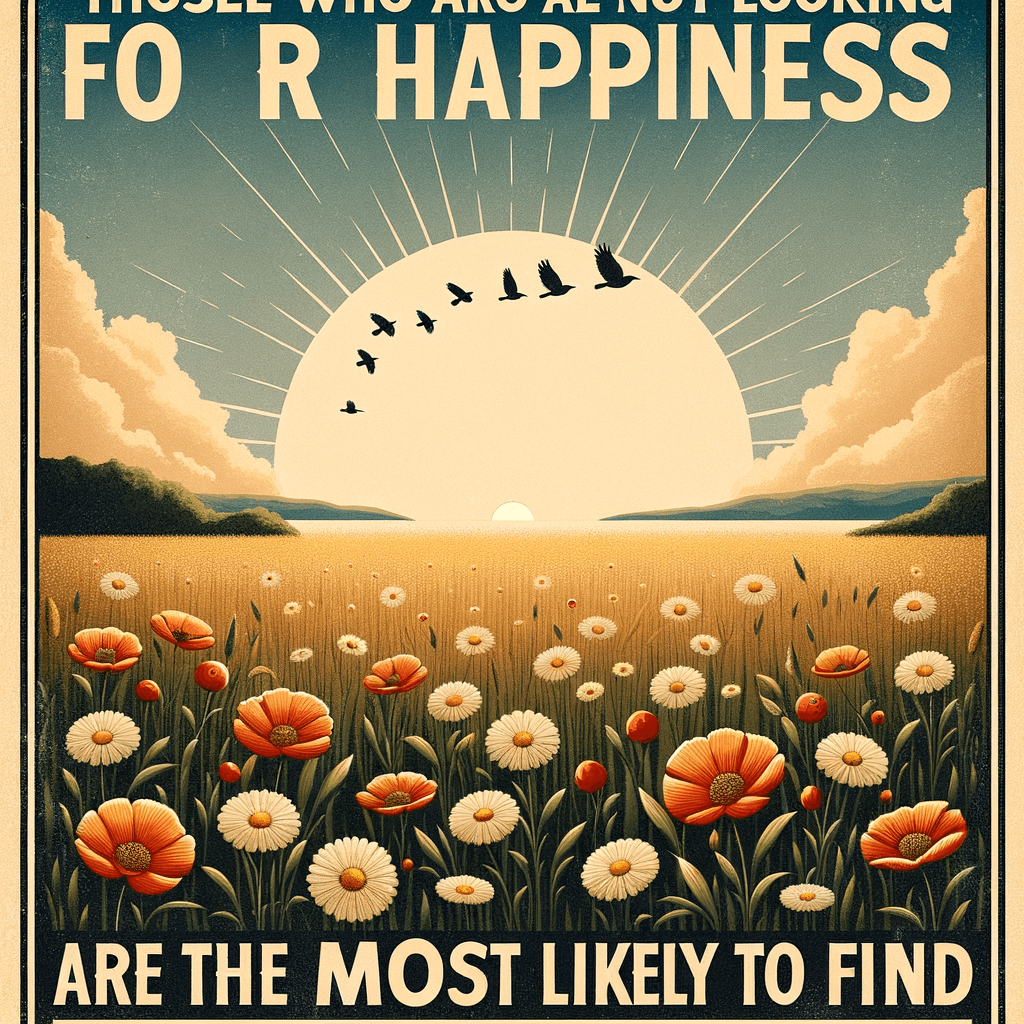
Those who are not looking for happiness are the most likely to find it. — A. M. Lindbergh
—What lingers after this line?
The Nature of Happiness
This quote implies that happiness is often a byproduct of experiences rather than a direct goal. When individuals stop fixating on pursuing happiness, they may discover it unexpectedly in their lives.
Detachment from Outcome
It suggests that a focus on the process of living and engaging with life's moments, rather than an obsession with achieving happiness, can lead to a more fulfilling existence.
Mindfulness and Presence
The quote also promotes the idea of being present. Those who are content in their current situations without yearning for more are more likely to enjoy genuine happiness.
Irony in Pursuit
There’s an irony in the pursuit of happiness; the harder one chases it, the more it seems to elude them. Instead, finding joy in the simple things can lead to a more authentic experience of happiness.
Author's Perspective
A. M. Lindbergh, an American author and aviator, often reflected on themes of personal exploration and the search for meaning in life. Her insights encourage a deeper understanding of human emotions and values.
One-minute reflection
What's one small action this suggests?
Related Quotes
6 selectedThe secret of happiness is to admire without desiring. — Carl Sandburg
Carl Sandburg
Carl Sandburg’s line reframes happiness as an attitude rather than an acquisition. To admire without desiring means recognizing beauty, excellence, or joy in the world without immediately trying to possess it.
Read full interpretation →The secret of happiness is not always doing what you want, but always wanting what you do. - Leo Tolstoy
Leo Tolstoy
This quote redefines happiness as a state of contentment that comes from cultivating a positive attitude toward one's actions rather than always striving to do exactly what one desires.
Read full interpretation →The secret of happiness is not always doing what you want, but always wanting what you do. - Leo Tolstoy
Leo Tolstoy
This quote emphasizes the importance of finding contentment and acceptance in one's current circumstances. Happiness is derived not from always pursuing desires but from valuing and appreciating what one is already engag...
Read full interpretation →I have learned that to be with those I like is enough. — Walt Whitman
Walt Whitman
Whitman’s line reduces happiness to something disarmingly plain: the presence of beloved company. Rather than chasing wealth, status, or elaborate pleasures, he suggests that being with people one genuinely likes can alr...
Read full interpretation →I will get there, but now I'm here, and here is wonderful. — Jenny Offill
Jenny Offill
Jenny Offill’s line gently overturns the modern obsession with destinations. At first, “I will get there” acknowledges ambition and movement, yet the sentence immediately returns us to the present: “but now I’m here.” In...
Read full interpretation →Don't go expecting perfection; be satisfied with even the smallest progress. — Marcus Aurelius
Marcus Aurelius
Marcus Aurelius advises against the exhausting demand for flawlessness and redirects attention toward modest improvement. In the spirit of Stoic thought, especially in his Meditations (c.
Read full interpretation →More From Author
More from A. M. Lindbergh →