
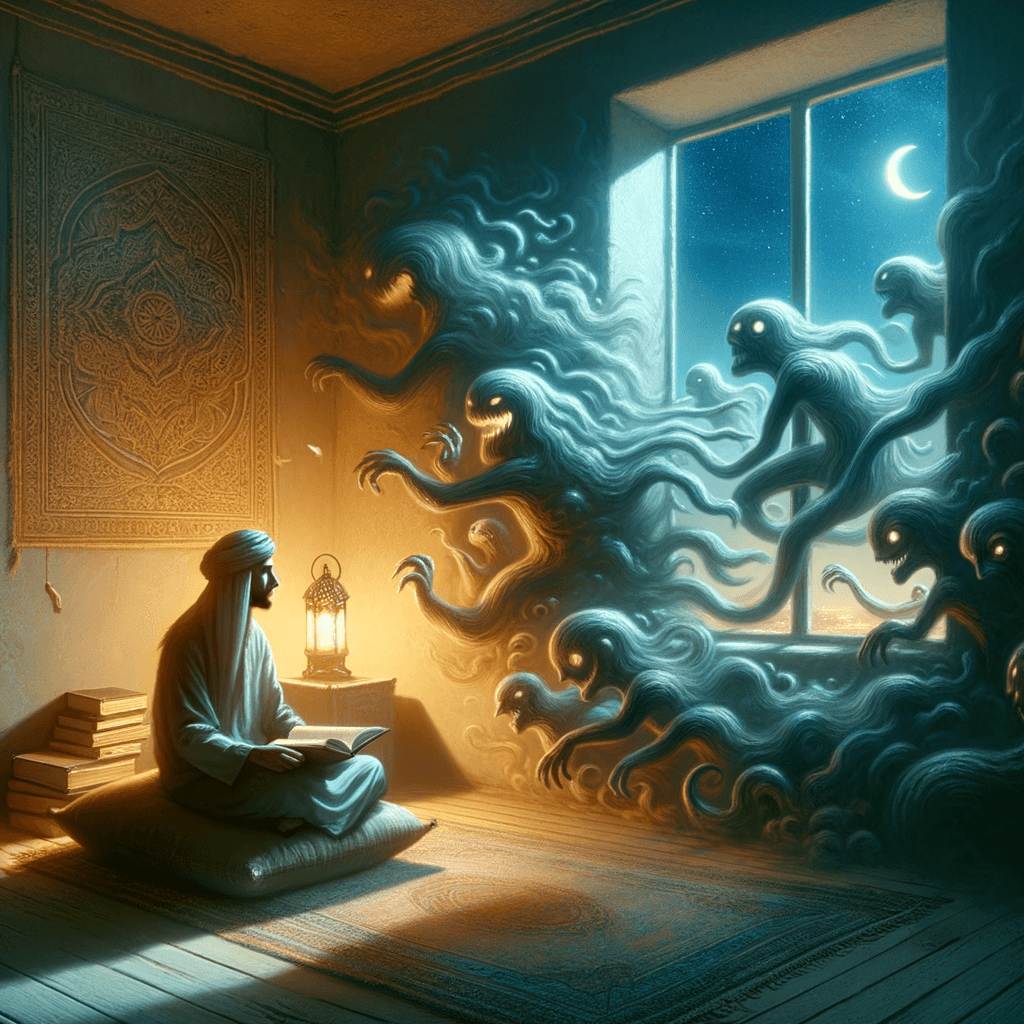
Fears are stories we tell ourselves. — Unknown
—What lingers after this line?
Subjectivity of Fear
This quote suggests that fear is often a product of our own minds. It points to the idea that fears are constructed narratives that might not necessarily reflect reality.
Power of the Mind
It emphasizes the strength of the human mind to create perceptions. Just as our minds can stir up fear through stories, they also have the potential to change those stories and reduce the power of fear.
Perception vs. Reality
The quote hints at the distinction between perceived danger and actual danger. Often, the fears we harbor are exaggerated or imagined versions of reality, and not something tangible or immediate.
Overcoming Fear
By understanding that fear is a self-made narrative, this quote encourages us to take control of our fears by rewriting or challenging the stories we tell ourselves.
Emotional Growth
The idea that fear is constructed suggests that by changing our internal dialogue, we can cultivate emotional resilience and move beyond irrational or limiting beliefs.
One-minute reflection
Why might this line matter today, not tomorrow?
Related Quotes
6 selectedEmbrace your fears, for they are the steps that lead you to your greatest growth. — Aria L. Haven
Aria L. Haven
This quote encourages individuals to confront their fears rather than avoiding them. By facing challenges head-on, one can develop resilience and learn valuable life lessons.
Read full interpretation →Your fear is 100% dependent on you for its survival. — Steve Maraboli
Steve Maraboli
This quote emphasizes that fear is a construct of the mind, reliant on one's perception. By changing the way we perceive situations, we have the power to diminish or eradicate our fears.
Read full interpretation →You don't have to bully yourself out of feeling fear. You just have to move while it's still there. — Annie Wright
Annie Wright
At its core, Annie Wright’s quote challenges the common belief that courage begins only after fear has disappeared. Instead, it reframes fear as something that can accompany action rather than prevent it.
Read full interpretation →The economy can take your money. A crisis can take your opportunities. But fear can take your judgment—and that is the loss most people never recover from. — Epictetus
Epictetus
At first glance, this saying draws a sharp line between what happens to us and what happens within us. Money can vanish in a recession, and opportunities can disappear when markets collapse, yet Epictetus argues that the...
Read full interpretation →The obsession with being 'productive' is just a mask for fear. True discipline is the courage to do what is necessary while leaving behind what is merely loud. — Ryan Holiday
Ryan Holiday
At first glance, Ryan Holiday’s quote challenges a deeply admired ideal: productivity. In many workplaces and digital spaces, being constantly busy is treated as proof of worth.
Read full interpretation →Fear is the first enemy of the man who wants to be free.
Unknown
This quote highlights that fear is a major obstacle to achieving freedom. It emphasizes the need to confront and overcome fear in order to attain true independence and liberation.
Read full interpretation →More From Author
More from Unknown →The language is the substrate. The architecture is the contract.
The line sets up a deliberate pairing: language lies beneath everything, while architecture governs everything above it. In other words, what you can express determines what you can build, and what you commit to structur...
Read full interpretation →A scroll is not a break; it is a trap disguised as rest. — Unknown
The quote begins by challenging a familiar story we tell ourselves: that a brief scroll is a harmless pause between tasks. On the surface, it looks like recovery—no effort, no decision, no commitment.
Read full interpretation →Don't let your ice cream melt while you're counting someone else's sprinkles. — Unknown
The quote uses ice cream as a simple stand-in for life’s fleeting pleasures: what you have is delicious, but it won’t last forever if you ignore it. Meanwhile, “counting someone else’s sprinkles” captures the habit of mo...
Read full interpretation →If your absence doesn't affect them, your presence never mattered. — Unknown
The quote frames absence as a revealing experiment: remove yourself, and the reaction—concern, curiosity, indifference—becomes a kind of data. If nothing changes when you’re gone, it suggests your role was never integrat...
Read full interpretation →