
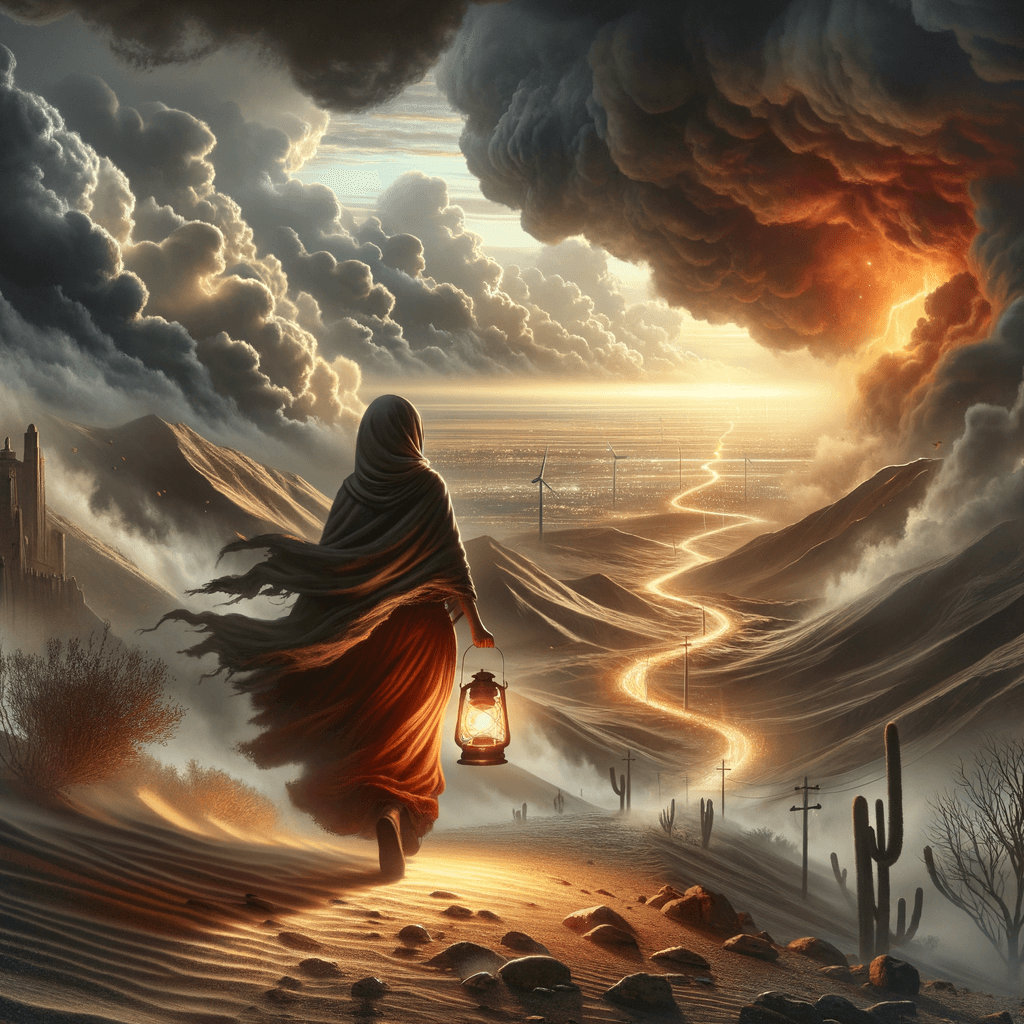
We must embrace pain and burn it as fuel for our journey. — Kenji Miyazawa
—What lingers after this line?
Overcoming Adversity
This quote suggests that pain and hardship are inevitable in life, but instead of avoiding them, we should face them head-on and use them as motivation to push forward.
Transforming Suffering into Strength
Miyazawa encourages us to transform our pain into a source of energy. Just as fuel powers a fire, suffering can give us the strength and resilience we need to persevere on our life’s journey.
Emotional Growth
The quote emphasizes the potential for personal growth through suffering. By embracing pain, we allow it to teach us valuable lessons, helping us grow emotionally and mentally stronger.
Endurance and Persistence
Pain becomes not something to escape from, but to use as a reason to continue moving forward. Enduring life’s challenges is essential to completing the journey we’ve embarked on.
Philosophical Reflection
Kenji Miyazawa, a Japanese poet and author, was also deeply influenced by his Buddhist beliefs. This quote reflects a Buddhist approach to suffering, advocating for acceptance of suffering as part of the human experience, and turning it into something positive.
Recommended Reading
As an Amazon Associate, we earn from qualifying purchases.
One-minute reflection
What does this quote ask you to notice today?
Related Quotes
6 selectedResilience is not pretending that pain doesn't exist. It's learning to dance with it. — Amir (Success Chasers)
Amir (Success Chasers
At first glance, Amir’s quote rejects a common misunderstanding: that resilient people are somehow untouched by suffering. Instead, it reframes strength as honest engagement with pain rather than denial of it.
Read full interpretation →It does not matter what you bear, but how you bear it. — Seneca
Seneca
At its heart, Seneca’s remark shifts attention away from suffering itself and toward character. Misfortune, pain, and limitation are often beyond human control, yet our response remains a moral choice.
Read full interpretation →Peace is not freedom from the storm, but peace amid the storm. — Martin Luther King Jr.
Martin Luther King Jr.
Martin Luther King Jr.’s words redefine peace as something deeper than comfort or calm surroundings. Rather than imagining peace as the total absence of conflict, pain, or uncertainty, he presents it as an inner steadine...
Read full interpretation →Yield and overcome, bend and be straight. — Lao Tzu
Lao Tzu
At first glance, Lao Tzu’s line seems contradictory: how can yielding lead to overcoming, or bending result in straightness? Yet this paradox lies at the heart of Taoist thought.
Read full interpretation →A blazing fire makes flame and brightness out of everything that is thrown into it. — Marcus Aurelius
Marcus Aurelius
Marcus Aurelius compresses a central Stoic lesson into a vivid image: a strong fire does not merely endure what is cast into it, but transforms it into more flame and light. In that sense, adversity is not just something...
Read full interpretation →The creative process is often fraught with setbacks, criticism, and rejection. Focus on what you can control and let go of what you cannot. — Seneca
Seneca
At its core, this thought reflects Seneca’s Stoic distinction between what belongs to us and what does not. In the creative process, effort, discipline, and integrity remain within an artist’s control, while public taste...
Read full interpretation →More From Author
More from Kenji Miyazawa →