
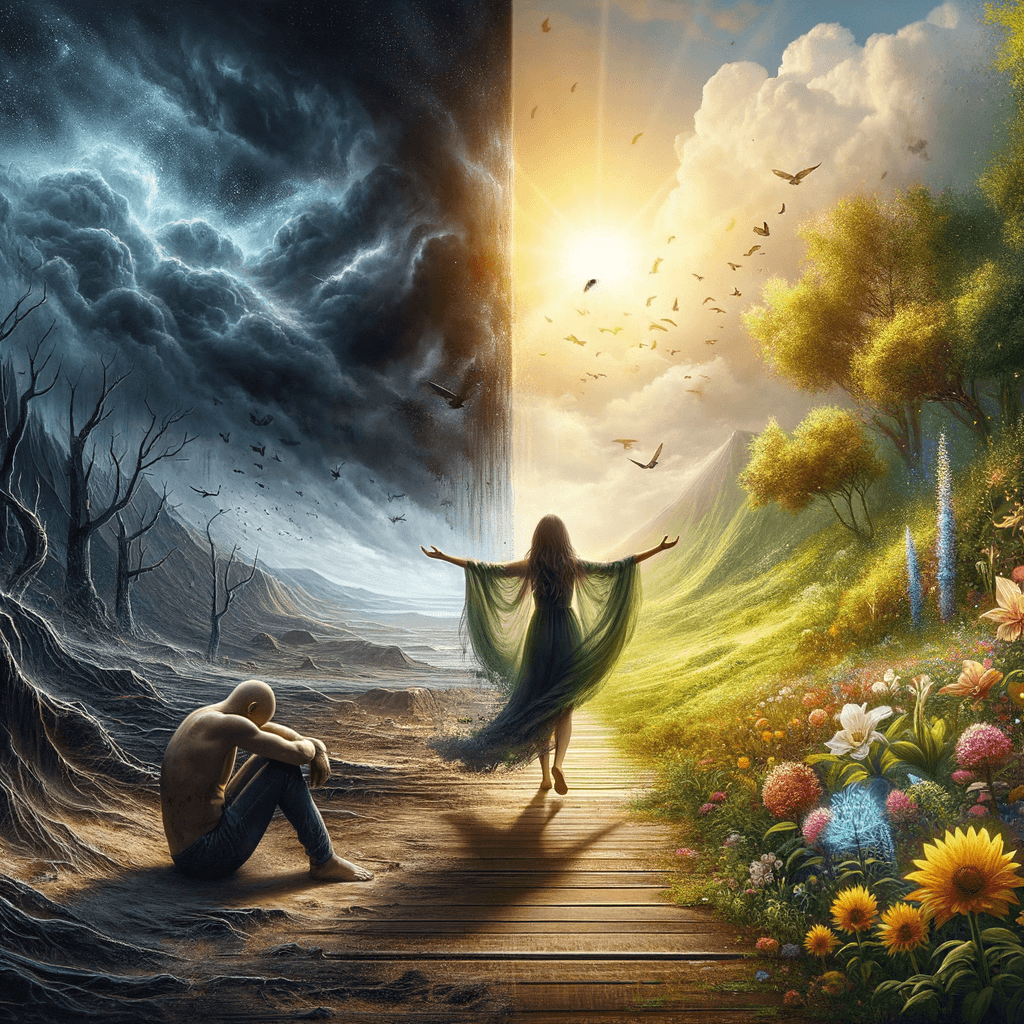
In the face of adversity, we have a choice: to be bitter or to be better. — Unknown (but widely attributed)
—What lingers after this line?
Power of Choice
This quote emphasizes that, no matter the challenges we face, we always have control over our reactions. While adversity may be inevitable, how we respond to it remains within our power.
Emotional Growth
Choosing to be ‘better’ instead of ‘bitter’ reflects a mindset of personal growth. While it’s easy to dwell on negativity and hardship, actively pursuing improvement allows for emotional and psychological development.
Resilience in Hard Times
The quote highlights resilience, saying that the true strength lies not in avoiding adversity, but in rising above it. Choosing to grow from difficult experiences builds inner strength and maturity.
Hope vs. Bitterness
Choosing to be ‘better’ symbolizes hope and optimism. Bitterness, on the other hand, represents holding onto resentment, which can weigh a person down. This quote suggests that choosing a healthier mindset leads to a more fulfilling life.
Universal Struggle
The anonymous nature of this quote contributes to its universality. The message applies to everyone, regardless of their background, as everyone eventually encounters adversity and faces the same choice between growth and bitterness.
One-minute reflection
What does this quote ask you to notice today?
Related Quotes
6 selectedSelf-mastery rarely looks impressive. It simply holds. — James Clear
James Clear
James Clear’s observation begins by stripping self-mastery of glamour. It is not usually a heroic moment, a public triumph, or a dramatic display of willpower.
Read full interpretation →When I hear somebody sigh, 'Life is hard,' I am always tempted to ask, 'Compared to what?' — Sydney J. Harris
Sydney J. Harris
Sydney J. Harris’s remark begins with an ordinary expression of fatigue: “Life is hard.” Yet his response, “Compared to what?” quietly turns complaint into inquiry.
Read full interpretation →Learning to love yourself is like learning to walk – essential, life-changing, and the only way to stand tall. — Vironika Tugaleva
Vironika Tugaleva
Vironika Tugaleva’s comparison begins with a simple but powerful truth: self-love is not a luxury, but a basic human necessity. Just as walking allows a child to move through the world with growing independence, learning...
Read full interpretation →Don't fight the challenges. Just find a new way to stand. — Germany Kent
Germany Kent
Germany Kent’s words begin with a quiet reversal of instinct: instead of treating every challenge as an enemy to defeat, she invites us to reconsider our posture toward difficulty. The emphasis is not on surrender, but o...
Read full interpretation →Optimist: someone who figures that taking a step backward after taking a step forward is not a disaster, it's more like a cha-cha. — Robert Brault
Robert Brault
Robert Brault’s line begins with a witty redefinition: an optimist is not someone who denies backward motion, but someone who interprets it differently. Instead of treating a setback as proof of failure, the optimist see...
Read full interpretation →The most gifted members of the human species are at their creative best when they cannot have their way, and must compensate for what they miss by realizing and cultivating their capacities. — Bryant H. McGill
Bryant H. McGill
Bryant H. McGill’s observation begins with a striking reversal: gifted people may not reach their highest potential when everything comes easily, but when something blocks their path.
Read full interpretation →More From Author
More from Unknown (but widely attributed →