
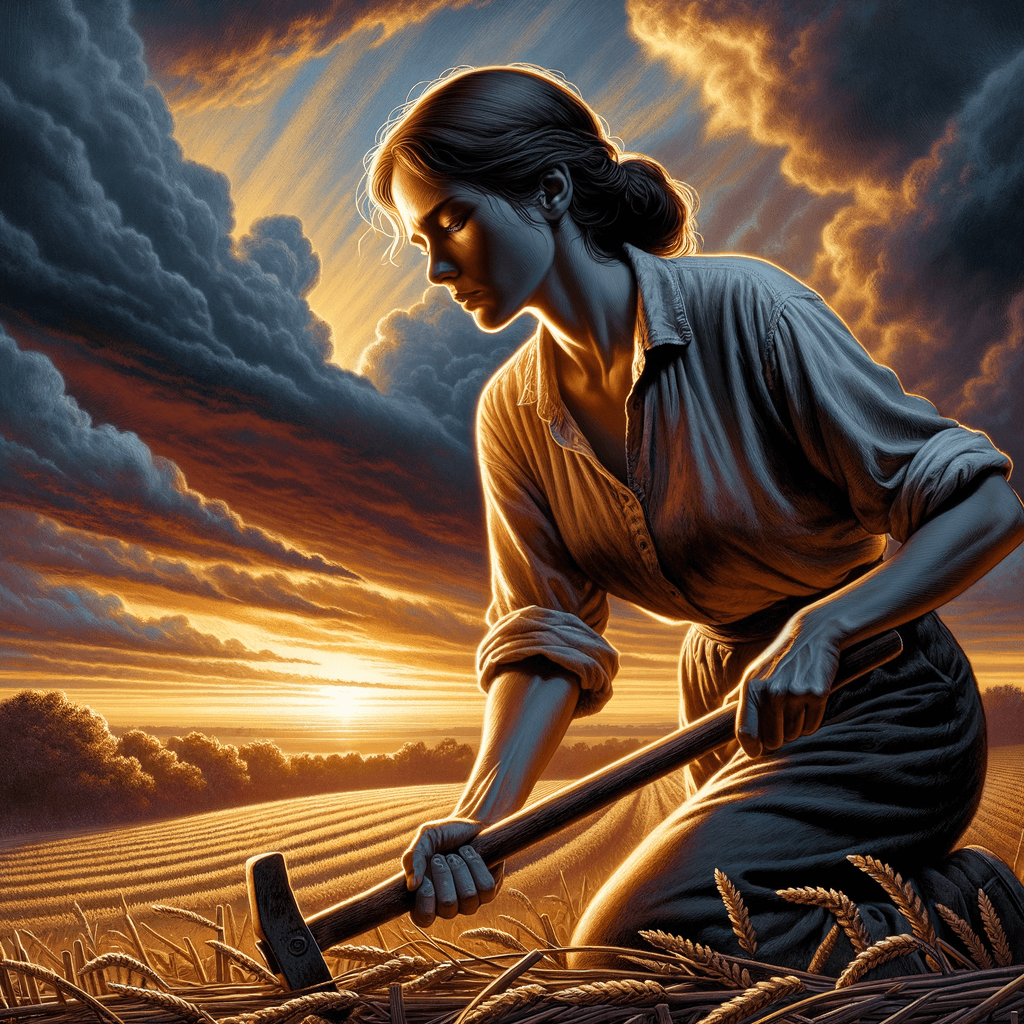
You may be surprised at how hard you can work when you have to. — John Steinbeck
—What lingers after this line?
Resilience Under Pressure
This quote highlights the human ability to rise to the occasion when faced with challenging circumstances. It suggests that people can push beyond their perceived limits when necessity demands it.
Motivation Driven by Necessity
The statement implies that dire situations bring out hidden strength and determination, showing how necessity often becomes a powerful motivator for action and effort.
Discovering Inner Strength
John Steinbeck points to the unexpected depths of strength and capacity within individuals, which are often revealed only in critical moments of need or pressure.
The Human Spirit in Adversity
The quote speaks to the resilience and adaptability of the human spirit, emphasizing that challenges often lead to personal growth and achievement.
Steinbeck's Perspective on Human Nature
As an author with deep insights into human struggles, Steinbeck's words often reflect his appreciation for the endurance and resourcefulness of ordinary people in extraordinary circumstances, as seen in works like *The Grapes of Wrath*.
Recommended Reading
As an Amazon Associate, we earn from qualifying purchases.
One-minute reflection
What does this quote ask you to notice today?
Related Quotes
6 selectedHonor the ordinary tasks; they are the scaffolding of greatness — John Steinbeck
John Steinbeck
John Steinbeck’s line reads like practical wisdom disguised as poetry: treat ordinary tasks with honor because they hold up everything else. Rather than romanticizing rare moments of inspiration, he points attention to w...
Read full interpretation →Doing the work is the only way to find out if the work is worth doing. — Flannery O'Connor
Flannery O'Connor
Flannery O’Connor’s line turns a common assumption upside down: we often think we must know a task’s value before we begin, yet she argues the opposite. The worth of serious work is rarely visible from a distance.
Read full interpretation →A man at work, making something which he feels will exist because he is working at it and wills it, is exercising the energies of his mind and soul as well as of his body. — William Morris
William Morris
At its core, William Morris presents work not as drudgery but as an act of creation. A person who makes something with the conviction that it will endure is doing more than completing a task; he is shaping reality throug...
Read full interpretation →Whatever the job you are asked to do at whatever level, do a good job because your reputation is your resume. — Madeleine Albright
Madeleine Albright
Madeleine Albright’s remark turns attention away from titles and toward conduct. Her point is simple but demanding: no matter how small the assignment or how modest the position, the quality of your effort becomes a publ...
Read full interpretation →Hard work never killed anybody, but why take a chance? — Edward Bergen
Edward Bergen
At first glance, Edward Bergen’s line sounds like a lazy person’s excuse, yet its charm lies in the deadpan reversal. He begins with a familiar moral lesson—hard work is harmless and virtuous—then instantly undercuts it...
Read full interpretation →Whatever you do, you have to master your craft. If it's flipping hamburgers at McDonald's, be the best hamburger flipper in the world. — Snoop Dogg
Snoop Dogg
Snoop Dogg’s quote begins with a democratic idea: the value of work does not depend on prestige, but on the care brought to it. Whether the task is glamorous or routine, he argues that mastery transforms it into somethin...
Read full interpretation →More From Author
More from John Steinbeck →The work we do with our hands is the best way to keep our hearts from getting restless. — John Steinbeck
At its core, Steinbeck’s line proposes that physical work does more than produce useful things: it calms inner turbulence. By keeping the hands occupied, he suggests, the mind is less likely to drift into anxiety, idlene...
Read full interpretation →The art of resting is a part of the art of working. — John Steinbeck
At first glance, Steinbeck’s remark seems simple, yet it quietly overturns a common assumption: that work and rest are opposites. Instead, he presents them as parts of the same craft.
Read full interpretation →Set your hands to work that honors tomorrow and your feet will find steady ground. — John Steinbeck
Steinbeck’s line ties dignity to direction: “hands” symbolize daily effort, but the effort must “honor tomorrow,” meaning it should be guided by a longer horizon than immediate comfort. Rather than romanticizing busyness...
Read full interpretation →Turn curiosity into craft; practice is where dreams learn to behave. — John Steinbeck
Steinbeck begins with a familiar engine of creativity: curiosity. It’s the restless question—“What if?”—that nudges a person toward a story, a song, a business, or a skill.
Read full interpretation →