
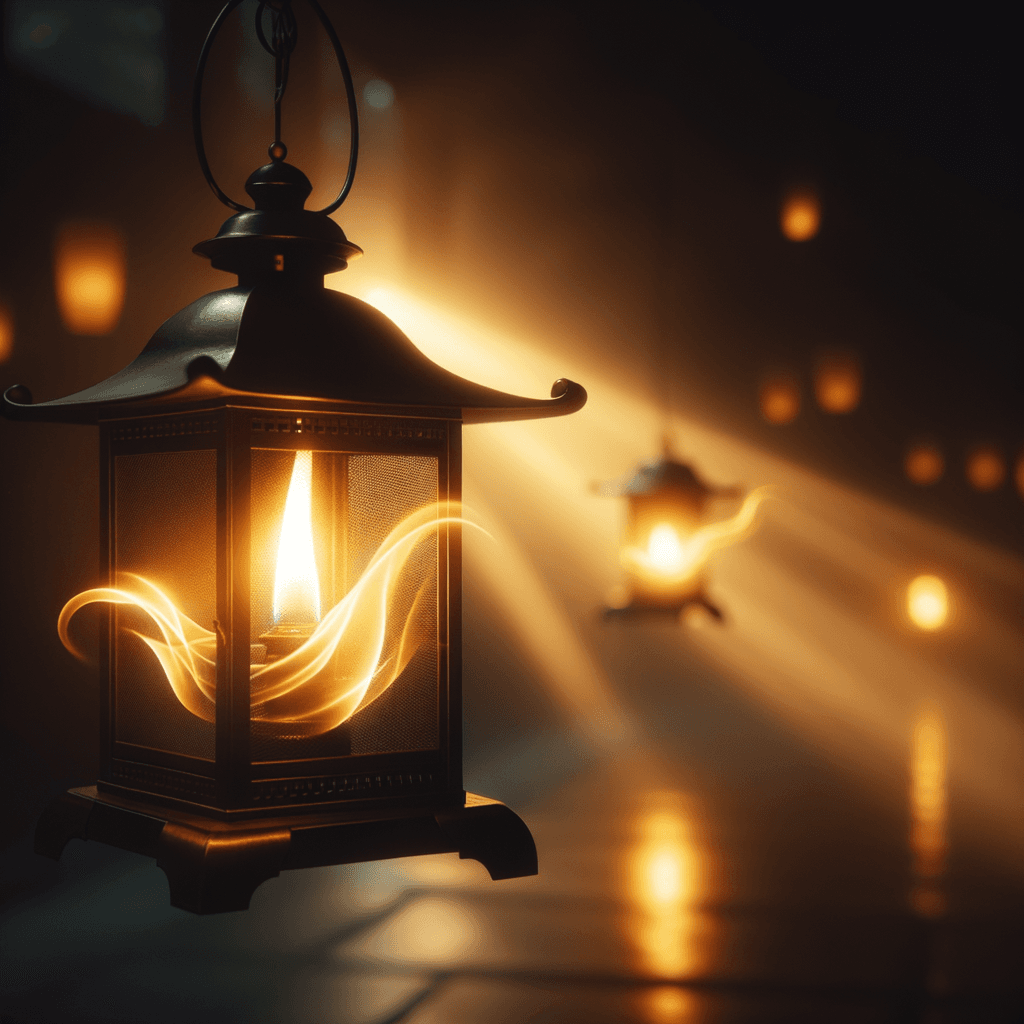
The flame that burns Twice as bright burns half as long. — Lao Tzu
—What lingers after this line?
Intensity and Longevity
This quote reflects the idea that extraordinary intensity, whether in life, creativity, or passion, often comes at the cost of longevity. A life lived with extreme fervor may burn out more quickly.
Balance and Moderation
Lao Tzu emphasizes the value of balance and moderation in life. By avoiding extremes, one can achieve a sustainable and enduring existence.
Short-Lived Brilliance
The 'flame that burns twice as bright' symbolizes achievements or actions that shine with remarkable intensity but are fleeting. It serves as a cautionary metaphor for those who may pursue glory or success without considering long-term consequences.
Energy and Resource Management
The quote can be interpreted as a reminder to manage one's energy and resources wisely. Overexertion or overindulgence can lead to rapid depletion, reducing one's ability to sustain efforts over time.
Philosophical Perspective
As a Taoist philosopher, Lao Tzu often examined natural processes and the flow of life. This quote reflects his philosophical focus on living in harmony with natural rhythms, avoiding extremes to maintain a balanced, fulfilling life.
Recommended Reading
As an Amazon Associate, we earn from qualifying purchases.
One-minute reflection
Where does this idea show up in your life right now?
Related Quotes
6 selectedThe flame that burns the brightest is not the one that burns the longest. — Seneca
Seneca
This quote conveys the idea that things which are intense or passionate often don't last very long. The brighter a flame burns, the faster it consumes its fuel.
Read full interpretation →The flame that burns the brightest is not the one that lasts the longest. — Eugene O'Neill
Eugene O'Neill
This quote suggests that things that shine the brightest or burn with great intensity often have a short lifespan. Whether it is passion, ambition, or life itself, extreme intensity can lead to an early burnout.
Read full interpretation →Everything is blooming most recklessly; if it were voices instead of colors, there would be an unbelievable shrieking into the heart of the night. — Rainer Maria Rilke
Rainer Maria Rilke
At first glance, Rilke turns a peaceful image of blooming nature into something almost overwhelming. Flowers do not merely open; they burst forth “most recklessly,” suggesting a vitality so abundant that it exceeds calm...
Read full interpretation →Be lightning, not a little light. — Charles Bukowski
Charles Bukowski
Bukowski’s metaphor invites us to consider the distinction between ordinary illumination and a dramatic, transformative force. While ‘a little light’ gently dispels darkness, lightning cuts through the night with sudden...
Read full interpretation →May we all be blessed with longevity, Though thousands of miles apart, We are still able to share the beauty of the moon together. - Su Shi (Su Dongpo)
Su Shi (Su Dongpo
At the outset, Su Shi’s wish binds time, space, and affection into a single gesture: may we live long enough to keep sharing the same moon. Rather than lament distance, the lines convert it into a field of connection, wh...
Read full interpretation →May we all be blessed with longevity, Though thousands of miles apart, We are still able to share the beauty of the moon together. - Su Shi (Su Dongpo)
Su Shi (Su Dongpo
Su Shi, the Song-dynasty poet-statesman, composed his lyric to the tune “Shui Diao Ge Tou” during the Mid-Autumn Festival (c. 1076).
Read full interpretation →More From Author
More from Lao Tzu →Yield and overcome, bend and be straight. — Lao Tzu
At first glance, Lao Tzu’s line seems contradictory: how can yielding lead to overcoming, or bending result in straightness? Yet this paradox lies at the heart of Taoist thought.
Read full interpretation →Confidence is silent. Insecurities are loud. — (Skipped due to author uncertainty) -> Let's use: A truly strong person does not need to dominate. — Lao Tzu
At its core, Lao Tzu’s saying reframes strength as something inward rather than theatrical. A truly strong person, in this view, does not need to overpower others to prove worth, because genuine power is already settled...
Read full interpretation →If you are depressed you are living in the past. If you are anxious you are living in the future. If you are at peace you are living in the present. — Lao Tzu
At first glance, this saying offers a simple emotional map: depression is linked to the past, anxiety to the future, and peace to the present. In that structure, Lao Tzu presents inner life as a matter of where conscious...
Read full interpretation →If you want to master the world, first master your own internal chaos. The rest is just noise. — Lao Tzu
At its core, this saying shifts the arena of power from the external world to the self. The desire to ‘master the world’ often begins with ambition, competition, and control, yet Lao Tzu redirects that energy inward, tow...
Read full interpretation →