
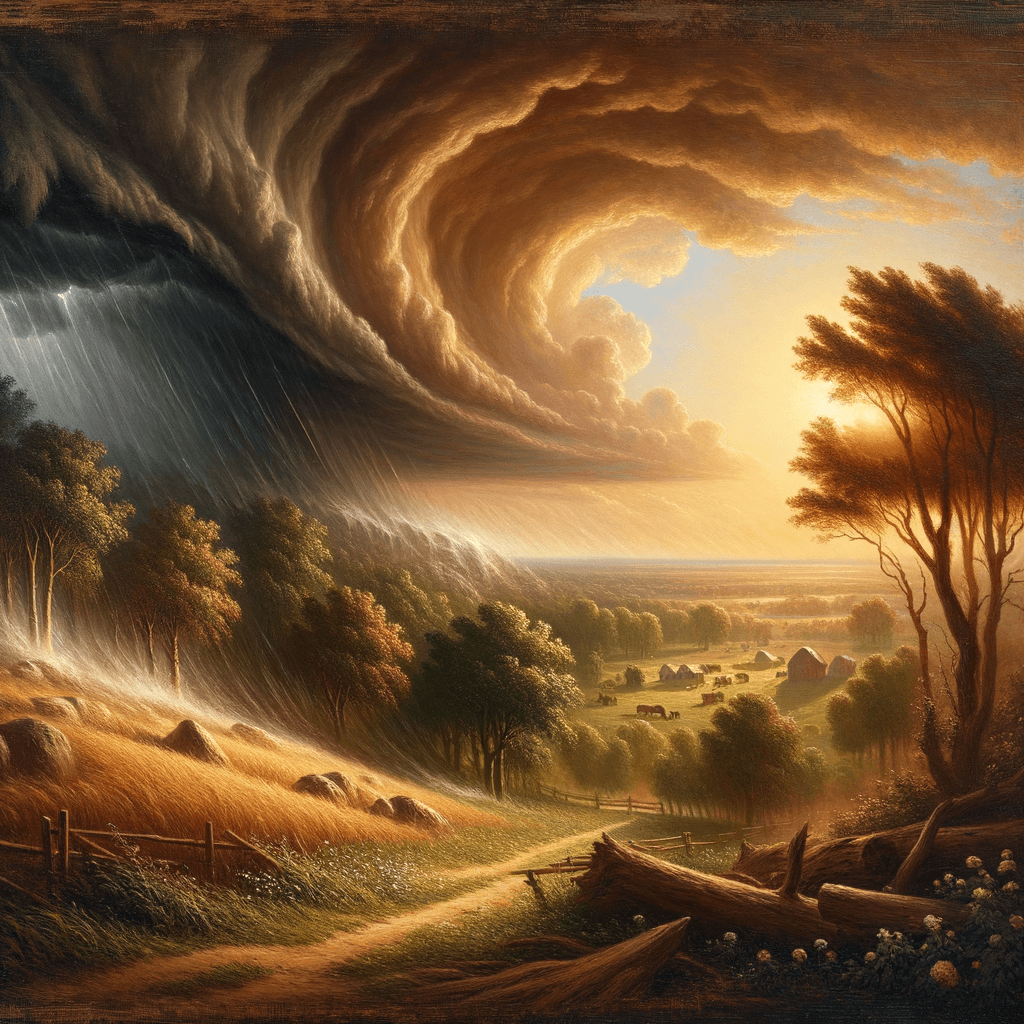
After the storm comes the calm. - Popular Saying
—What lingers after this line?
Resilience and Recovery
This saying implies that turbulent periods are temporary and will eventually be followed by peace and stability. It emphasizes the resilience needed to withstand tough times, with the reassurance that better days are ahead.
Hope and Optimism
It suggests that there is always hope and light at the end of the tunnel. Even during the most challenging times, one can remain optimistic, knowing that calmness and relief will follow.
Natural Cycle
The saying reflects the natural cycle of life, where difficulties are followed by periods of tranquility. It mirrors the patterns in nature, such as storms being followed by clear skies.
Patience and Endurance
This saying encourages patience and endurance. It teaches that enduring hardships with patience will eventually lead to a time of peace and calm.
Spiritual and Emotional Balance
The phrase can also denote the importance of maintaining a balanced perspective during emotional or spiritual upheavals, with the assurance that inner peace will eventually return.
Cultural Usage
Being a popular saying, it's often used in various cultures to comfort and encourage individuals facing difficult situations, reinforcing a universal understanding and collective wisdom.
One-minute reflection
Where does this idea show up in your life right now?
Related Quotes
6 selectedWhen I hear somebody sigh, 'Life is hard,' I am always tempted to ask, 'Compared to what?' — Sydney J. Harris
Sydney J. Harris
Sydney J. Harris’s remark begins with an ordinary expression of fatigue: “Life is hard.” Yet his response, “Compared to what?” quietly turns complaint into inquiry.
Read full interpretation →Don't fight the challenges. Just find a new way to stand. — Germany Kent
Germany Kent
Germany Kent’s words begin with a quiet reversal of instinct: instead of treating every challenge as an enemy to defeat, she invites us to reconsider our posture toward difficulty. The emphasis is not on surrender, but o...
Read full interpretation →Optimist: someone who figures that taking a step backward after taking a step forward is not a disaster, it's more like a cha-cha. — Robert Brault
Robert Brault
Robert Brault’s line begins with a witty redefinition: an optimist is not someone who denies backward motion, but someone who interprets it differently. Instead of treating a setback as proof of failure, the optimist see...
Read full interpretation →A mind grows by staying with difficulty long enough for the experience to change it. — Mary Catherine Bateson
Mary Catherine Bateson
Mary Catherine Bateson’s observation begins with a quiet but demanding truth: the mind does not grow merely by encountering difficulty, but by remaining with it. Challenge becomes transformative only when we resist the u...
Read full interpretation →When you are friends with your storm, you dance, instead of getting blown away. — Michael Bassey Johnson
Michael Bassey Johnson
Michael Bassey Johnson’s line begins with a striking reversal: the storm is not merely an enemy to survive, but a force one can learn to understand. In this sense, the storm may represent grief, fear, conflict, uncertain...
Read full interpretation →Just because your light flickers does not mean it is about to go out. — Yohancé Salimu
Yohancé Salimu
At first glance, Yohancé Salimu’s line separates appearance from reality. A flicker suggests instability, fatigue, or interruption, yet it does not automatically signal extinction.
Read full interpretation →More From Author
More from Popular Saying →