
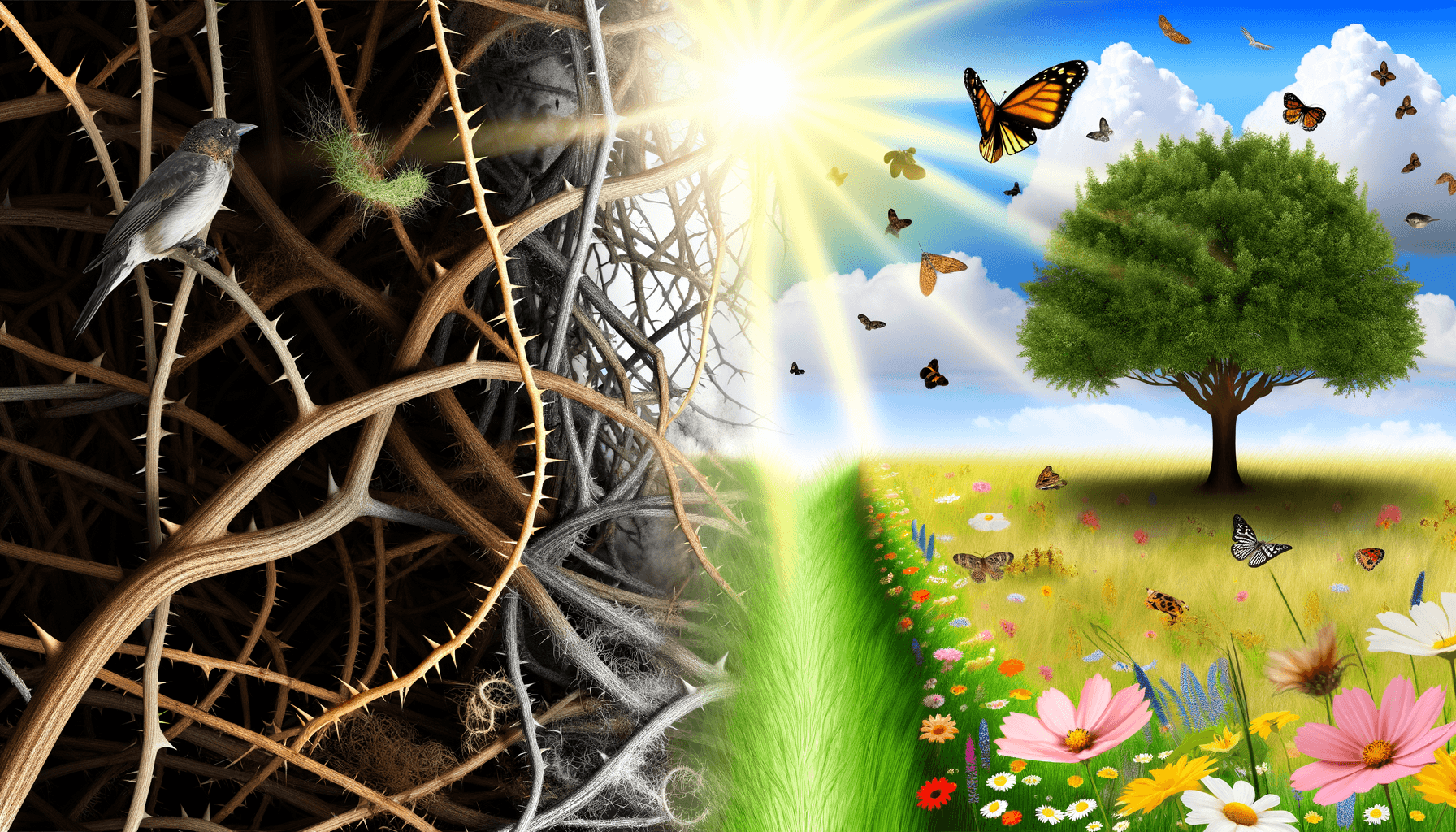
When we see beyond pain and error, we find wisdom and grace. — Thich Nhat Hanh
—What lingers after this line?
Overcoming Suffering
The quote suggests that enduring and looking beyond our suffering can lead to greater understanding.
Nonjudgmental Awareness
It encourages us to view mistakes and pain with kindness and acceptance, without harsh judgment.
Learning and Growth
Pain and error become sources of insight, offering lessons that foster personal growth and wisdom.
Compassion and Forgiveness
Grace emerges when we respond to difficulties with compassion, both for ourselves and others.
Buddhist Philosophy
Reflecting Thich Nhat Hanh’s Buddhist teachings, it highlights mindfulness as a path to transformation.
One-minute reflection
What's one small action this suggests?
Related Quotes
6 selectedWisdom watches the moments you waste and waits for your awakening. — Thich Nhat Hanh
Thich Nhat Hanh
Thich Nhat Hanh’s quotation highlights how easily time slips away unnoticed. In an age saturated with distractions—endless scrolling, multitasking, and hasty living—it’s all too common to let minutes accumulate into hour...
Read full interpretation →Wisdom is knowing when to have rest, when to have activity, and how much of each to have. — Etty Hillesum
Etty Hillesum
Etty Hillesum’s insight begins with a simple but demanding idea: wisdom is not merely knowing what is good, but knowing when it is good. Rest and activity are both necessary, yet either can become harmful when taken at t...
Read full interpretation →Wisdom comes only to the silent mind. — Krishnamurti
Krishnamurti
Krishnamurti’s statement begins with a simple but demanding insight: wisdom is not merely accumulated information, nor is it the reward for constant thinking. Instead, it arises when the mind becomes quiet enough to perc...
Read full interpretation →Never call yourself a philosopher; show it. — Epictetus
Epictetus
Epictetus compresses an entire ethical program into a sharp command: do not claim the title, demonstrate the life. In other words, wisdom is not a badge one pins on oneself but a pattern others can recognize in conduct.
Read full interpretation →You are not starting over. You're starting wiser. — Meredith Eastwood
Meredith Eastwood
At first glance, Meredith Eastwood’s line gently challenges the fear that often accompanies change. To say, “You are not starting over,” is to reject the idea that every setback erases what came before.
Read full interpretation →The wise do things slowly, because they love it. — David Fell
David Fell
At first glance, David Fell’s line seems to praise caution, yet it reaches further than mere hesitation. To do something slowly, in this view, is not to be indecisive but to be fully present.
Read full interpretation →More From Author
More from Thich Nhat Hanh →When we lose ourselves in activities we diminish our quality of being. It's important to preserve ourselves, to maintain our freshness and good humor, our joy, and compassion. — Thich Nhat Hanh
Thich Nhat Hanh’s observation begins with a quiet warning: activity itself is not the enemy, but unconscious absorption in activity can erode our inner life. When we become only workers, caretakers, planners, or problem-...
Read full interpretation →It is not what you shout out to the world that determines your life; it is what you whisper to yourself that has the most power. — Thich Nhat Hanh
At first glance, Thich Nhat Hanh’s insight contrasts two forms of speech: the loud declarations we make to others and the private language we repeat within. Public words may build a reputation, but inner words build a re...
Read full interpretation →If we are facing in the right direction, all we have to do is keep walking. — Thích Nhất Hạnh
Thích Nhất Hạnh’s words begin with a simple but profound premise: progress depends first on direction, not speed. If a person is turned toward compassion, clarity, healing, or truth, then each modest step becomes meaning...
Read full interpretation →You must love in such a way that the person you love feels free. — Thich Nhat Hanh
At its core, Thich Nhat Hanh’s statement redefines love as an act of care that does not confine. To love someone so that they feel free means offering affection without turning it into control, guilt, or dependence.
Read full interpretation →